
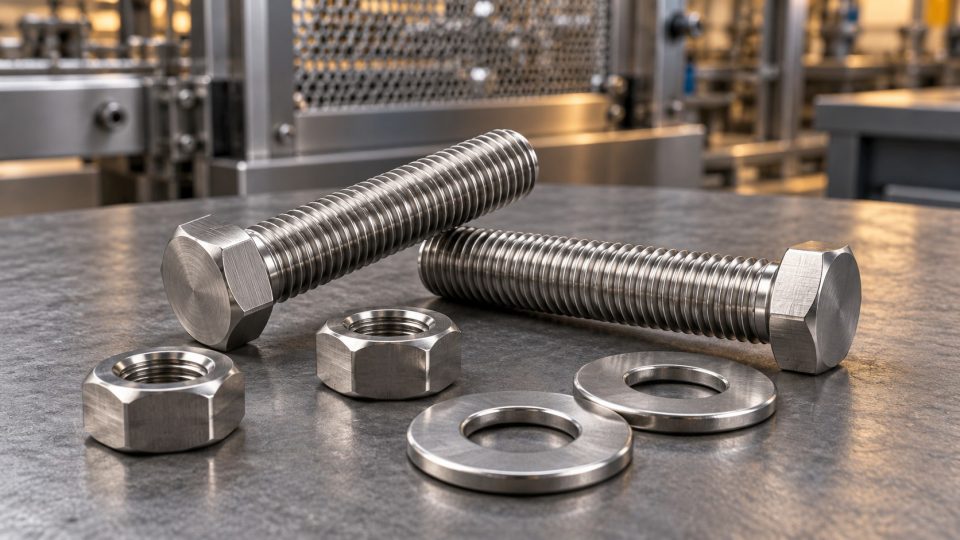
A4 does not automatically mean a stronger bolt than A2. In a designation such as A2-70 or A4-80, the material and mechanical property class must be read separately. Ch...
A4 does not automatically mean a stronger bolt than A2. In a designation such as A2-70 or A4-80, the material and mechanical property class must be read separately. Changing A2 to A4 alone does not confirm that a substitute complies, and the number 80 does not replace the required corrosion resistance.
This guide explains how to read markings before purchasing a substitute. For a general overview of types and applications, see the article how to choose stainless steel bolts for industry.
What do A2 and A4 on a bolt mean?
The letter A indicates the austenitic group of stainless steels in the fastener designation system. A2 and A4 distinguish the material. A2 are chromium-nickel steels, while A4 also contain molybdenum, which improves resistance to pitting and crevice corrosion. This does not mean resistance to every acid, salt or cleaning agent.
Keep material selection separate from mechanical requirements. A silver appearance does not confirm A2 or A4; a photograph alone, without legible markings and documentation, cannot establish the bolt's material and property class. This guide's illustration shows the general appearance of the parts, not the identification of a specific batch.
What does 70 or 80 after the hyphen mean?
The number indicates the mechanical property class. For bolts with full loadability within the relevant scope of ISO 3506-1, class 70 corresponds to a minimum tensile strength Rm of 700 MPa, and class 80 to 800 MPa. It is not a tightening torque or a permissible load weight.
These requirements are linked to tests at ambient temperature. ISO 3506-1:2020 specifies a test temperature range of 10–35°C; this must not be taken as a guarantee of unchanged properties at any operating temperature. The geometry of certain heads or shanks may limit loadability despite the stated material class.
Reading four example designations:
- A2-70: A2 material, mechanical property class 70.
- A4-70: A4 material, mechanical property class 70.
- A2-80: A2 material, mechanical property class 80.
- A4-80: A4 material, mechanical property class 80.
ISO 3506-1 covers specified bolts, screws and studs. Do not apply its requirements to set screws not subjected to tensile loading; these are covered by another part of the standard. Nuts also require the appropriate specification to be checked rather than automatically assigning bolt data to them.
A2-80 or A4-70 — which bolt is the right substitute?
Assumption for the example: you are comparing bolts with the same geometry, dimensions and thread. They differ only in their material and property-class designations.
The documentation requires A4-70, but A2-80 is available
A2-80 has a higher mechanical property class but a different material. It does not automatically meet the A4 requirement. A higher number after the hyphen does not compensate for the difference in corrosion resistance. Comparing Rm values alone cannot confirm the substitution.
The documentation requires A2-80, but A4-70 is available
Switching to A4 does not replace the required class 80. The lower mechanical property class remains a significant difference. Check the joint documentation and obtain approval for the substitution from the person responsible for its design or the equipment manufacturer.
Similarly, A2-70 and A4-70 share class 70, but this does not make them identical materials. None of the examples above constitutes product selection for a specific machine.
Is A4 sufficient for salt exposure and frequent cleaning?
A4 is often considered where chlorides are present, but the material name alone does not complete the selection. Information is needed on the medium, concentration, temperature, contact time and crevices where liquid remains. Conditions beneath the head or washer may differ from those on the exposed surface.
The term “acid-resistant” does not guarantee compatibility with every chemical product. Before purchasing, provide the operating and cleaning conditions instead of limiting the requirement to “an outdoor bolt”.
Does choosing A4 eliminate the risk of thread galling?
No. Galling can occur during assembly of stainless steel parts. If the thread locks or unusual resistance develops, do not take this as proof that the correct clamping force has been achieved. Stop tightening and check the condition of the parts and the procedure.
Select the assembly compound together with the tightening conditions. A change in lubrication changes friction, so do not transfer a torque from a dry joint to a lubricated one without checking. There is no single correct torque for every A2-70 or A4-80 bolt.
How should you describe a bolt in an enquiry to NERON?
- Design: standard or drawing, head shape and full or partial thread.
- Dimensions: diameter, thread pitch and length.
- Full designation: A2 or A4 material and the required property class, separately.
- Operating conditions: medium, temperature, salt and cleaning method.
- Complete assembly: nut, washer or thread in the housing, assembly procedure and required documentation.
In NERON's range, compare DIN 933 hexagon-head bolts in A2 and bolts from the same family in A4. The subcategory name does not confirm the class of every item. If the required class or document is not specified, send your requirements to NERON before choosing a substitute.
Related articles
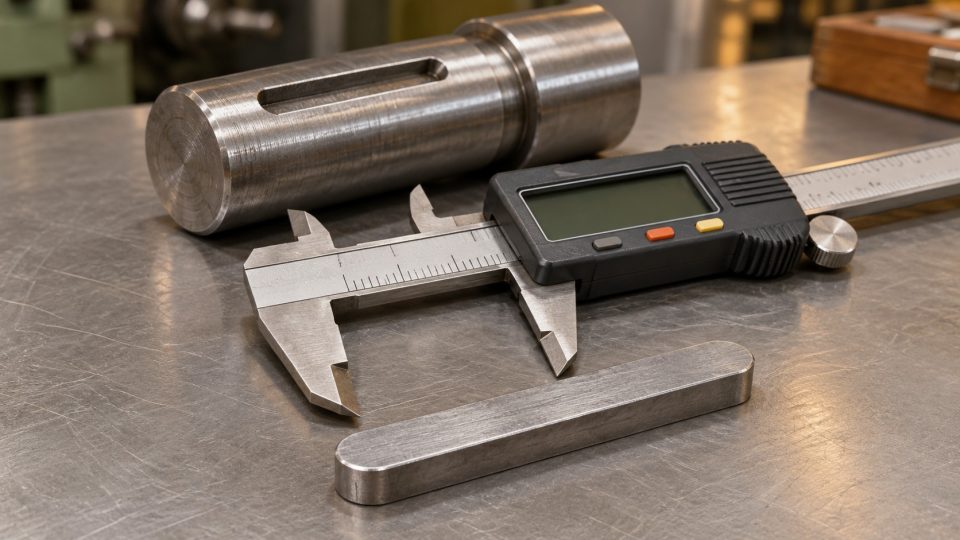
DIN 6885 parallel key — how to measure it and select a replacement?
A DIN 6885 parallel key is selected to suit the shaft and hub keyways, not solely the shaft diameter. Before purchasing, establish the width b, height h, length l, end...
Read article · 4 min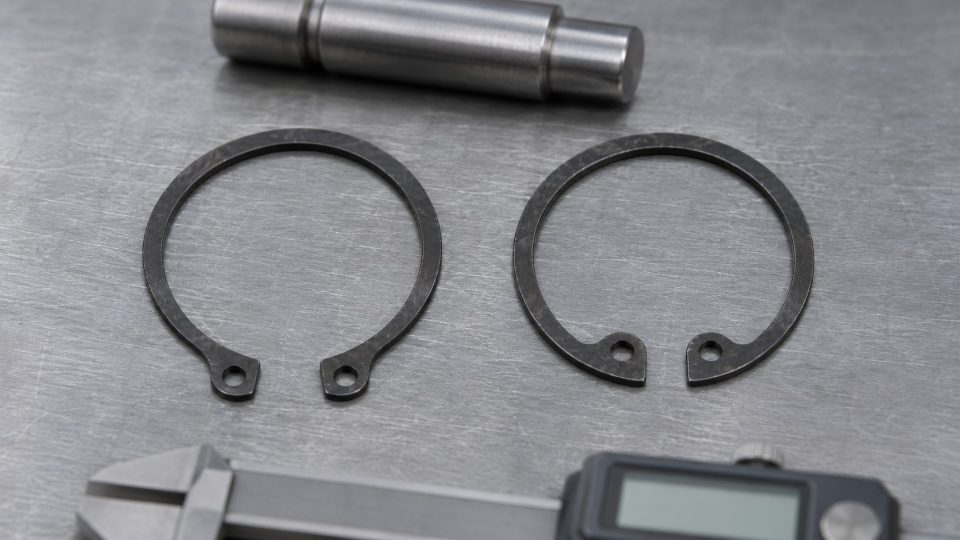
DIN 471 or DIN 472 circlip? How to select the size
DIN 471 denotes a retaining ring for a shaft, while DIN 472 denotes a ring for a bore. Before purchasing, establish the installation location, nominal shaft or bore di...
Read article · 5 min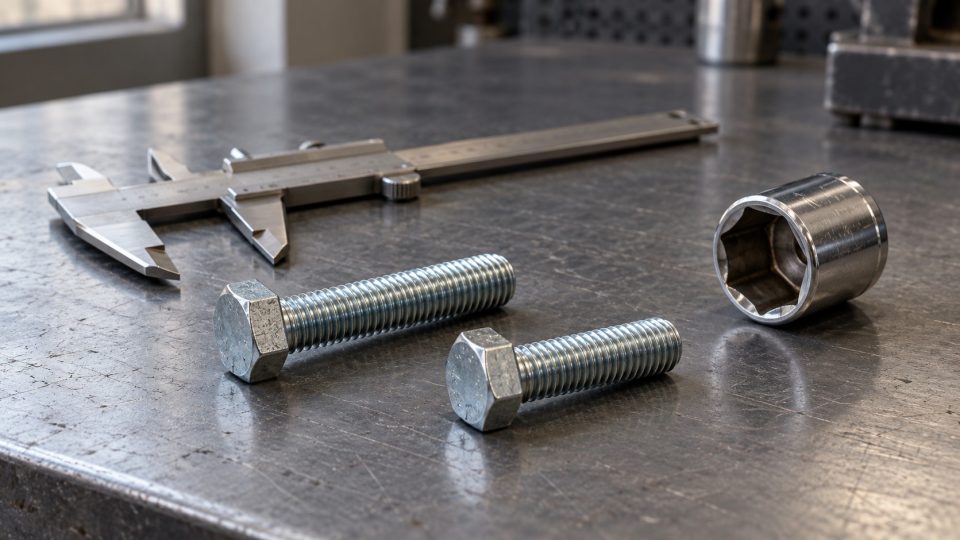
DIN 933 and ISO 4017 — which wrench and what to check before replacement?
An M10 bolt does not always require a 17 mm wrench. For DIN 933, the nominal width across flats is 17 mm, while for ISO 4017 it is 16 mm. The same thread therefore doe...
Read article · 4 min