
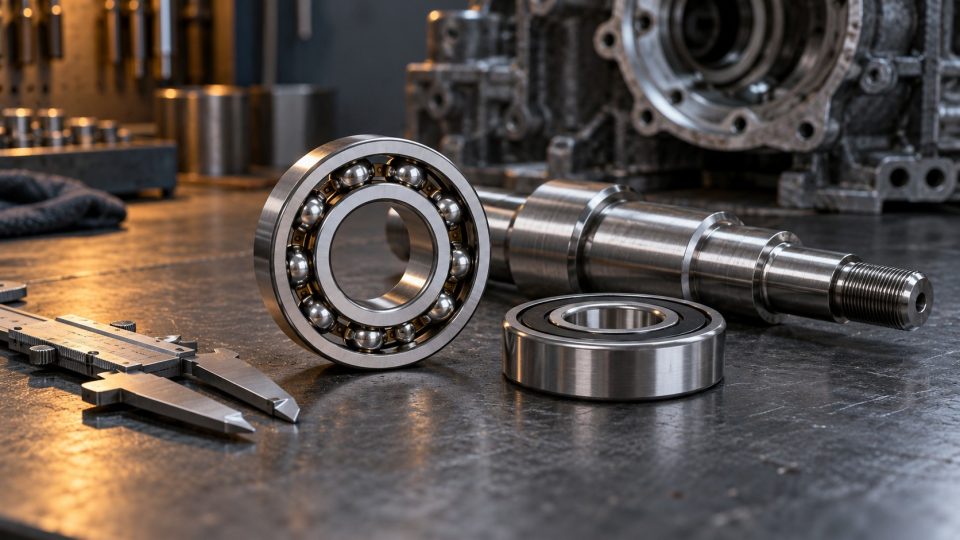
How to select a bearing? A practical step-by-step guide Correct selection of a bearing is essential to the durability and reliability of machines and equipment. An inc...
How to select a bearing? A practical step-by-step guide
Correct selection of a bearing is essential to the durability and reliability of machines and equipment. An incorrectly selected bearing can cause excessive wear, overheating and costly failures. This guide explains which parameters to consider when selecting a suitable bearing.
Step 1. Read the designation on the old bearing
The simplest way to select a new bearing is to read the designation on the ring of the old component.
Example
6205 2RS C3
The designation provides information about
-
bearing type,
-
seal type,
-
internal clearance.
If the designation is legible, simply order an identical model.
Step 2. Measure the main dimensions
If the designation is illegible, take measurements.
The main dimensions
-
d – inside diameter,
-
D – outside diameter,
-
B – width.
A caliper is best for taking measurements.
Step 3. Determine the load type
The load type has a major influence on selecting the appropriate bearing type.
Radial load
Acts perpendicular to the shaft axis.
Most commonly used
-
cylindrical roller bearings,
-
spherical roller bearings.
Axial load
Acts along the shaft axis.
Most commonly used
-
thrust bearings,
-
angular contact bearings.
Combined load
Acts radially and axially at the same time.
Most commonly used
-
tapered roller bearings,
-
angular contact ball bearings.
Step 4. Check rotational speed
Not all bearing types are designed for high-speed operation.
For example
-
ball bearings are well suited to high speeds,
-
plain bearings are preferred for high loads and lower speeds.
Step 5. Consider operating conditions
When selecting a bearing, consider
-
operating temperature,
-
humidity,
-
dust,
-
contact with water,
-
possible vibration.
In difficult conditions, bearings with 2RS seals or special industrial designs are recommended.
Step 6. Select the appropriate internal clearance
The most common designations
The designation | Meaning |
|---|---|
C2 | reduced clearance |
CN | normal clearance |
C3 | increased clearance |
C4 | large clearance |
C5 | very large clearance |
The most commonly used solution is clearance C3, used in electric motors among other applications.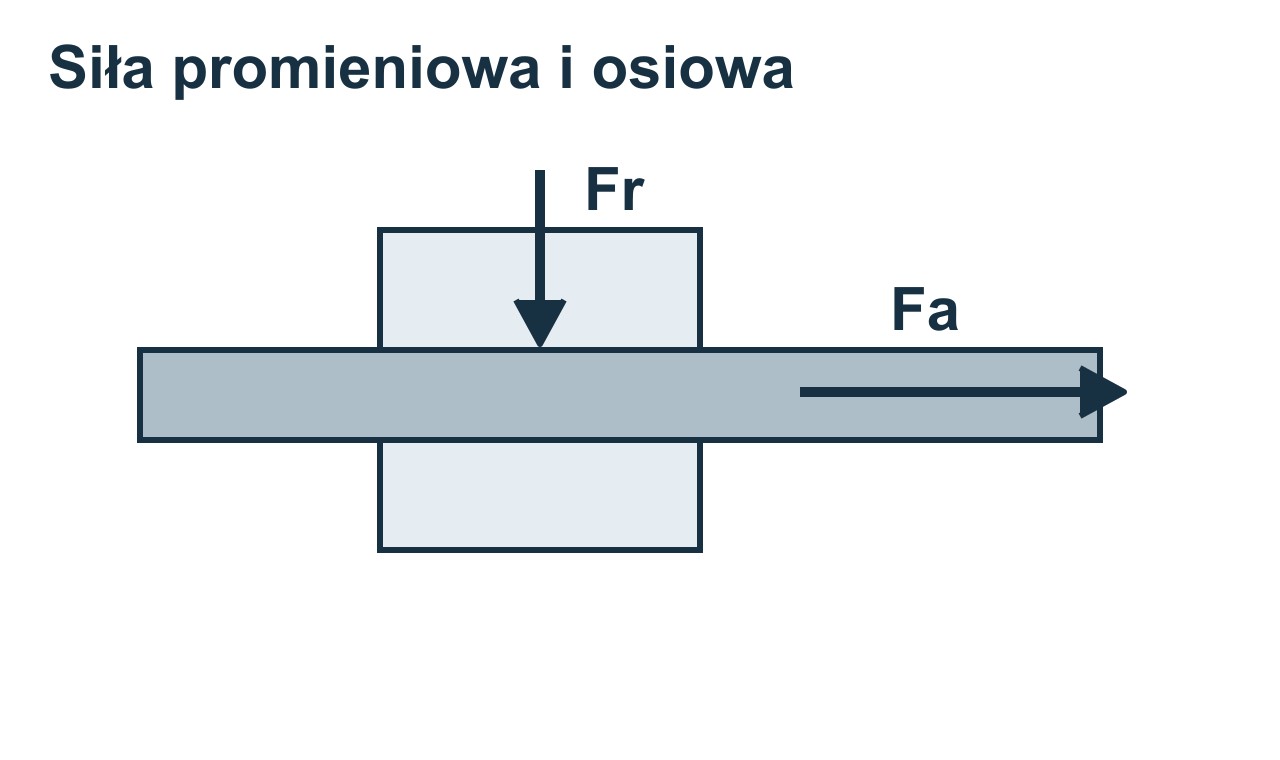 Fr — radial force, perpendicular to the shaft axis. Fa — axial force, along the shaft axis. The arrows show directions without magnitudes or the distribution of load between bearing components.
Common mistakes in bearing selection
-
selecting solely by shaft diameter,
-
overlooking the load type,
-
ignoring internal clearance,
-
choosing an unsuitable seal,
-
installing an unsuitable replacement.
Summary
Selecting the right bearing requires consideration of dimensions, load type, operating conditions and technical specifications. If in doubt, seek advice from specialists or consult the machine manufacturer's technical documentation.
Related articles
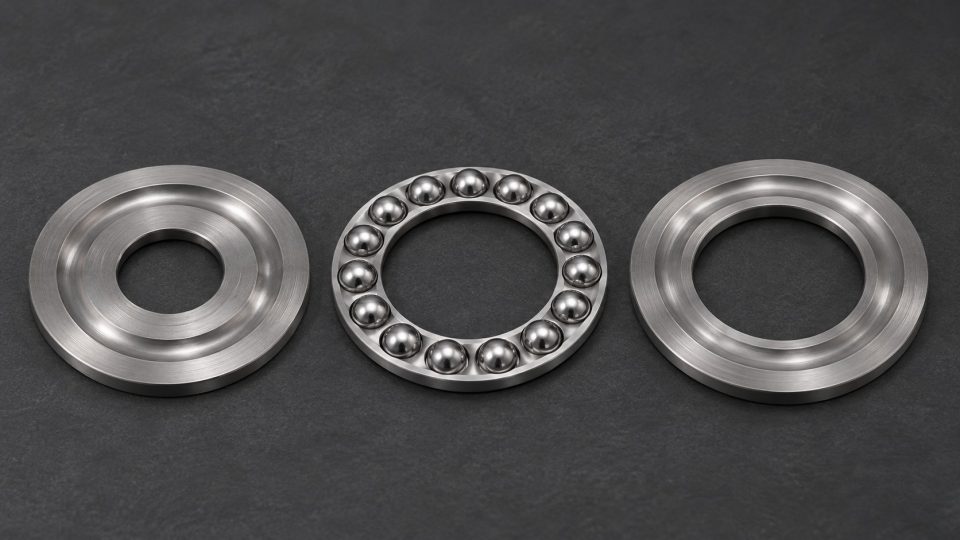
Łożysko oporowe 51105 czy 51205? Co zmierzyć przed wymianą
Okładka pokazuje rozłożone części poglądowo. Wymiary odczytaj z karty danego wykonania. Łożysko 51105 ma wymiary 25 × 42 × 11 mm, a 51205 ma 25 × 47 × 15 mm. Oba mają ...
Read article · 3 min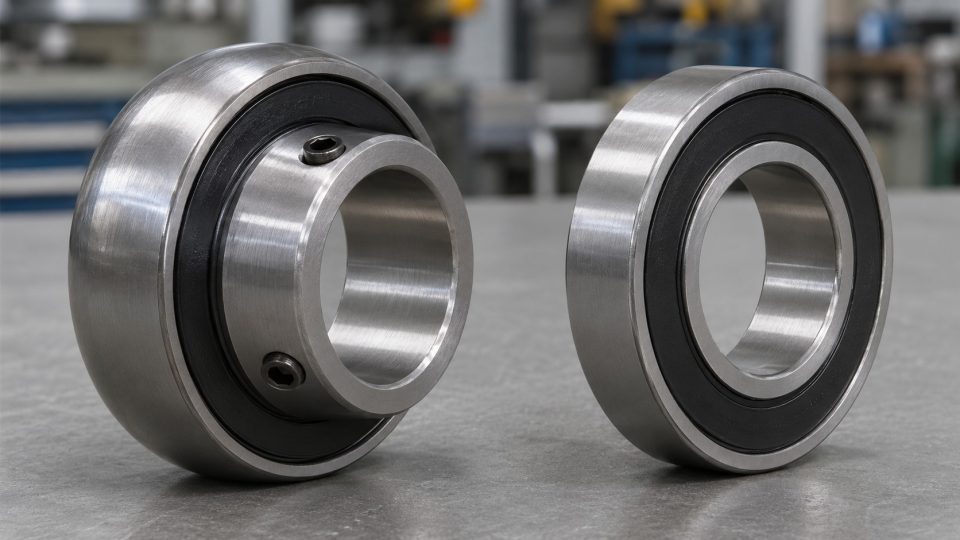
UC205 a 6205 — dlaczego wymiary 25 i 52 mm nie wystarczą?
UC205 i 6205 nie są bezpośrednimi zamiennikami tylko dlatego, że mają otwór 25 mm i średnicę zewnętrzną 52 mm. Przy zakupie sprawdź również kształt powierzchni zewnętr...
Read article · 3 min
causes of premature bearing wear
Causes of premature bearing wear – mounting errors, lubrication and contamination The most common causes of premature bearing wear are inadequate lubrication, lubrican...
Read article · 12 min