
How to select bearing internal clearance Internal clearance selection is as important as bearing size, type and sealing. Two bearings with the same basic designation m...
How to select bearing internal clearance
Internal clearance selection is as important as bearing size, type and sealing. Two bearings with the same basic designation may have different clearance classes and behave differently after mounting and machine warm-up. Too little operating clearance increases friction, temperature and seizure risk. Too much can impair guiding accuracy, increase vibration and noise and shorten raceway life.
There is no rule that C3 is always better than normal clearance. The correct class follows the bearing arrangement, including ring fits, shaft and housing temperatures, speed, load, stiffness and quiet-running requirements. The procedure below organises these factors and reduces the risk of purchasing the wrong variant.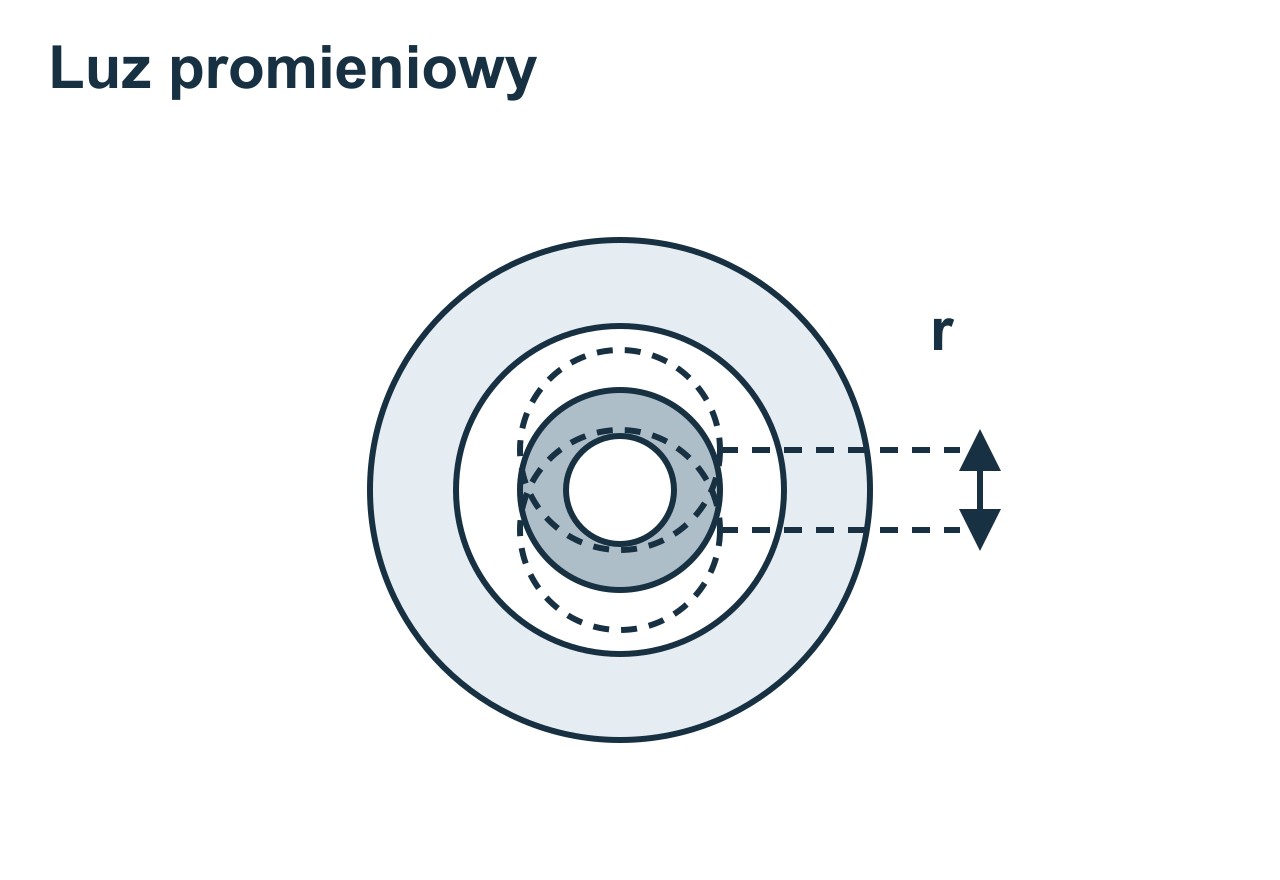 The dashed ring positions and clearance r are deliberately exaggerated. The drawing illustrates relative ring movement, not the clearance scale or a ready mounting value. C3 is not an accuracy class or preload designation.
What is bearing internal clearance?
Internal clearance is the total possible displacement of one bearing ring relative to the other before mounting, without an operating load. Depending on measurement direction, there is radial clearance, measured perpendicular to the axis, and axial clearance, measured along the axis. Radial bearings most often specify and require selection of the radial clearance class.
Do not confuse clearance with bearing dimensional tolerance or shaft and housing fits. Tolerance describes permissible dimensional deviations and running accuracy. Fits define the relationship between journal diameter and bearing bore and between bearing outside diameter and housing seat. Clearance concerns space and relative movement within the bearing.
It is also crucial to distinguish three conditions. Initial clearance applies to the unmounted bearing. Clearance after mounting includes inner ring expansion on a tight journal or outer ring compression in a tight seat. Operating clearance exists at operating temperature and includes thermal expansion of shaft, housing and rings. Operating clearance determines bearing behaviour in the machine.
What do C2, CN, C3, C4 and C5 mean?
Clearance classes form ordered groups. For many bearing types, the order from smallest to largest is C2, CN, C3, C4, C5. C1, smaller than C2, also exists but is used much less often. Values in micrometres are not universal. They depend on bearing type and bore range. Do not assume one clearance value for every C3 bearing.
Class Meaning Typical application direction |
Class Meaning Typical application direction |
Class Meaning Typical application direction |
Class Meaning Typical application direction |
Class Meaning Typical application direction |
No clearance suffix generally means normal clearance. For example, 6205 without an extra symbol most often has CN, while 6205/C3 or 6205 C3 has greater-than-normal clearance. Notation depends on the manufacturer, so check the catalogue when changing brands rather than relying on similar symbols.
What determines required operating clearance?
Ring fits on shaft and in housing
An interference fit expands the inner ring and reduces radial clearance. A tight outer ring seat can compress it with a similar effect. Greater interference, a thinner ring section or less compliant mating material can make the reduction more significant. If both rings have interference fits, greater initial clearance is often needed, but its class must be calculated.
Temperature difference between rings
If the shaft and inner ring are warmer than the housing and outer ring, the inner ring expands more and operating clearance decreases. This occurs in motors, fans, pumps and gearboxes, among others. High ambient temperature alone does not establish a need for C3. Temperature difference and heat dissipation matter most.
Rotational speed and load
High speed generates more heat, while heavy or shock loads may require a tighter fit. Both can reduce clearance during operation. This does not automatically mean choosing the largest class. Excess clearance reduces the number of load-carrying rolling elements, impairs motion stability and can increase vibration.
Bearing type and adjustment method
Classes C2–C5 primarily concern internal clearance in many radial bearings, such as deep groove ball, cylindrical roller and spherical roller bearings. Tapered roller bearings and some angular contact ball bearing arrangements set axial clearance or preload when mounting the pair. Do not directly transfer C3 selection rules from a deep groove ball bearing to an adjustable tapered roller arrangement.
How to select bearing clearance step by step
- Read the old bearing's full designation. Record ring and packaging markings, including C2, C3, C4, seals, cage and accuracy class. If the machine worked correctly and the design has not changed, retaining the original specification is generally the safest starting point.
- Establish bearing type and size. Check whether it is a deep groove ball, cylindrical roller, spherical roller, needle roller, tapered roller or angular contact bearing. Clearance tables belong to specific designs and diameter ranges, so C3 alone is insufficient.
- Determine which ring rotates relative to the load. A ring under rotating load generally needs a fit preventing creep. Greater interference means greater clearance reduction after mounting.
- Check journal and seat tolerances. Measure actual diameters and assess shape, roughness and material. Do not compensate a worn journal with an arbitrary clearance class change. Restore the correct fit first.
- Estimate operating temperatures. Consider inner and outer ring temperature, heat source, cooling, cold start and continuous duty. The temperature difference matters, not just the highest housing reading.
- Include speed, load and machine requirements. A quiet electric motor, a slow shock-loaded conveyor and a precision spindle have different criteria.
- Determine required initial clearance. Work backwards from target operating clearance, allowing for fit reduction and thermal change. For critical applications, use bearing manufacturer calculations or technical support.
- Check the table for the specific designation. Compare the required range with the manufacturer's clearance table. Class values partly depend on bore diameter, so the class name alone is insufficient for selection.
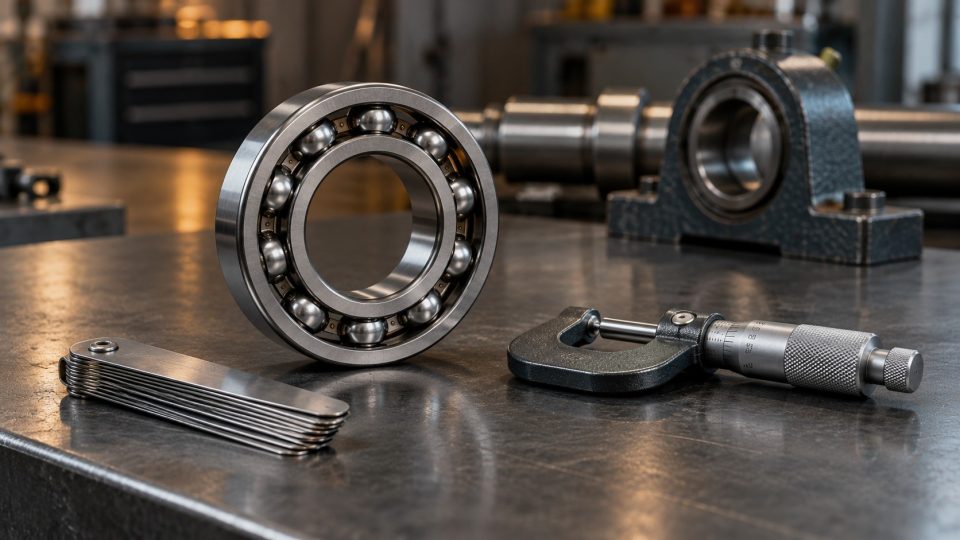
- Verify the result after mounting. Large bearings, especially spherical roller bearings on adapter sleeves or tapered journals, are checked for clearance reduction with a feeler gauge or for axial drive-up according to manufacturer instructions. After start-up, monitor temperature, noise and vibration.
When to choose CN and when C3
CN is correct for many standard arrangements with typical fits, moderate speed and small ring temperature differences. If machine documentation requires no other class and the original bearing had no C3 or C4 suffix, there is no basis for increasing clearance independently.
C3 is considered where expected clearance reduction after mounting and warming is sufficient to leave a CN bearing with too little clearance or unintended preload. Typical reasons include tight ring fits, a shaft warmer than the housing, high speed or demanding loads requiring greater interference.
A cold C3 bearing may have noticeably more clearance than CN without being defective. Mounting and operating temperature remove part of that reserve. Conversely, C3 in a cool, lightly loaded precision mechanism can increase noise and impair guidance. The class describes pre-mounting clearance reserve, not bearing quality.
Application examples
- Typical fan at moderate temperature if the manufacturer specified standard fits and CN, retaining that class is justified. A C3 change should follow temperature measurements and mounting data.
- Electric motor under prolonged load a warmer rotor and inner ring may reduce operating clearance. C3 is common, but always reproduce the full motor manufacturer designation, including quiet-running requirements.
- Spherical roller bearing on an adapter sleeve driving the bearing onto the taper expands the inner ring. Mount using clearance reduction or axial drive-up checks according to manufacturer tables, not by tightening the nut by feel.
- Gearbox with tight fits and a hot shaft greater initial clearance may be needed, but choosing between C3 and C4 should follow the balance of fit, temperature and required stiffness.
- Precision angular contact bearing arrangement pair selection, arrangement and preload may matter more than C3. Follow the design documentation here.
Common clearance selection mistakes
- Assuming greater clearance means longer life. C4 or C5 is not a reinforced version. Excessive clearance can reduce accuracy, increase vibration and distribute load unfavourably.
- Automatically changing CN to C3. C3's popularity in motors does not make it universal for every machine and speed.
- Ignoring the full designation. Clearance is only one parameter. Sealing, cage, thermal stabilisation, accuracy and internal construction must match too.
- Compensating a worn shaft with clearance class. A loose ring fit on the journal can cause creep and surface damage. Another internal clearance class does not repair incorrect seating.
- Comparing clearance by feel. Perceptible movement in an unmounted bearing does not reliably predict operating clearance. Values are in micrometres and require a suitable measuring method.
- Mixing rings from different bearings. Rings and rolling elements are made as a set, especially for bearings with adjustable or non-interchangeable clearance.
- Incorrect force mounting. Passing mounting force through rolling elements can damage raceways before start-up and cause symptoms wrongly attributed to clearance.
Practical pre-purchase data checklist
Before ordering, prepare information allowing quick variant verification.
- full old bearing designation and a photograph of the marking,
- machine type and bearing arrangement function,
- shaft and housing bore diameters and fit tolerances,
- speed, load direction and characteristics,
- shaft and housing temperatures at stable operation,
- lubrication, sealing and cooling method,
- noise, vibration, runout and stiffness requirements,
- whether design or conditions differ from the factory version.
Without calculations, retaining the machine manufacturer's specified class is safest. A clearance change should solve an identified design or thermal issue, not attempt to treat symptoms without finding their cause.
FAQ — common bearing clearance questions
Does C3 mean a better bearing?
No. C3 means greater-than-normal radial clearance, not better material or manufacture. It is correct only if greater initial clearance gives appropriate operating clearance after mounting and warming.
Can CN be replaced with C3?
The change is dimensionally possible but not always technically correct. Check fits, temperature, speed, load, noise and accuracy requirements. If the manufacturer specifies CN, an unauthorised change may impair the arrangement.
Does absence of C3 mean C0 or CN?
In many common bearings, no clearance suffix means normal clearance, called CN or colloquially C0. Confirm designation rules in the specific manufacturer's catalogue, especially for special series.
Why does a C3 bearing have perceptible clearance before mounting?
Its initial clearance is greater than normal. Interference and operating temperature differences reduce part of that reserve. Perceptible clearance alone in an unmounted bearing is not proof of damage.
Does high temperature always require C3?
No. Ring temperature difference, fit and target operating clearance matter. If both rings warm similarly, the thermal effect may differ from a hot shaft and cool housing arrangement.
How do you measure radial clearance?
The method depends on size and type. Large spherical roller bearings use feeler gauges and the manufacturer's procedure, among other methods. Small bearings need suitable instruments and controlled measuring load. Measurement by feel does not replace catalogue data.
What happens with too little operating clearance?
Friction, temperature and torque may increase, lubrication may worsen and raceway damage can cause premature failure. The extreme case is unintended preload and seizure.
What happens with too much clearance?
Possible effects include greater vibration and noise, poorer shaft guidance, unfavourable load distribution among rolling elements and reduced overall arrangement stiffness.
Need help selecting a bearing?
If unsure which clearance suits, contact our sales department. We will help select a bearing for operating conditions, temperature and mounting method.
Summary
Correct clearance selection considers the operating state as well as the unmounted product. Initial class must compensate for fit reduction and thermal changes while retaining proper running clearance. CN suits many standard uses, C3 may be needed with greater interference or a warmer inner ring, and C4 and C5 need clear design justification.
The most reliable sequence is reading the full designation, checking machine documentation, establishing fits and temperatures and comparing with the manufacturer's table for the specific type and size. If uncertain, send the seller full operating data instead of ordering a clearance class from habit.
Related categories
Related articles
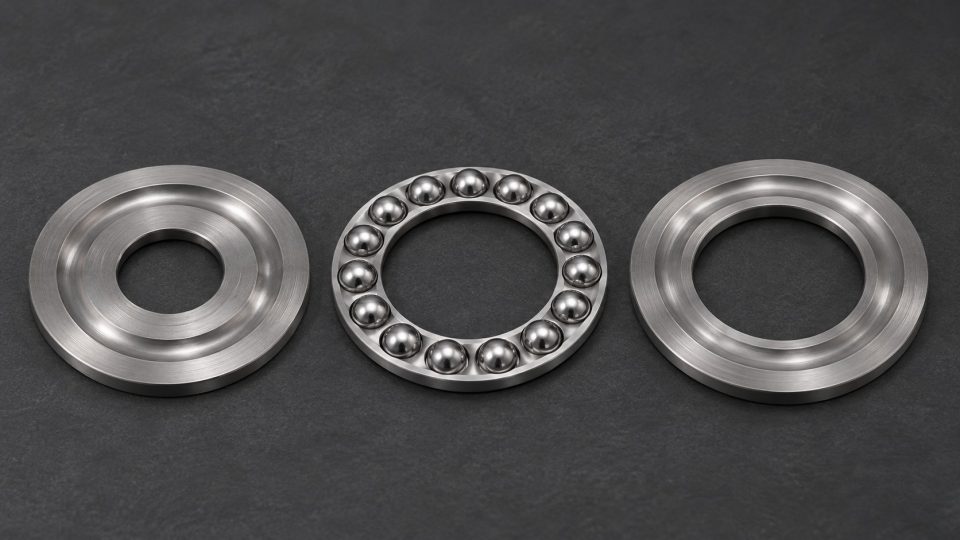
Łożysko oporowe 51105 czy 51205? Co zmierzyć przed wymianą
Okładka pokazuje rozłożone części poglądowo. Wymiary odczytaj z karty danego wykonania. Łożysko 51105 ma wymiary 25 × 42 × 11 mm, a 51205 ma 25 × 47 × 15 mm. Oba mają ...
Read article · 3 min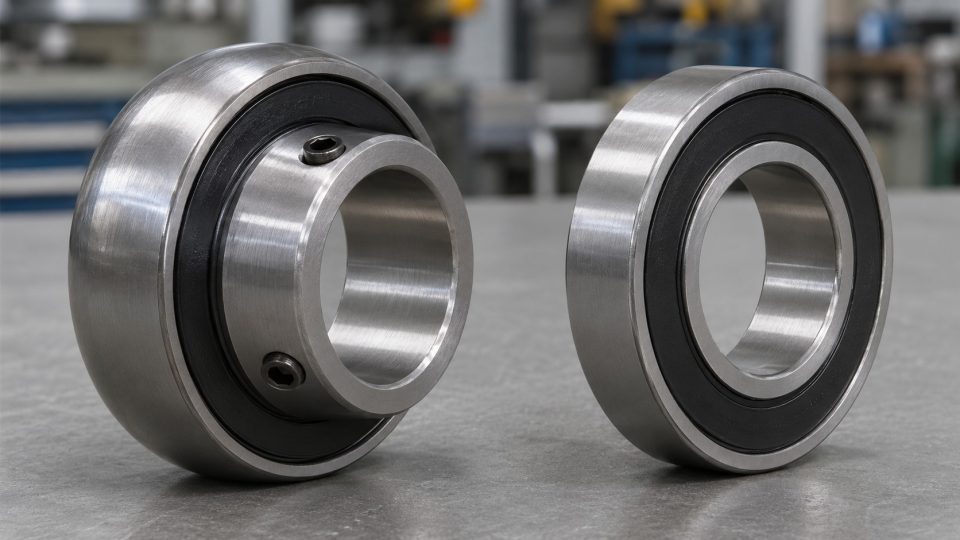
UC205 a 6205 — dlaczego wymiary 25 i 52 mm nie wystarczą?
UC205 i 6205 nie są bezpośrednimi zamiennikami tylko dlatego, że mają otwór 25 mm i średnicę zewnętrzną 52 mm. Przy zakupie sprawdź również kształt powierzchni zewnętr...
Read article · 3 min
causes of premature bearing wear
Causes of premature bearing wear – mounting errors, lubrication and contamination The most common causes of premature bearing wear are inadequate lubrication, lubrican...
Read article · 12 min