

Causes of premature bearing wear – mounting errors, lubrication and contamination The most common causes of premature bearing wear are inadequate lubrication, lubrican...
Causes of premature bearing wear – mounting errors, lubrication and contamination
The most common causes of premature bearing wear are inadequate lubrication, lubricant contamination, mounting errors, inaccurate alignment and loads exceeding the design assumptions. Using a branded bearing alone does not protect the bearing arrangement against failure if the fit, mounting, sealing or operating conditions are incorrect.
In industrial practice, a damaged bearing should be treated as a source of information about the entire system. The nature of the marks on raceways, rolling elements and cage helps distinguish material fatigue from the effects of lubricant starvation, corrosion, stray currents or misalignment. Correct root-cause analysis helps avoid a new bearing suffering the same failure after a short time.
Contents
- Key information at a glance
- Why do bearings wear prematurely?
- Inadequate bearing lubrication
- Contamination and ineffective sealing
- Mounting errors and incorrect fit
- Overload, misalignment and vibration
- Temperature, corrosion and stray currents
- How to analyse a damaged bearing
- Industrial application examples
- Common user errors
- How to extend bearing life
- FAQ
- Summary
Key information at a glance
- Premature bearing failure usually results from operating or maintenance conditions rather than the natural exhaustion of fatigue life.
- Both too little and too much grease increase temperature, friction and the risk of damage to the raceways and cage.
- Dust particles, metal chips and water destroy the lubricant film and cause indentations, corrosion and accelerated surface fatigue.
- Mounting forces must be applied only to the ring being installed with an interference fit. They must never be transmitted through the rolling elements.
- Wear-mark analysis should cover the bearing as well as the shaft, housing, seals, lubricant and machine operating parameters.
- Replacing a component without eliminating the original cause usually leads to another failure.
Why do bearings wear prematurely?
Calculated bearing life assumes a specific load, speed, lubricant cleanliness, temperature and correct seating of the rings. In an actual machine, each of these parameters may differ from the design. An excessively tight fit reduces internal clearance, shaft deflection causes misalignment, and production dust enters the bearing arrangement through a worn seal. As a result, contact stresses rise, the lubricant film becomes too thin and wear occurs before the material reaches its designed fatigue life.
Selection should begin with the type, dimensions, load rating, clearance, accuracy and seal design. In the bearings category, you can compare solutions intended for different loads and operating conditions. One design should not be replaced with another solely because the dimensions match. Two bearings with an identical bore diameter may differ in clearance, load rating, limiting speed and resistance to contamination.
Cause Typical marks or symptoms What to check Preventive action |
Cause Typical marks or symptoms What to check Preventive action |
Cause Typical marks or symptoms What to check Preventive action |
Cause Typical marks or symptoms What to check Preventive action |
Cause Typical marks or symptoms What to check Preventive action |
Cause Typical marks or symptoms What to check Preventive action |
Cause Typical marks or symptoms What to check Preventive action |
Inadequate bearing lubrication
Grease forms a layer separating the working surfaces, reduces friction, carries away some heat and protects steel against corrosion. Selection cannot be reduced to assuming that any bearing grease will be suitable. Base oil viscosity, thickener type, temperature range, water resistance, rotational speed and load all matter. Mixing incompatible greases may alter the consistency, cause oil separation or reduce mechanical stability.
Too little and too much grease
Too little lubricant causes the film to break down, temperature to rise and metal-to-metal contact. Too much is also harmful: the rolling elements work the grease intensively, resistance to motion rises, and the temperature accelerates oil oxidation. Excess pressure may also push out a seal or direct grease to an unwanted location.
The relubrication interval should account for speed, bearing size, temperature, shaft position and contamination level. Hot, high-speed and dusty bearing arrangements are among those requiring shorter intervals. Sealed bearings that are factory-filled for the entire intended service life should not be opened and relubricated by the user without manufacturer recommendations.
Contamination and ineffective sealing
Even very small hard particles can enter between a rolling element and the raceway. The resulting indentations have raised edges where local stresses increase. Over time, these become initiation points for microcracks and spalling. Contaminants can come from the surroundings, wear of other parts, dirty tools, open packaging or a dirty grease gun.
Water reduces the grease's ability to form a film, promotes corrosion and may alter its structure. This is common in pressure-washed machines, outdoor equipment and installations exposed to heating and cooling cycles. The seal must be selected for the type of contamination, speed and permissible friction. In very dusty environments, a single seal may be insufficient. Multistage or labyrinth solutions, or suitable sealed bearing designs, are then used.
Mounting errors and incorrect fit
Hammering directly on a ring, mounting through the rolling elements and pressing a bearing in at an angle cause damage before the machine even starts. If the inner ring has an interference fit, force must be applied to the inner ring. When fitting the outer ring into the housing, force should act on the outer ring. When pressing in both rings simultaneously, use a tool that supports them evenly.
Thermal mounting is used for larger diameters, but heating must be uniform and controlled. An open flame may locally overheat the steel and damage the grease or sealing elements. Before mounting, measure the shaft and housing and check their roundness, roughness and abutment surfaces. Too loose a fit causes ring creep and seat wear. Too tight a fit reduces internal clearance and increases stress and operating temperature.
Importance of selecting the design
The bearing type must suit the direction of loading. For example, angular contact ball bearings are used where radial and axial loads occur, and setting and preload have a major influence on system operation. In contrast, spherical roller bearings better tolerate a certain degree of misalignment, but do not remove the need to check shaft and housing geometry.
Overload, misalignment and vibration
Actual loads may be significantly higher than calculated loads because of impacts, imbalance, belt tension, incorrect coupling alignment or changes in the production process. Overloading increases contact stresses and reduces fatigue life. Short impacts are particularly dangerous: they are not visible in average operating parameters, yet can deform raceways or damage the cage.
Misalignment concentrates the load on part of the raceway width. Causes may include inaccurate housing installation, shaft deflection, foundation deformation or thermal expansion. Vibration during standstill is also harmful. When stationary rolling elements make micromovements under load, regularly spaced false-brinelling marks may develop on the raceways. Spare motors, fans and entire machines standing beside operating equipment therefore require protection against vibration.
Temperature, corrosion and stray currents
Elevated temperature reduces base oil viscosity and accelerates grease ageing. It can also change operating clearance when the shaft, housing and rings heat up at different rates. Temperature should not automatically be regarded as the primary cause: it can result from excess grease, an excessively tight fit, misalignment or a damaged seal.
In motors supplied by frequency converters, current may flow through the bearing. Discharges puncture the lubricant film and create microscopic craters that eventually develop into regular grooves in the raceway. Solutions may include improved earthing, a shaft grounding ring, an insulated bearing or ceramic rolling elements. The protective measure should be selected on the basis of electrical measurements and drive design.
How to analyse a damaged bearing
Analysis should begin before disassembly. Record temperature, noise, vibration level, load, speed and time since the last lubrication. Document the bearing position, load direction and seal condition. During disassembly, do not destroy marks that may indicate the cause. Components should be photographed and labelled with the drive side and axial direction.
Inspection area Diagnostic questions Useful data |
Inspection area Diagnostic questions Useful data |
Inspection area Diagnostic questions Useful data |
Inspection area Diagnostic questions Useful data |
Inspection area Diagnostic questions Useful data |
Industrial application examples
Electric motor controlled by a frequency converter
Recurring grooves on the raceways may indicate electrical erosion. Replacing a standard bearing without checking earthing and shaft voltage will not solve the problem. Diagnostics should combine vibration measurement with electrical measurements.
Conveyor in an aggregate plant
Mineral dust entering through an ineffective seal causes indentations and accelerated spalling. An effective change may involve improving sealing, relubrication cleanliness and lubrication-line layout, rather than merely shortening the bearing replacement interval.
Industrial fan
An unbalanced rotor increases dynamic load and vibration level. If the bearing is also overfilled with grease, temperature rises. Repair requires checking balance, alignment, fit and lubricant quantity.
Process pump
Coupling misalignment and pipe-induced stresses may load the bearing arrangement beyond the design assumptions. After replacing a seal or overhauling the installation, check the assembly alignment again, because correct alignment before connecting the pipes may not reflect the final conditions.
Common user errors
- Selecting a replacement solely by dimensions without checking clearance, load rating, speed and design.
- Opening the packaging too early and leaving the bearing on a dirty workstation.
- Transmitting mounting force through the balls or rollers.
- Heating a ring with an open flame without temperature control.
- Mixing greases without confirming base oil and thickener compatibility.
- Relubricating until full without a defined quantity or an escape route for old grease.
- Ignoring the condition of the shaft, housing and seals during replacement.
- Eliminating clearance or increasing preload to eliminate noise.
- Starting the machine after an overhaul without checking temperature and vibration.
- Discarding the damaged component before documenting marks and taking a grease sample.
How to extend bearing life
- Verify selection. Check radial and axial loads, speed, temperature, required clearance and environmental conditions.
- Control tolerances. Measure the shaft and housing instead of assuming that they retained their nominal dimensions after the previous failure.
- Standardise mounting. Specify the tools, heating temperature, support method and required tightening torque.
- Manage lubrication. Assign a specific grease, quantity, interval and application method to each lubrication point.
- Protect against contamination. Check seals, component storage, and the cleanliness of grease guns and the workstation.
- Monitor condition. Analyse trends in temperature, vibration, noise and power consumption instead of relying on a single reading.
- Analyse every unusual failure. Determine the root cause before installing another component.
FAQ – frequently asked questions about premature bearing wear
1. What is the most common cause of bearing failure?
Lubrication and contamination problems dominate in many applications. However, the exact cause depends on the application, so a failure should not be diagnosed on the basis of one symptom alone.
2. Can excess grease damage a bearing?
Yes. Excess grease increases churning resistance and temperature, can damage a seal and accelerate lubricant degradation. The quantity should be defined for the specific bearing arrangement.
3. Why does a new bearing heat up quickly?
The cause may be the grease distribution period, but also excess grease, an excessively tight fit, incorrect clearance, incorrect preload, misalignment or seal friction. Temperature must be assessed as a trend together with vibration and load.
4. Can different bearing greases be mixed?
Only after their compatibility has been confirmed. Incompatible thickeners or base oils may cause softening, hardening or oil separation. Changing the product often requires cleaning the system.
5. How can bearing contamination be recognised?
Typical marks include numerous small indentations, scratches, dull raceways and accelerated spalling. Metal chips, dust or a colour change may be visible in the grease. Analysing a lubricant sample can help.
6. Can a bearing be mounted with a hammer?
Hammering directly on a ring is incorrect. For small bearings, controlled mounting using a suitable sleeve and tool that evenly transmits force to the correct ring is permissible. Presses and specialist kits are preferred.
7. What do regular grooves on a raceway mean?
They may indicate current flowing through the bearing, especially in motors with a frequency converter. However, this appearance requires confirmation by measurements and surface assessment, because not every regular mark has an electrical cause.
8. Does noisy operation always mean bearing damage?
No. Noise may come from the coupling, gearbox, fan, structural play or fluid flow. It is a signal for diagnostics, but the source should be confirmed by measurements and inspection.
9. Is replacing the bearing alone sufficient after a failure?
Not always. Check the shaft, housing, seals, lubrication, alignment and loading conditions. If the cause remains in the system, the new component may suffer identical damage.
10. How should bearings be stored before mounting?
In their original, sealed packaging, in a dry, clean location without vibration or abrupt temperature changes. Ideally, open the packaging immediately before mounting.
Summary
Premature bearing wear most commonly results from a combination of factors: inadequate lubrication, contamination, mounting errors, unsuitable fit, misalignment or overload. Effective repair does not end with component replacement. It should include documenting symptoms, analysing marks, measuring the shaft and housing, checking the lubricant and verifying the actual machine parameters.
Standardisation delivers the greatest benefits: correct bearing selection, clean mounting, controlled grease quantity, effective sealing and trend monitoring. This enables the bearing arrangement to operate closer to its intended life, while maintenance teams reduce unplanned shutdowns and recurring repair costs.
Related articles
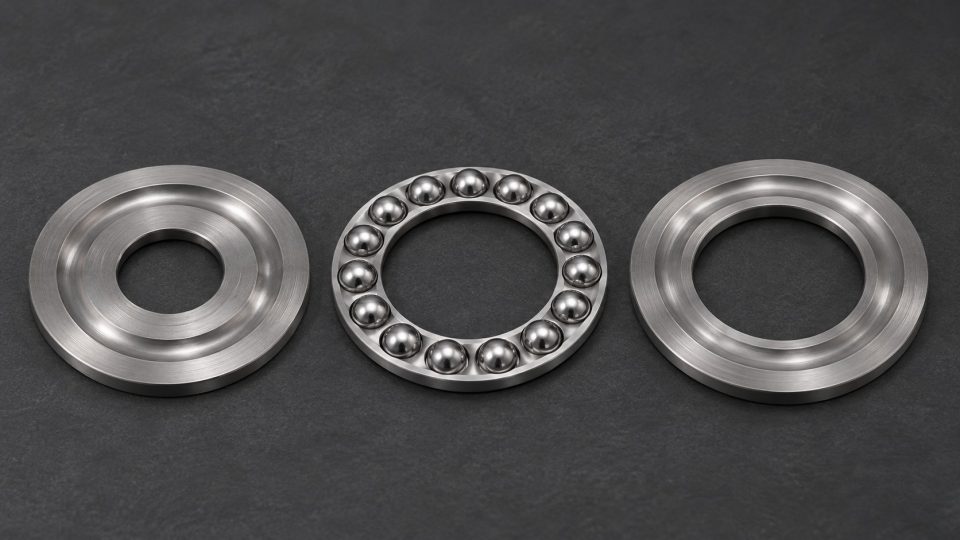
Łożysko oporowe 51105 czy 51205? Co zmierzyć przed wymianą
Okładka pokazuje rozłożone części poglądowo. Wymiary odczytaj z karty danego wykonania. Łożysko 51105 ma wymiary 25 × 42 × 11 mm, a 51205 ma 25 × 47 × 15 mm. Oba mają ...
Read article · 3 min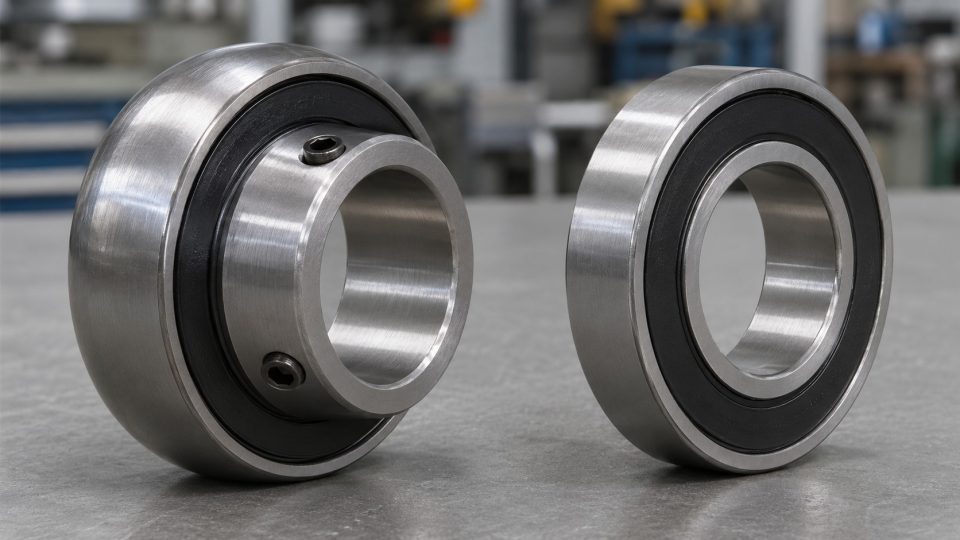
UC205 a 6205 — dlaczego wymiary 25 i 52 mm nie wystarczą?
UC205 i 6205 nie są bezpośrednimi zamiennikami tylko dlatego, że mają otwór 25 mm i średnicę zewnętrzną 52 mm. Przy zakupie sprawdź również kształt powierzchni zewnętr...
Read article · 3 min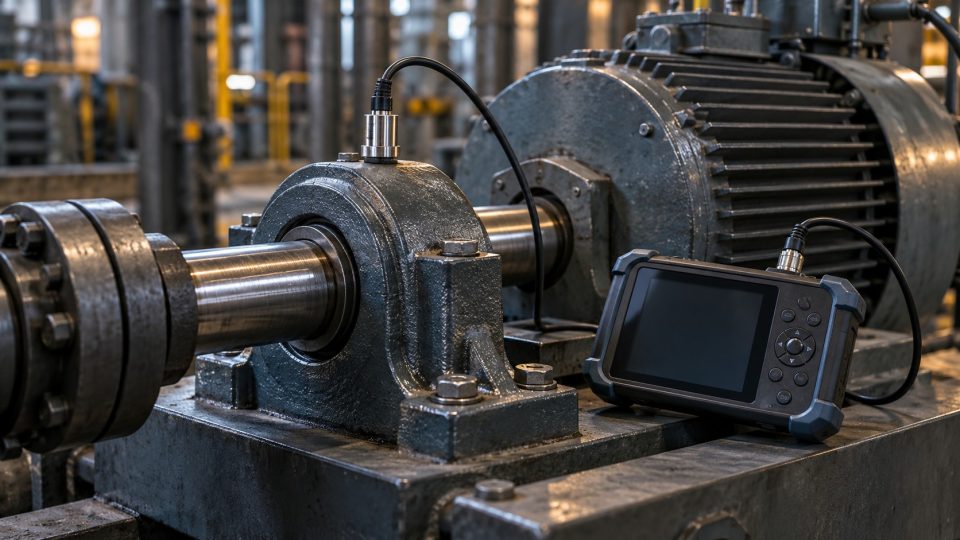
Bearing diagnostics – how to detect a failure before the machine stops?
Bearing diagnostics – how to detect a failure before the machine stops? A bearing failure can be detected before the machine stops by regularly comparing trends in vib...
Read article · 13 min