
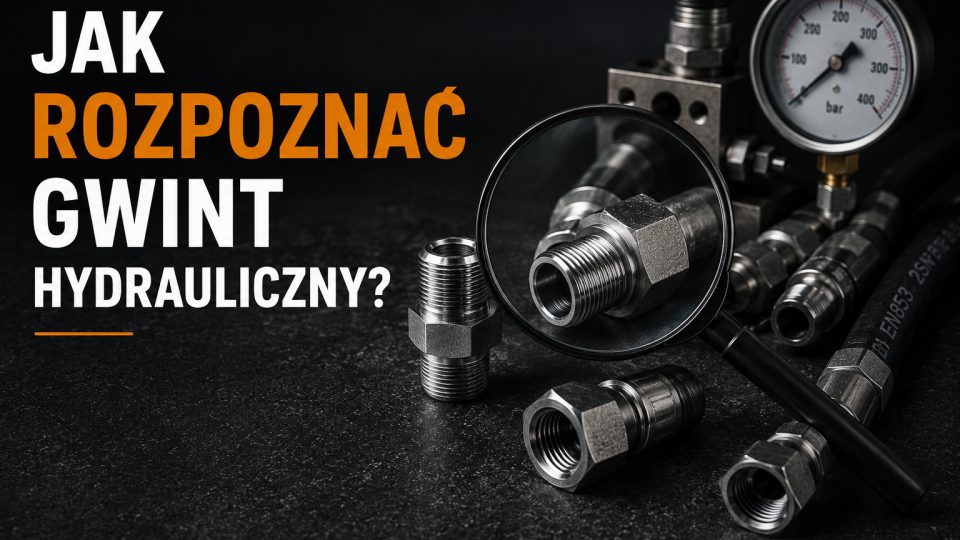
Correctly identifying a hydraulic thread is crucial when selecting hoses, quick couplings, adapters and other power hydraulic components. Incorrect thread identificati...
Correctly identifying a hydraulic thread is crucial when selecting hoses, quick couplings, adapters and other power hydraulic components. Incorrect thread identification can lead to leaks, connection damage and hydraulic system failure.
The most common threads in power hydraulics are
Why is correct thread identification so important?
Although many threads look very similar, they differ in profile, thread angle and sealing method. Attempting to connect incompatible threads can result in
- hydraulic oil leaks,
- thread damage,
- working pressure loss,
- failure of the entire hydraulic system.
How to identify a hydraulic thread step by step
1. Measure the thread diameter
For a male thread, initially measure the diameter over the crests. Measuring a female thread involves different surfaces and requires the correct table or gauge. Do not compare it directly with the outside diameter column.
This measurement helps provisionally determine the thread size and narrow down the possible hydraulic standards.
2. Check the thread pitch
Next, determine the thread pitch using a thread pitch gauge or compare the thread with the manufacturer's tables.
Thread pitch is one of the most important identification parameters.
3. Determine the sealing method
It is very important to check how the particular connection achieves sealing.
- ORFS — O-ring seal,
- JIC — 37° cone seal,
- BSPP — parallel thread, with sealing outside the thread according to the fitting design, for example on a cone or at the port,
- NPT — sealing on the tapered thread.
4. Compare the results with thread tables
After taking the measurements, compare the results with manufacturers' tables or hydraulic standards.
The most common hydraulic thread diameters
The following list covers selected BSP family threads, not all inch threads. It gives approximate outside diameters and threads per inch (TPI) for preliminary identification. For BSPT, the measurement also depends on the location on the taper. Do not use this list as a tolerance table or manufacturing data for a thread. Confirm whether the thread is parallel or tapered, its profile and sealing method.
BSP size | Outside diameter ≈ mm | TPI — threads/inch |
|---|---|---|
1/4 | 13,2 | 19 |
3/8 | 16,7 | 19 |
1/2 | 20,9 | 14 |
3/4 | 26,4 | 14 |
1 | 33,2 | 11 |
1 1/4 | 41,9 | 11 |
1 1/2 | 47,8 | 11 |
2 | 59,6 | 11 |
Approximate values for identification, not manufacturing tolerances. For BSPT, account for the measuring location on the taper.
The most common types of hydraulic threads
- BSP — the most popular thread used in Europe,
- BSPT — tapered thread sealing in the thread,
- NPT — American standard,
- JIC — thread with a 37° cone seal,
- ORFS — thread with an O-ring seal.
Common mistakes during thread identification
- assessing the thread purely by eye,
- omitting thread pitch measurement,
- confusing BSP with NPT,
- overlooking the seal type,
- using incompatible adapters.
Which tools should be used to identify threads?
For correct hydraulic thread identification, use
- a calliper,
- a thread pitch gauge,
- hydraulic thread tables,
- thread gauges.
Frequently asked questions
Are BSP and NPT the same thread?
No. BSP and NPT differ in profile, thread angle and sealing method. They are not directly compatible.
How do you measure a hydraulic thread?
It is best to use a calliper to measure the diameter and a thread pitch gauge to determine the pitch.
How do you identify an ORFS thread?
An ORFS thread can be identified by the characteristic O-ring on the fitting's face.
Does every hydraulic thread require sealing?
Yes, but the sealing method depends on the thread type. Some systems use O-rings, others cones or thread sealing.
Summary
Correct hydraulic thread identification helps avoid many problems with leaks and hydraulic system failures. During identification, pay attention to thread diameter, pitch, seal type and the applicable standard.
Related articles
- Types of hydraulic threads
- BSP vs NPT — how do the threads differ?
- ORFS vs BSP — hydraulic thread differences
- How to seal hydraulic threads?
- How to select a hydraulic hose?
Related products
- Hydraulic adapters
- BSP hydraulic fittings
- ORFS fittings
- Hydraulic quick couplings
- Hydraulic hoses
Related articles
Common mistakes when selecting hydraulics
A matching connection size is not enough when selecting power hydraulic components. Before purchasing, confirm the requirements of the entire connection, including pre...
Read article · 4 min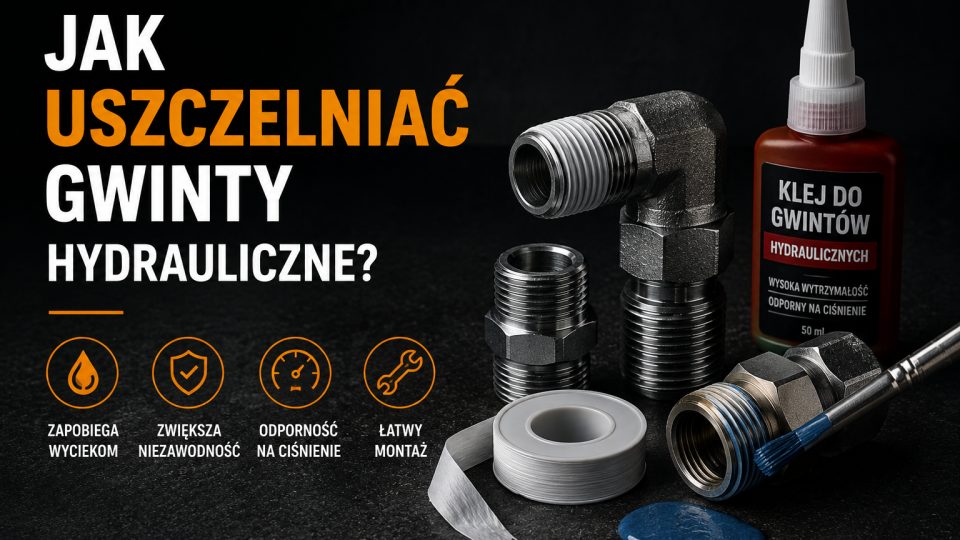
How to seal hydraulic threads?
Correct sealing of hydraulic threads is essential to the leak-tightness and safety of the entire hydraulic system. Inadequate sealing can lead to oil leaks, pressure d...
Read article · 3 min
What does DN12 mean?
DN12 is a nominal size designation used in hydraulics. It does not automatically mean that every bore, thread or hose measures exactly 12 mm. Check how the designation...
Read article · 3 min