
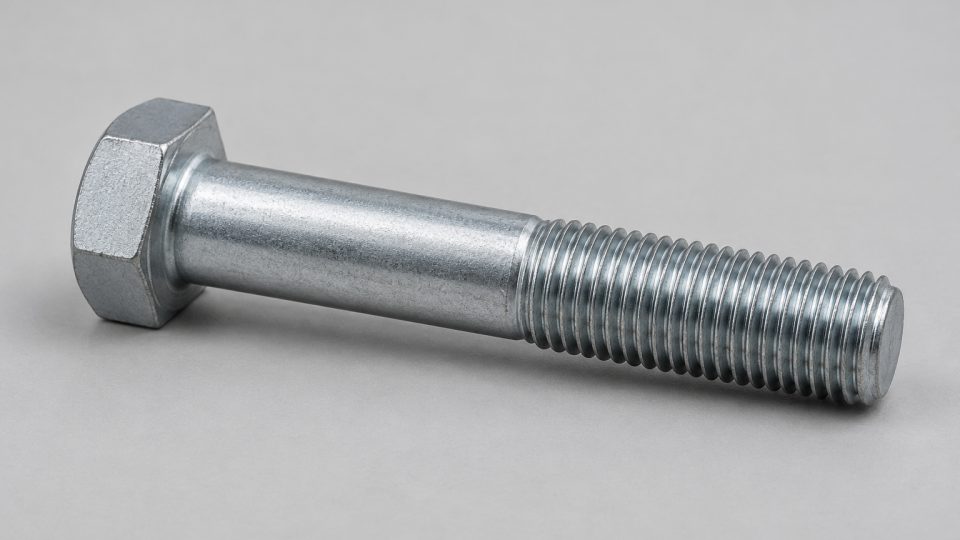
Do not replace a zinc-coated bolt with a stainless steel one solely because it has the same thread and a silver colour. Check the mechanical requirements, corrosion pr...
Do not replace a zinc-coated bolt with a stainless steel one solely because it has the same thread and a silver colour. Check the mechanical requirements, corrosion protection and the metal to which you are fastening the component. Stainless steel may be the right choice, but it is not a universal substitute.
This guide covers changes to material or surface protection. For a broader description of types and applications, see the article how to choose stainless steel bolts for industry.
In this article: material and coating, types of zinc coating, contact between different metals, checking a substitute, purchasing information.
Zinc-coated versus stainless steel bolts — what is the difference?
On a typical carbon steel bolt, zinc is an additional protective coating. It separates the base metal from the environment and can protect it by being consumed itself. The bolt material and its coating are therefore two separate pieces of information.
Stainless steel gains its resistance from a thin passive layer on its surface. However, it is not resistant to every operating condition. Its behaviour depends on the grade and the environment.
Information in the description What does it establish? What must not be inferred from it? |
Information in the description What does it establish? What must not be inferred from it? |
Information in the description What does it establish? What must not be inferred from it? |
Does every zinc coating provide the same protection?
No. Electroplated and hot-dip zinc coatings are produced by different processes. Layer thickness and additional treatments, such as passivation or sealing, also matter when selecting a coating. The term “zinc-coated” alone is too general if the documentation specifies a particular coating system.
ISO 4042 covers electroplated coatings on fasteners, while ISO 10684 covers hot-dip zinc coatings. These are surface-protection standards; they do not replace checks of the bolt's geometry and mechanical properties.
For hot-dip galvanising, also check the fit between the thread and nut. A thicker layer requires dimensions and tolerances to be taken into account. Do not assemble a set based only on nominal diameter. If the nut does not fit, do not rework the thread with an arbitrary tool instead of clarifying whether the parts are compatible.
Can a stainless steel bolt accelerate corrosion of an adjacent part?
Yes. Galvanic corrosion can occur when different metals are electrically connected and a conductive environment is present, such as moisture containing dissolved salts. The assessment concerns the entire joint, not just the bolt itself.
Illustrative example: you plan to replace a zinc-coated fastener with a stainless steel one in a damp steel-sheet fixing. The new bolt may resist corrosion better while increasing the risk of corrosion in the mating part. The surface-area ratio of the metals in contact also matters.
A designed electrical isolation arrangement, such as a suitably selected separator, can be a solution. Not every washer provides this isolation. The method of separating the metals must be incorporated into the joint design rather than assuming that replacing the bolt alone is enough.
What should you check before replacing a zinc-coated bolt with a stainless steel one?
- Read the requirement in the documentation. Record the material, coating and required mechanical property class. Do not treat stainless steel construction as confirmation of equivalent load-bearing capacity.
- Compare the design. Check the standard or drawing, thread, length and head. For thick coatings, take account of the requirements for the mating nut.
- Describe the environment. Establish the moisture, salinity, temperature and contact with cleaning agents.
- Check the complete assembly. Include the sheet or housing, nut, washer and any isolation between different metals.
- Confirm the installation procedure. Use the approved equipment instructions or joining procedure. Do not carry over the previous tightening torque to the new variant without checking it.
If the required data is missing, the substitute is not yet confirmed. Where the documentation specifies a particular material or coating system for a joint, the decision to change it must be based on that documentation.
How do you order the right variant from NERON?
Prepare an enquiry: “Bolt to [standard or drawing], thread [diameter and pitch], length [mm], required property class [value], material and protection [specification]. Component being fastened: [metal and coating]. Operating conditions: [moisture, salinity, temperature, cleaning]”.
Compare NERON's range of bolts, and if the product page does not contain the information you need, send your requirements to NERON before purchasing. The trade name and photograph help identify the item but do not replace a complete specification.
Related articles
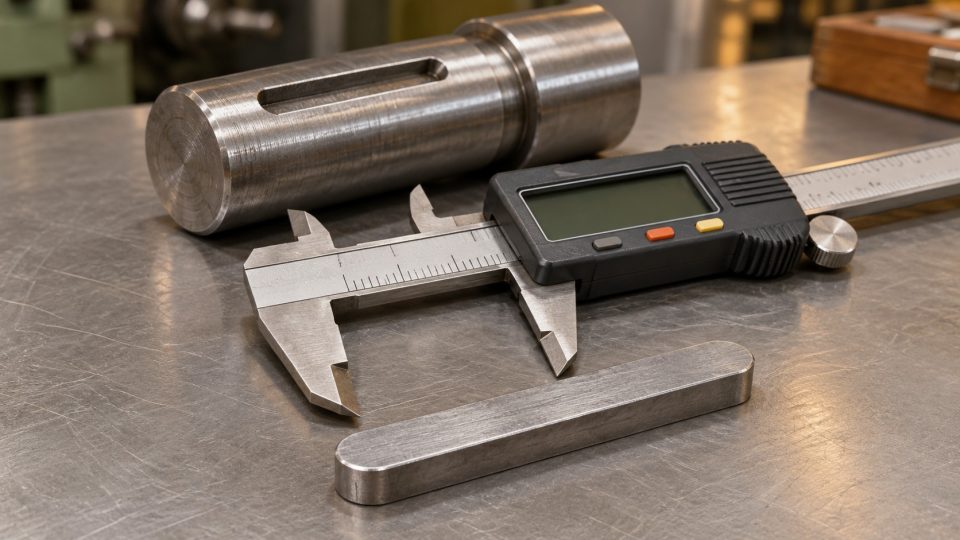
DIN 6885 parallel key — how to measure it and select a replacement?
A DIN 6885 parallel key is selected to suit the shaft and hub keyways, not solely the shaft diameter. Before purchasing, establish the width b, height h, length l, end...
Read article · 4 min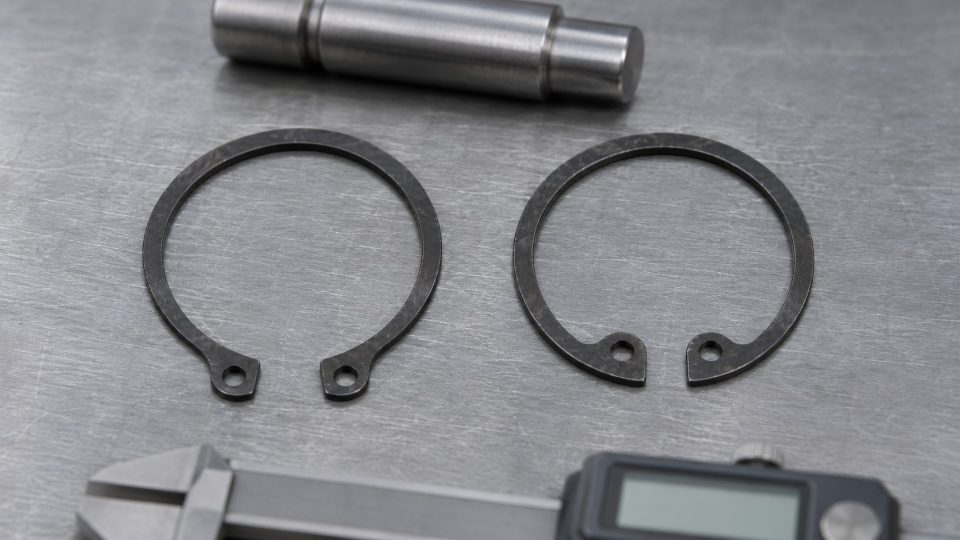
DIN 471 or DIN 472 circlip? How to select the size
DIN 471 denotes a retaining ring for a shaft, while DIN 472 denotes a ring for a bore. Before purchasing, establish the installation location, nominal shaft or bore di...
Read article · 5 min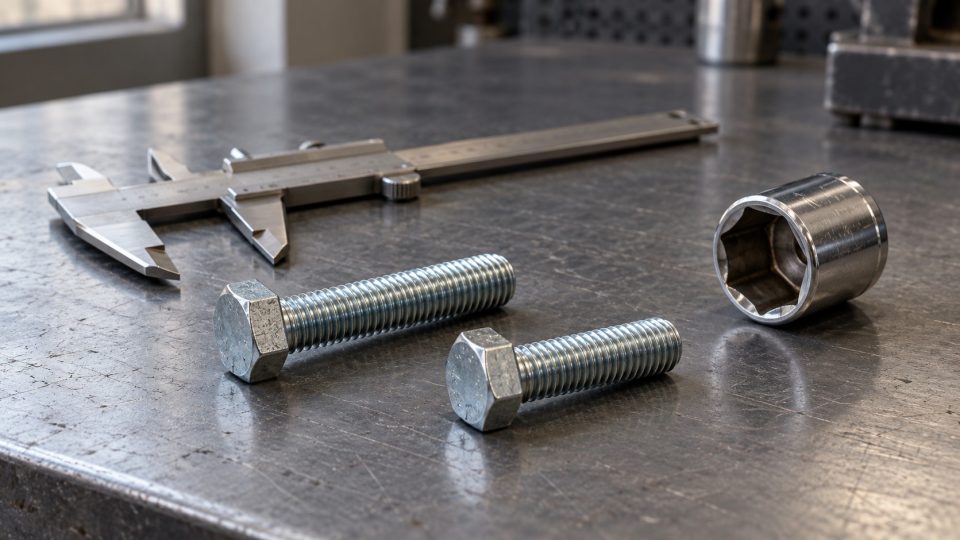
DIN 933 and ISO 4017 — which wrench and what to check before replacement?
An M10 bolt does not always require a 17 mm wrench. For DIN 933, the nominal width across flats is 17 mm, while for ISO 4017 it is 16 mm. The same thread therefore doe...
Read article · 4 min