

Bolted joint failure rarely starts with the bolt alone. The problem usually comes from a material unsuited to the operating environment, an incorrect thread or economi...
Bolted joint failure rarely starts with the bolt alone. The problem usually comes from a material unsuited to the operating environment, an incorrect thread or economising on the component holding the whole structure. Industrial stainless steel bolts must therefore be selected by operating conditions, loads and assembly requirements as well as dimensions.
In industrial practice, stainless steel is not one product. It is a group of solutions with different corrosion, mechanical and functional properties. Maintenance, production and workshops need not just rust resistance, but consistent parameters, standard compliance and rapid availability of a specific variant.
Where industrial stainless steel bolts offer advantages
Bolts made from stainless steel are used where ordinary zinc-coated steel is no longer sufficient. This includes damp environments, wash zones, installations exposed to chemicals and outdoor equipment. Many industrial plants also use stainless steel where process cleanliness and easy surface maintenance matter.
Typical uses include food processing, pharmaceuticals, chemicals, water and wastewater, ventilation, air conditioning, machine and equipment manufacturing and auxiliary structures. In these areas, corrosion resistance directly improves connection durability, reduces replacement frequency and lowers downtime risk.
This does not mean stainless steel is always best. If a joint carries very high mechanical loads in a non-aggressive environment, a bolt with a higher strength class and another protective coating may be better. Base selection on actual operating conditions, not an assumption that stainless means better.
Which stainless steel grade should you choose?
A2 and A4 are the most common designations in industrial purchasing. They are a basic starting point for stainless steel bolt selection.
A2 — a versatile solution
A2 steel is most often used in standard industrial conditions. It works well in damp environments, with occasional water contact and in many outdoor applications. It is a good choice for general assembly of machines, guards, brackets, enclosures and technical installations, provided the environment is not particularly chemically aggressive.
Its advantages are broad availability and a lower price than A4. Many procurement departments value this, especially for regular purchases in larger quantities.
A4 — for more demanding conditions
A4 is used where corrosion risk is elevated, with salt, detergents, aggressive media or frequent washing. It is a common choice for food processing, chemical and marine industries and outdoor installations in harsher conditions.
If the joint is near a washing zone, in a highly humid room or exposed to corrosive media, the extra cost of A4 is usually justified. The component cost can then be lower than subsequent replacement, disassembly and equipment downtime.
Beyond material — why property class matters
Stainless steel bolts often carry designations such as A2-70 or A4-80. The first part indicates steel grade, the second mechanical properties. For industrial users, this is practical information on the strength level to expect.
A common purchasing mistake is selecting stainless steel solely for corrosion resistance without checking working loads. The joint must transmit the forces in the machine, enclosure, bracket or structure. If the bolt resists corrosion adequately but is mechanically too weak, the problem remains.
For higher loads, check not just bolt class but also the material of the nut, washer and mating parts. The whole joint should be consistent in material and function. Mixing arbitrary components reduces assembly predictability.
How to select bolt type for a specific application
Head type and design are as important as material. Industry most often uses hexagon, socket, countersunk, cylindrical or button-head screws. Each makes sense under specific assembly conditions.
Hexagon-head bolts suit straightforward assembly and achieving the appropriate torque with a standard tool. Socket screws are convenient in restricted working space and where appearance or compact installation matters. A countersunk head is chosen when the component must be flush and a projecting head would obstruct operation.
Technical departments also need the DIN or ISO standard, thread type, threaded length and manufacturing tolerances. For consistent repair series or production, keep to one standard. This simplifies ordering, storage and later replenishment.
The operating environment determines joint durability
The biggest stainless steel bolt selection mistake is treating corrosion as one phenomenon. A dry workshop, industrial wash facility and installation exposed to salt, chlorine or aggressive chemicals each present different risks.
A2 will often suffice in damp environments. With regular washing and detergents, consider A4. For high temperatures, vibration or changing loads, stainless properties alone are insufficient. Also account for loosening, thermal expansion and thread seizure risk.
Remember galvanic corrosion. A stainless bolt mating with another metal, especially in moisture, can cause adverse electrochemical reactions. Such joints are not ruled out, but require deliberate material selection and sometimes separators or suitable washers.
Thread galling in stainless steel
Stainless steel can cause problems during bolting. Thread galling occurs particularly with fast assembly, high friction or unsuitable mating components.
This matters especially in maintenance under time pressure. An apparently correct bolt can seize on the nut while being tightened. Reduce the risk by controlling torque, thread quality, cleanliness and appropriate assembly compounds where permitted for the application.
The problem is not always a product defect. Assembly method and operating conditions often decide it. For larger batches or critical applications, standardise the bolting procedure instead of assessing the component solely by unit price.
What to check when ordering
Industrial purchasing needs speed without mistakes. Verify diameter, length, thread pitch, head type, steel grade, property class and standard. Many delays come from small discrepancies, for example full versus partial thread or differing head standards.
If the bolt will work in a specific assembly, select nuts, washers and any locking components at once. Buying one component without the full set extends assembly time and complicates material consistency. Many industrial customers therefore seek one supplier to complete the entire technical order in one process.
Standardising item codes and standards on the customer's side also helps regular purchasing. It simplifies reordering, shortens identification time and reduces the risk of different fasteners with different specifications reaching similar applications.
Industrial stainless steel bolts and total cost
Purchase price matters, but is rarely the only industrial criterion. A cheaper bolt needing earlier replacement or causing service problems increases the entire process cost. Consider assembly time, spare-part availability, inspection frequency and downtime risk.
Take a broader view when choosing. For a simple application in a mild environment, paying extra for a more resistant grade makes little sense. But under moisture, washing or chemical exposure, saving on material quickly stops being a real saving.
Suppliers such as the Neron store offer not just bolt choice but the ability to reorder other technical items quickly. A plant needs procurement that does not fragment across several suppliers and fulfilment dates.
A correctly selected stainless bolt attracts no attention in operation. That is its purpose, to retain its parameters, withstand the environment and avoid extra intervention while the production line simply runs.
Related articles
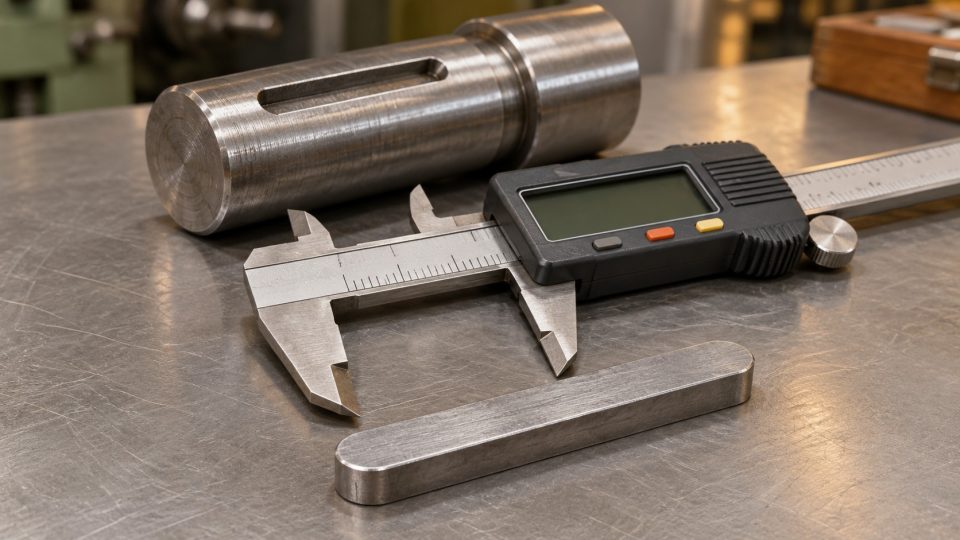
DIN 6885 parallel key — how to measure it and select a replacement?
A DIN 6885 parallel key is selected to suit the shaft and hub keyways, not solely the shaft diameter. Before purchasing, establish the width b, height h, length l, end...
Read article · 4 min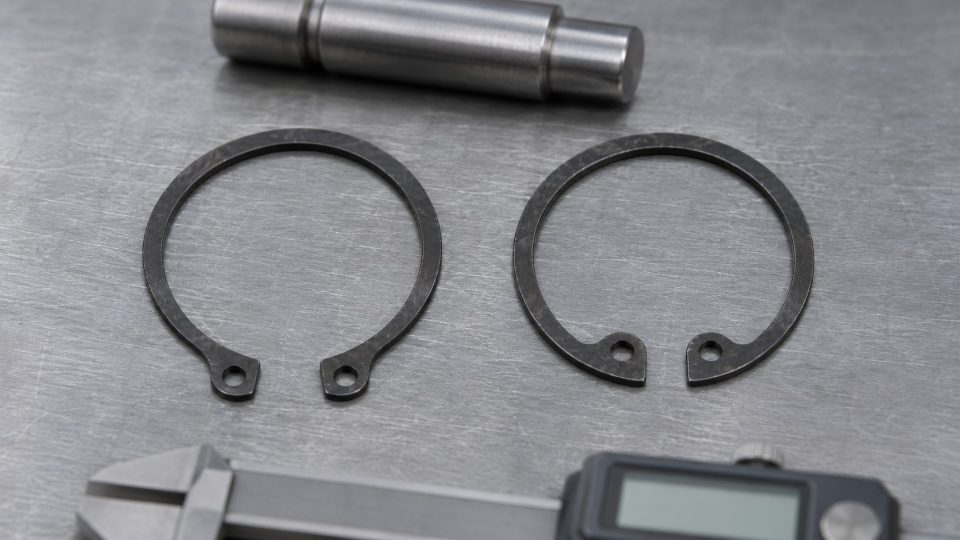
DIN 471 or DIN 472 circlip? How to select the size
DIN 471 denotes a retaining ring for a shaft, while DIN 472 denotes a ring for a bore. Before purchasing, establish the installation location, nominal shaft or bore di...
Read article · 5 min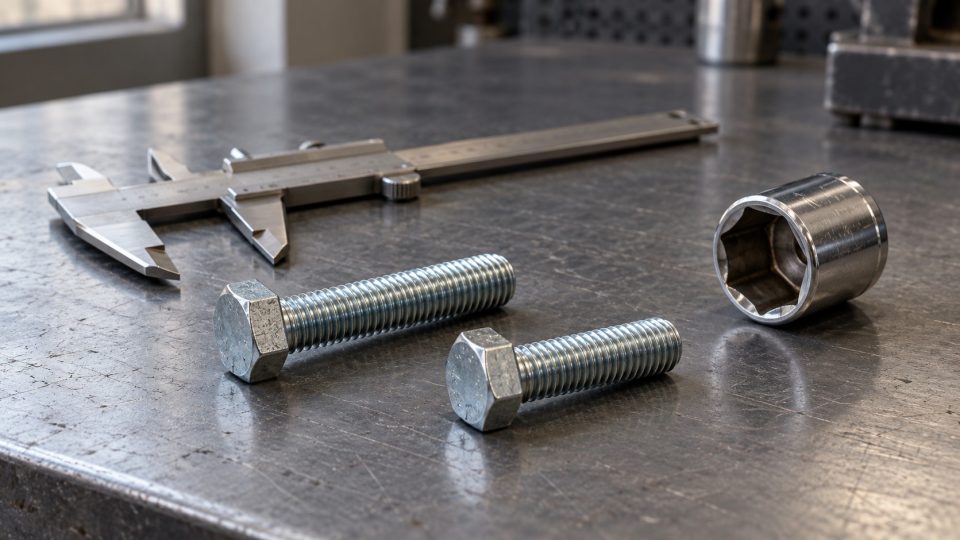
DIN 933 and ISO 4017 — which wrench and what to check before replacement?
An M10 bolt does not always require a 17 mm wrench. For DIN 933, the nominal width across flats is 17 mm, while for ISO 4017 it is 16 mm. The same thread therefore doe...
Read article · 4 min