

When purchasing parts for production and maintenance, the problem is rarely the bolt itself. Problems begin when DIN ISO fasteners are described too generally and asse...
When purchasing parts for production and maintenance, the problem is rarely the bolt itself. Problems begin when DIN ISO fasteners are described too generally and assembly reveals the wrong head, thread pitch, strength class or coating. At this point, standards stop being a formality and become a tool that shortens selection and reduces mistakes.
For technical departments, DIN and ISO form a common language between design, purchasing, stores and installation. A specific standard in the documentation makes ordering the right part easier without extra clarification. An incomplete designation creates questions that lengthen the process and increase the operational cost of the whole order.
DIN ISO fasteners — what this description means
DIN ISO refers to standardisation of dimensions, geometry, tolerances and, in many cases, performance characteristics of defined fastener groups. In practice, these are most often bolts, screws, nuts, washers, threaded rods, pins and other components used in detachable connections.
DIN is historically a German standard, long used as a basic industrial reference. ISO is an international standard. Many items now have equivalents or standards replacing older DIN designations. For users, the standard's origin matters less than whether the component meets the required geometry and operating parameters.
This matters because “M8 bolt” alone is not enough. M8 specifies thread diameter but says nothing about head type, threaded length, strength class, material or coating. A fuller description is needed to order a part fitting the existing system and operating conditions.
Where DIN and ISO standards genuinely help
In everyday industrial work, a standard organises technical selection and purchasing at once. Designers and mechanics gain predictable dimensions. Procurement can compare offers and reorder missing items quickly without risking a different next batch.
Interchangeability is the greatest benefit. A part complying with a specific standard can be selected with greater confidence even when supplier or batch changes. This is particularly important for regular maintenance purchases requiring supply continuity and consistency.
However, a standard does not solve everything. Two apparently matching components may differ in material, corrosion protection or property class. That affects joint durability, suitability for damp environments and resistance to dynamic loads.
How to read designations correctly
Incomplete descriptions cause most errors. If an enquiry gives only a trade name, selection often needs clarification. A correct description should progress from the standard to design parameters.
For a bolt, the main factors are standardised type, diameter and length, thread pitch, strength class, material and coating. Some applications also require consideration of drive type, head shape and partial or full thread.
For example, a hexagon-head bolt can have several variants that initially look similar. A specific standard in the documentation eliminates guesswork. The same applies to nuts and washers. Dimensional differences may be small but matter when matching an existing joint.
When reading designations, also check whether the company still uses older DIN numbers historically present in documentation. Many plants use mixed descriptions, some with former numbers and others with current ISO equivalents. This is not inherently wrong, but requires care when ordering.
DIN ISO fasteners and application selection
Not every standard component suits every operating environment. The standard defines the product, but purchasing should account for operating conditions. This is often where a merely correct purchase differs from a genuinely suitable one.
Steel components in common strength classes often suffice for general, workshop and machine applications. But changing loads, vibration or moisture mean dimensions and standard alone are insufficient. Material, surface protection and protection against self-loosening need checking.
Stainless steel or a suitable coating matters in corrosive environments. Strength class is crucial in highly loaded joints. For thin-walled structural components, head shape and pressure distribution may matter. Sometimes a larger washer is better, sometimes a self-locking nut, and sometimes a bolt a few millimetres longer to provide the correct number of engaged threads.
This is why ordering “by name” is unwise in practice. Checking a few extra parameters is better than revisiting the matter during machine downtime.
Common ordering mistakes
The most expensive mistakes are generally simple. First, equating matching dimensions with full product compliance. M8 x 30 does not yet mean suitability for the application. Second, omitting strength class. This may not show immediately during ordinary assembly, but the difference becomes critical under load.
The third common problem concerns coatings. Clear zinc plating, zinc flake coating, phosphating and stainless construction are not interchangeable in every application. For outdoor operation or chemical contact, surface protection should follow operating conditions, not price alone.
The fourth mistake is mixing standard designations without checking equivalents. Many DIN items have ISO equivalents, but substitution is not always automatic. Some differences are cosmetic, others affect assembly. Check geometry when the part mates with an existing recess, guard or limited space.
The fifth mistake is overlooking the entire joint assembly. The bolt alone does not solve the problem if a matching nut, appropriate washer or thread-locking product is missing. Maintenance purchasing should view a connection as an assembly, not one item code.
How to organise purchasing of standardised fasteners
For companies regularly consuming fasteners, a simple model works well, with one description standard, one indexing approach and the fullest possible data for every item. Buyers then do not need to reconstruct parameters from scratch each time.
In practice, retain the full technical name in the item record, including standardised type, size, class, material and coating. If an item is critical to continuity, add the application or assembly number. This simplifies both the initial order and reorders.
Availability of multiple product groups in one place also matters. Production rarely needs bolts alone. Washers, nuts, technical chemicals, small mounting accessories or quick-repair parts are often needed together. Procurement gains fewer scattered orders and simpler replenishment. This suits plants wanting operational ordering without unnecessarily long procedures, which is why a broad, technically organised range such as the Neron store's works well.
When to enquire before purchasing
There are situations where the standard alone is insufficient and briefly pausing is better than correcting later. This applies particularly to joints at high temperatures, in aggressive environments, under vibration or subject to specific end-customer quality requirements.
Enquire also when documentation is old or ambiguous. If a drawing has a former designation and stock contains several similar variants, a few minutes of verification generally save hours of subsequent downtime. The same applies when a substitute is to replace an original machine manufacturer's part.
Working with fasteners does not require memorising every standard. What matters is being able to read what truly defines the part and affects its behaviour in operation. A complete description and selection considering operating conditions turn the order from a risk into a smoothly completed task.
Related articles
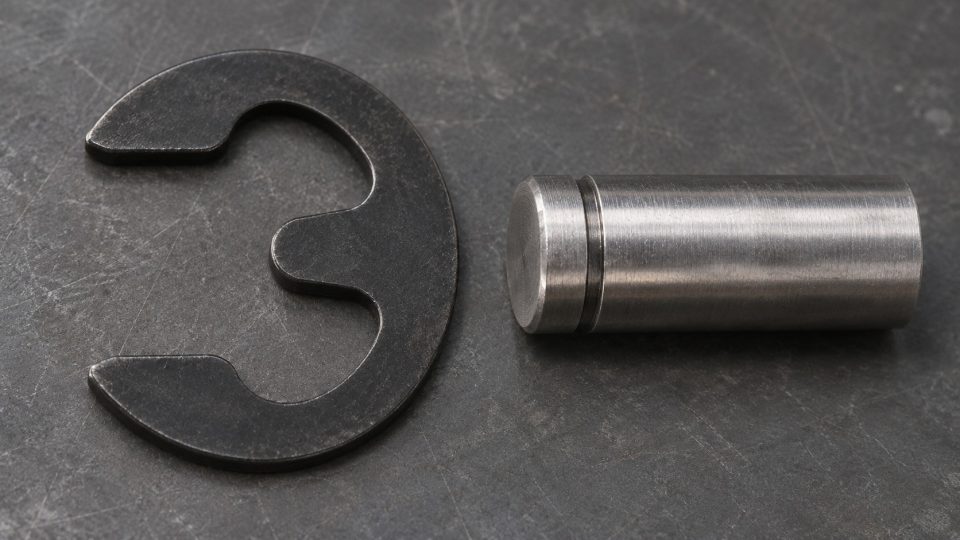
Płytka osadcza DIN 6799 — co oznacza rozmiar 8 mm?
Jeśli wymieniasz płytkę osadczą DIN 6799, sprawdź najpierw średnicę na dnie rowka. W oznaczeniu DIN 6799–8 liczba 8 odnosi się do nominalnej średnicy rowka d₂. Średnic...
Read article · 3 min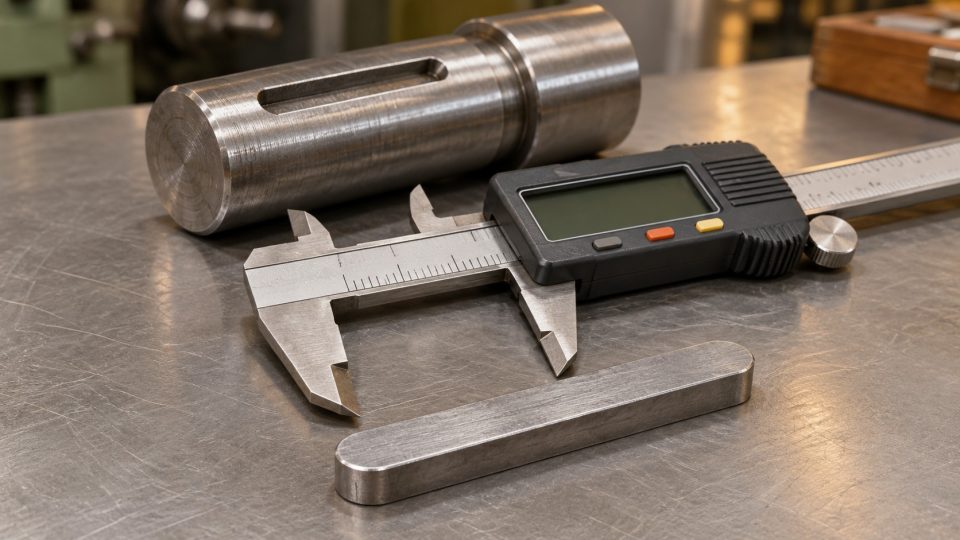
DIN 6885 parallel key — how to measure it and select a replacement?
A DIN 6885 parallel key is selected to suit the shaft and hub keyways, not solely the shaft diameter. Before purchasing, establish the width b, height h, length l, end...
Read article · 4 min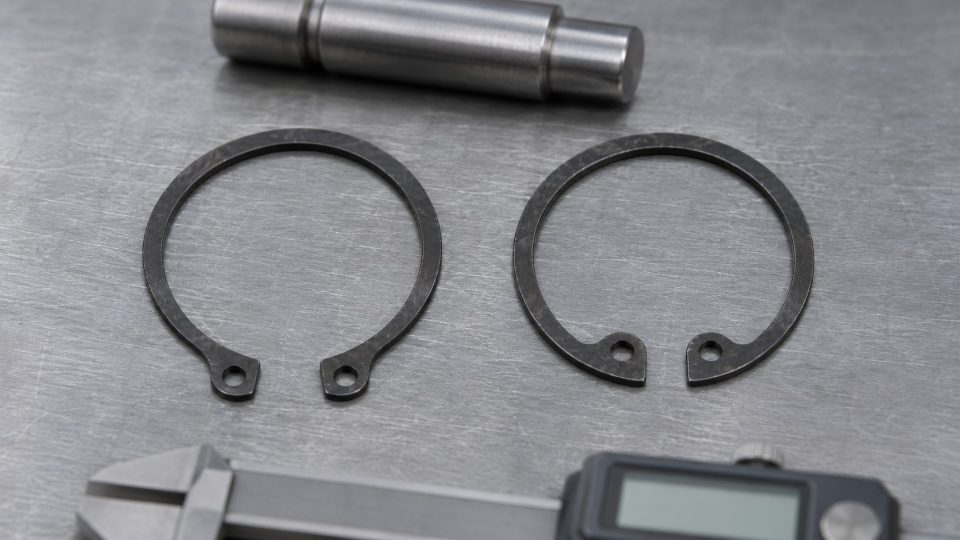
DIN 471 or DIN 472 circlip? How to select the size
DIN 471 denotes a retaining ring for a shaft, while DIN 472 denotes a ring for a bore. Before purchasing, establish the installation location, nominal shaft or bore di...
Read article · 5 min