
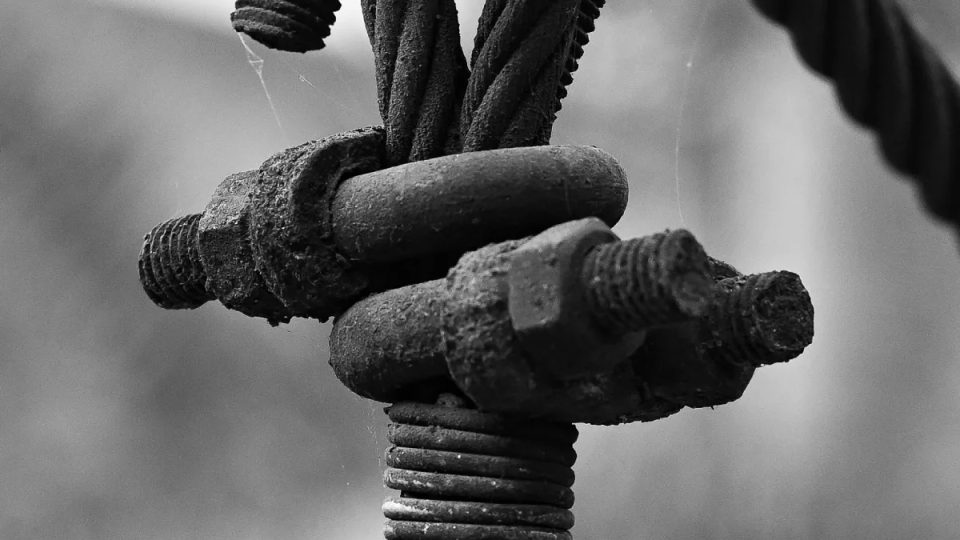
What are U-bolts? They are extremely practical and robust fasteners, also known as threaded clamps, bow clamps or simply U-shaped brackets. In the simplest terms, a st...
What are U-bolts? They are extremely practical and robust fasteners, also known as threaded clamps, bow clamps or simply U-shaped brackets. In the simplest terms, a steel rod or bent flat bar resembles the letter “U”, less often “C” or a rectangle, with threaded sections at both ends.
The main task of this unassuming component is to fasten a pipe, mast, bar or cable permanently, rigidly and safely to a wall, frame or steel section. Its well-designed construction prevents component movement and handles shocks, vibration and heavy weights ideally, in domestic installations, industry and automotive applications alike.
Contents
- How is a U-bolt constructed and how does it work in practice?
- Types of U-bolts — which model should you choose?
- Round U-bolts, standard
- Square and rectangular U-bolts
- Flat U-bolts made from flat bar
- Noise-damping U-bolts with a rubber insert
- Materials and corrosion protection
- Practical everyday applications of U-bolts
- How to read U-bolt dimensions — parameter table
- FAQ — frequently asked questions
- Choose the right U-bolt for your application
How is a U-bolt constructed and how does it work in practice?
Although a U-bolt looks unassuming, its strength lies in simple physics. Once placed around a pipe and the nuts tightened, it produces a strong clamp that prevents the secured object from moving even a millimetre. A standard mounting kit consists of four components.
- bow, main body — a steel rod bent into an arc around the pipe or section being secured,
- threaded ends — two straight arms with cut threads, usually metric, such as M6, M8 or M10, onto which nuts are screwed,
- clamping plate — a steel plate with two holes, placed under the nuts to press the component evenly against the base and avoid deforming the pipe walls,
- nuts and washers — components that tighten the assembly and secure the connection against loosening.
Using a U-bolt is highly intuitive. Pass the bow around the pipe, feed the threaded ends through holes in the bracket or base, fit the plate and firmly tighten the nuts.
Types of U-bolts — which model should you choose?
In building supply stores and wholesalers, several U-bolt variants can be found. They differ in bend shape and purpose.
Round U-bolts, standard
This is the most popular U-shaped type. It is ideally profiled for circular components such as water and drain pipes, antenna masts and smooth lines. The curved section wraps evenly around the pipe so it does not crush it at one point.
Square and rectangular U-bolts
Instead of a smooth curve, they have sharp 90 degree bends. They clamp hollow sections, timber beams or angles. They are often used to install shelving, fencing elements or car trailers.
Flat U-bolts made from flat bar
Instead of round rod, these use a wide bent steel strip. The flat surface distributes clamping force better, which matters for more delicate materials such as plastic pipes (PVC, PE) or thin-walled copper installations.
Noise-damping U-bolts with a rubber insert
They have flexible rubber, often EPDM, on the inside. This insert serves two functions. It protects the pipe surface against scratches and damps vibration and noise, such as water noise in pipes or exhaust-system vibration.
Materials and corrosion protection
Fastening durability depends largely on the U-bolt metal and operating conditions. Select the appropriate steel according to location and corrosion exposure.
- electroplated zinc-coated — a thin protective zinc layer, suitable for dry indoor spaces such as cellars, garages or heated buildings,
- hot-dip galvanised — a thick, highly durable zinc coating, ideal outdoors, for example for roof antennas, fencing or garden structures exposed to rain,
- stainless steel (A2/AISI 304) — completely resistant to rust and moisture, successfully used in bathrooms, food processing, agriculture and automotive applications,
- acid-resistant steel (A4/AISI 316) — a stainless steel variant for special tasks, unaffected by sea salt, swimming-pool chemicals or aggressive industrial fumes.
Practical everyday applications of U-bolts
Although the name sounds professional, we encounter U-bolts almost daily, often without knowing. Here is where they are indispensable.
- antenna and fibre-optic installation — attaching satellite, terrestrial antenna and LTE/5G receiver masts to balcony railings or chimneys,
- domestic installations, HVAC and plumbing — supporting central heating, drain and gas pipes, and ventilation ducts beneath ceilings or on walls,
- automotive and transport — joining vehicle exhaust components, securing roof racks and bolting axles and ladder frames in trailers,
- gardens and agriculture — building polytunnel frames, mounting mesh and fence panels, and installing irrigation systems,
- photovoltaics — safely bolting solar panel frames to the roof structure.
How to read U-bolt dimensions — parameter table
When buying a U-bolt, check the dimension description so the clamp fits the pipe precisely.
Parameter Designation What does it mean in practice? |
Parameter Designation What does it mean in practice? |
Parameter Designation What does it mean in practice? |
Parameter Designation What does it mean in practice? |
Parameter Designation What does it mean in practice? |
FAQ — frequently asked questions
What are U-bolts and where can you buy suitable versions?
These universal clamping brackets are available in most building supply stores, agricultural and automotive parts shops and installation wholesalers. For unusual dimensions, look for specialist fastener manufacturers.
How does a U-bolt differ from an ordinary worm-drive hose clamp?
A worm-drive clamp is a flexible thin metal band with a screw, used for example to seal rubber hoses on vehicle spigots. It is unsuitable for supporting weights. A U-bolt is a rigid, strong threaded rod intended for securing larger pipes and structures to walls or frames.
How do you check which U-bolt you need?
Measure the outside diameter of the pipe or section to be mounted with a calliper. The U-bolt internal diameter, or clearance, should be exactly the same or 1–2 mm larger so the curve fits freely around the component.
Choose the right U-bolt for your application
U-bolts are a simple, inexpensive and reliable solution to installation problems at home, in the garden and workshop. The wide range of sizes and protective coatings makes it easy to select a variant suited to your needs. When planning building or plumbing work, measure the pipe diameter accurately and select a robust U-bolt. What this component is and its dimensions should be verified before purchasing to avoid unnecessary corrections during assembly. For proven fasteners, explore the range at the Neron store and choose the right variant for your application.
U-bolts available from stockLooking for a U-bolt for a pipe, section or structure?
Check the available U-bolt sizes and select the right variant for your application.
Explore U-boltsRelated articles
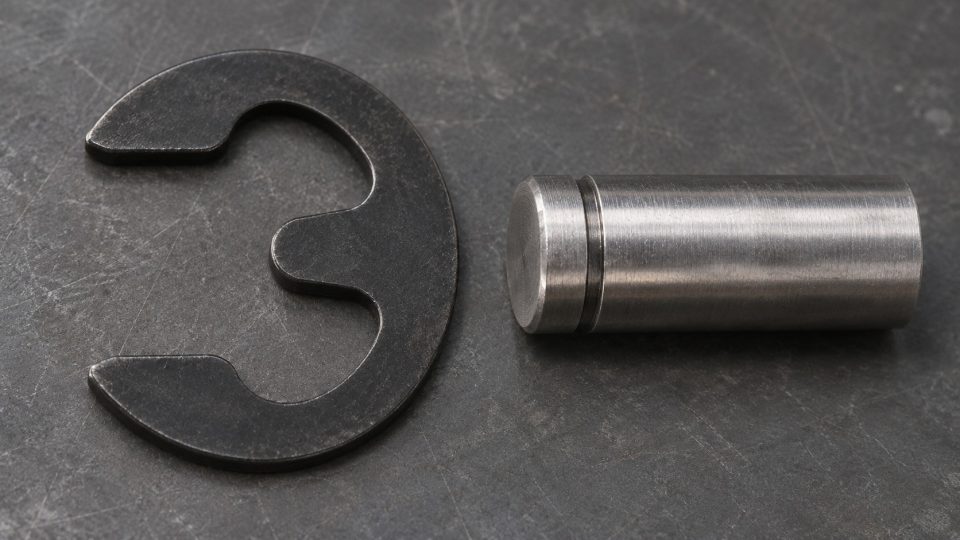
Płytka osadcza DIN 6799 — co oznacza rozmiar 8 mm?
Jeśli wymieniasz płytkę osadczą DIN 6799, sprawdź najpierw średnicę na dnie rowka. W oznaczeniu DIN 6799–8 liczba 8 odnosi się do nominalnej średnicy rowka d₂. Średnic...
Read article · 3 min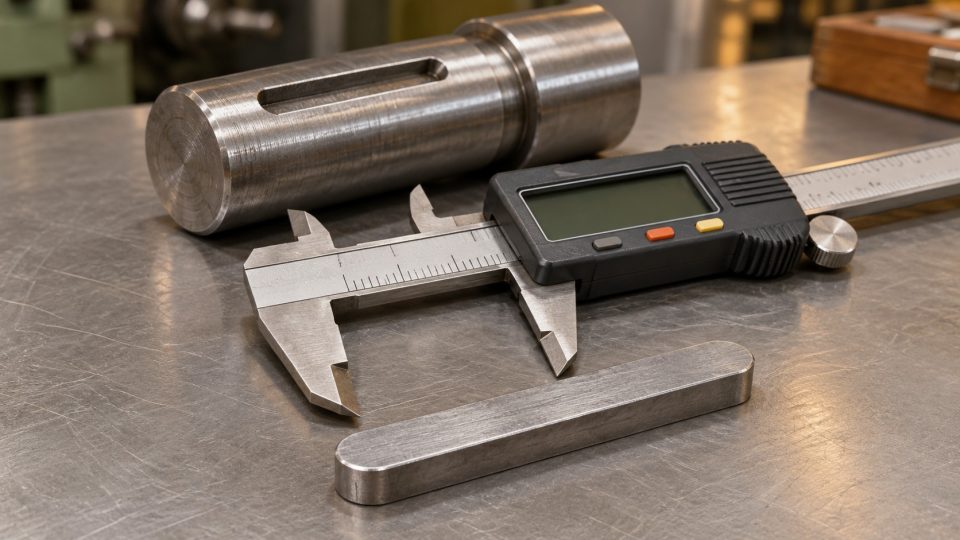
DIN 6885 parallel key — how to measure it and select a replacement?
A DIN 6885 parallel key is selected to suit the shaft and hub keyways, not solely the shaft diameter. Before purchasing, establish the width b, height h, length l, end...
Read article · 4 min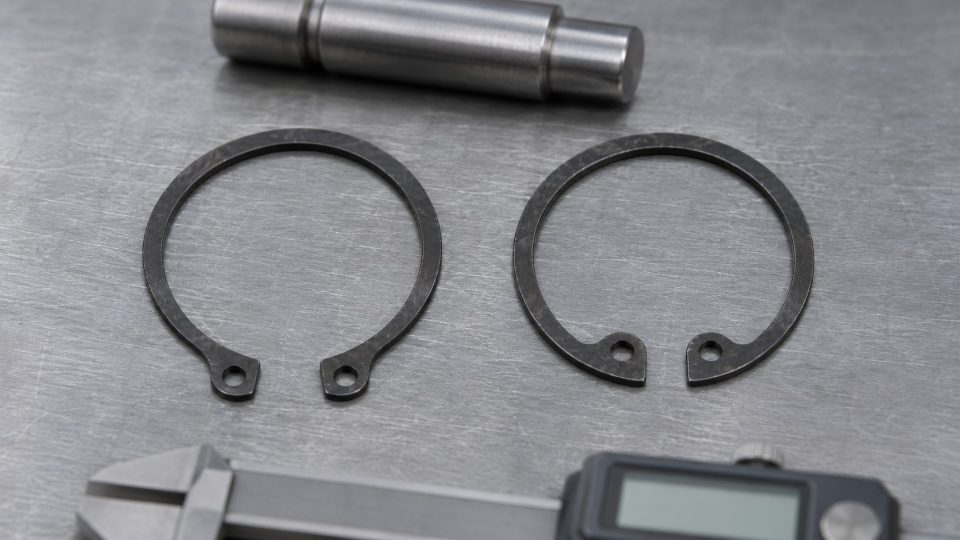
DIN 471 or DIN 472 circlip? How to select the size
DIN 471 denotes a retaining ring for a shaft, while DIN 472 denotes a ring for a bore. Before purchasing, establish the installation location, nominal shaft or bore di...
Read article · 5 min