
Modern industrial and DIY structures value solutions combining durability, precision and easy assembly. Technologies providing robust connections without welding or ac...
Modern industrial and DIY structures value solutions combining durability, precision and easy assembly. Technologies providing robust connections without welding or access to both sides of the material are increasingly used. Some components allow quick, clean, repeatable installation regardless of base material type or wall thickness.
These systems serve many industries, from automotive and machine manufacturing to furniture, small workshop projects and renovation. They enable highly durable structures while retaining appearance and connection mobility. Below we examine one of the most practical solutions and explain what rivet nuts are, how they work, where they are used and what can replace them.
Contents
- How do they work and what exactly are they?
- Rivet nut applications
- The most popular types and materials
- What can replace a rivet nut?
- Where to buy rivet nuts
- Summary
How do they work and what exactly are they?
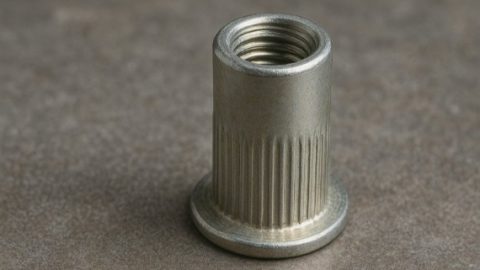
Many people first encountering the term rivet nutsask what exactly they are. Simply put, these fasteners create a durable threaded fixing point in material inaccessible from the other side. Combining rivet and nut functions, they provide a robust screw seat in thin-walled or delicate components.
Rivet nuts are internally threaded sleeves with a flange resting on the material surface. Installation fixes the sleeve permanently, creating a secure, stable point for bolting other components. Their simple but well-considered design provides consistent, precise and durable connections.
Rivet nut applications
Rivet nuts are used wherever thin structural components need a durable, secure connection. They create robust threads where rear access is unavailable, making them highly versatile. Common applications include
- Automotive industry — mounting body components, panels, handles, brackets, guards and trim.
- Machine and equipment construction — fastening guards, service doors, enclosures, control panels and frames.
- Aluminium and steel structures — joining profiles, frames, shelving and technical enclosures.
- Furniture industry — mounting steel elements, frames and fittings in workshop and office furniture.
- Energy and industrial installations — mounting equipment, electrical cabinets, ventilation ducts and sensor housings.
- Workshop and DIY projects — repairs, alterations, light structures and brackets at home.
Rivet nuts suit both series production and individual projects. They provide a neat, repeatable connection that can easily be unbolted and reused if needed. They are particularly valued where installation speed matters alongside durability.
The most popular types and materials
Many variants differ in shape, material and purpose. Selecting the right type greatly affects joint durability and installation ease, so learn the basic versions before purchasing.
Classification by shape and construction
- Flat flange — most common, providing stable surface support and even force distribution.
- Countersunk flange — ideal for chamfered holes or where appearance and a smooth joint surface matter.
- Hexagonal — prevent rotation in the hole, used mainly in soft materials or where greater torque transmission is required.
- Reduced flange — for restricted mounting space.
- Closed end — protect the thread against dirt, moisture and corrosion, for environments exposed to external factors.
Classification by material
- Aluminium — light and corrosion-resistant, suitable for aluminium structures and weight-sensitive applications.
- Zinc-coated steel — versatile and strong, intended for most technical applications.
- Stainless steel (A2, A4) — used in humid and corrosion-exposed environments, for example food processing and marine applications.
- Brass — good electrical conductivity and corrosion resistance, used in electrical and decorative installations, among others.
Classification by thread type
Rivet nuts come in many metric thread sizes, most often M3 to M12, allowing selection by bolt type and expected load. Selection depends on material type, thickness, operating conditions and appearance requirements. The right type guarantees joint durability, convenient installation and long component life.
What can replace a rivet nut?
Although rivet nuts are among the most convenient threaded connections in thin materials, other solutions may suit some situations. The question of what to use instead of a rivet nutmost often arises when a setting tool cannot be used or no thread is needed. Conventional bolts and nuts are the most common alternative where both sides are freely accessible.
Self-tapping screws also work well in simpler structures, forming their own thread without extra fasteners. Blind rivets provide strong but single-use connections where durability matters. Steel structures often use fusion or resistance welding when strength and leak-tightness are priorities.
Where to buy rivet nuts
People starting work with these components often wonder where to buy rivet nutsto be confident in quality. The source depends on project scale and required quantity. Technical stores and fastener wholesalers with broad size, material and type ranges, from aluminium to stainless steel, are the most reliable choice. They also offer professional advice on model selection by material or wall thickness. If speed matters, check online stores, where proven suppliers are readily found.
Summary
Rivet nuts are practical, versatile fasteners for durable, precise connections in thin or hard-to-access materials. Combining the advantages of conventional rivets and nuts, they enable fast installation without welding or special rear-side mountings. Their broad applications, many types and simple installation make them a frequent choice in industry, manufacturing, workshops and DIY. If you want high-quality rivet nutsbut are wondering where to buy them, explore the Neron store range. There you will find a broad selection for different needs and applications.
Need rivet nuts?
Buy them in our store!Related articles
Wood screws vs metal screws – understand the differences and avoid installation mistakes
What are the main differences when comparing wood screws with metal screws, and how do they affect correct installation? The main difference lies in thread geometry an...
Read article · 7 min
Everything worth knowing about grease nipples
Modern machinery and equipment depend not only on their design but, above all, on how they are maintained. Correct servicing of lubrication points is one of the most i...
Read article · 6 min
Kluber greases – why does choosing the right lubricant matter?
In precision engineering and heavy industry, there is no room for half measures. Every machine, whatever its purpose, needs proper protection to operate reliably for m...
Read article · 5 min