
Lubrication is one aspect of keeping machinery and equipment in working order. Its quality determines how smoothly mechanisms operate, as well as their durability and ...
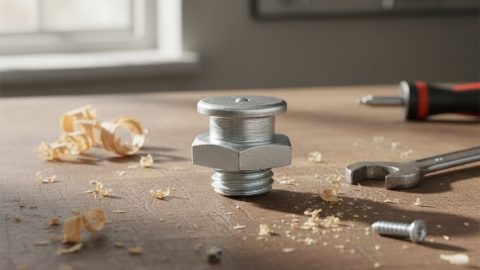
Lubrication is one aspect of keeping machinery and equipment in working order. Its quality determines how smoothly mechanisms operate, as well as their durability and wear resistance. To make this process quick, convenient and repeatable, dedicated lubrication points allow lubricant to be supplied without dismantling the assembly. The most popular and practical solution is the grease nipple. Although simple in construction, it has a significant effect on operating economy. It reduces downtime, simplifies maintenance and lowers the risk of failures caused by insufficient lubrication. Today, it is difficult to find an industrial machine, vehicle or piece of working equipment without such points. In this article, we explain what exactly a grease nipple is, the types available, how it works, how to select one and where it is used.
Contents
- What is a grease nipple and how does it work?
- Types of grease nipples
- How to choose the right grease nipple
- Common applications of grease nipples
- Summary
What is a grease nipple and how does it work?
A grease nipple is a small component fitted at points requiring regular grease application. Despite its simplicity, it plays an important role in machine maintenance systems. Many people encountering this component for the first time wonder what a grease nippleis for. What it is becomes clear when we look at its construction and operation. Inside is a spring-loaded ball that opens under grease-gun pressure and then closes automatically, protecting the interior from contamination.
This design allows grease to be injected accurately, cleanly and safely into bearings, joints and other moving components, delivering it exactly where required. Once we understand how a grease nipple works, it is easy to see why lubrication is quicker and more effective than traditional methods: there is no risk of grease flowing back and no need to dismantle components. This mechanism helps even heavily used machines operate longer and more reliably, because their mechanical components remain properly protected against wear.
Types of grease nipples
Now that we know what a grease nipple is, we can examine the different types, since their construction and mounting determine where they work best. The variants differ in shape, thread type and material, allowing them to be precisely matched to machine operating conditions.
Classification by design
Depending on access to the lubrication point and the equipment design, different grease nipple forms make correct grease application easier under specific conditions:- Straight grease nipples – the most common type, selected where the lubrication point is easily accessible and requires no additional access aids. Their simple design makes them highly versatile and suitable for most standard machinery and equipment applications.
- Angled grease nipples – available in 45° and 90° versions and used when the lubrication point is difficult to reach. The angled design makes connecting a grease gun easier when machine components restrict access to a conventional straight nipple.
- Tapered grease nipples – have a distinctive thread or body shape that provides a particularly tight and stable fit in the mounting hole. They work well in higher-pressure systems or where exceptionally precise grease delivery is needed.
Classification by thread
Different machines use different thread standards, so correct matching is crucial to a leak-tight and durable connection:
- Metric threads – the most common standard in European equipment. Sizes such as M6, M8 and M10 are widespread and easy to match, making this thread type dominant in most machines.
- Imperial threads – found mainly in equipment imported from the USA or the UK. They require precise matching because they are not compatible with metric threads.
- Tapered threads (R and G) – their design allows the connection to seal itself as it is screwed in, making them an excellent choice for higher-pressure systems and locations where leak-tightness is particularly important.
Classification by material
The material affects durability, resistance to environmental conditions and overall service life. Selection should depend on the load level and the machine's operating conditions. The most common materials are:
- Zinc-plated steel – the most widely used material, providing good resistance to surface corrosion and a favourable price-to-quality ratio. Ideal for standard operating conditions.
- Stainless steel – recommended for more demanding environments exposed to moisture, chemicals or intensive use. Offers high durability and corrosion resistance.
- Brass – less common, but highly stable and corrosion-resistant. Suitable for specific designs where conventional steel would not be resistant enough.
How to choose the right grease nipple
Choosing the right grease nipple is important for effective, leak-tight and convenient lubrication. In practice, the key is matching it to the machine design, operating conditions and the tool used to supply grease. An unsuitable nipple may obstruct access to the lubrication point, cause leaks or even accelerate component wear. The main factors to consider are:
- Thread – must match the machine's mounting hole exactly, otherwise the connection will not be leak-tight.
- Shape – a straight nipple suits easily accessible locations, while an angled nipple suits harder-to-reach points.
- Material – zinc-plated steel is sufficient for standard conditions, while stainless steel is better for damp environments or contact with chemicals.
The final choice should also take account of grease-gun handling. If the tool's coupler has limited mobility, an angled nipple will be more practical. For machines subject to intensive use or contamination, choose more durable, corrosion-resistant versions.
Common applications of grease nipples
Grease nipples are used wherever moving components need regular grease supply. They are found in bearings, joints, hinges and anywhere friction could accelerate part wear. Their design allows quick lubrication without dismantling assemblies, which is particularly important in heavily used equipment or difficult operating conditions.
In practice, grease nipples are found in agricultural and construction machinery as well as industrial and workshop equipment. They are used in vehicles, production lines, transport trolleys and even simple everyday mechanisms. Whatever the equipment, they perform the same role: ensuring smooth operation and protecting critical points against excessive wear.
Summary
Despite their small size, grease nipples play an important role in keeping machines in good condition. They make grease application quick and convenient, simplifying maintenance and supporting reliable equipment operation. A correctly selected model protects mechanical components from excessive wear and contributes to long-term, trouble-free service.
Looking for the right model?
Explore our range!Related articles
Wood screws vs metal screws – understand the differences and avoid installation mistakes
What are the main differences when comparing wood screws with metal screws, and how do they affect correct installation? The main difference lies in thread geometry an...
Read article · 7 min
Everything worth knowing about grease nipples
Modern machinery and equipment depend not only on their design but, above all, on how they are maintained. Correct servicing of lubrication points is one of the most i...
Read article · 6 min
Kluber greases – why does choosing the right lubricant matter?
In precision engineering and heavy industry, there is no room for half measures. Every machine, whatever its purpose, needs proper protection to operate reliably for m...
Read article · 5 min