
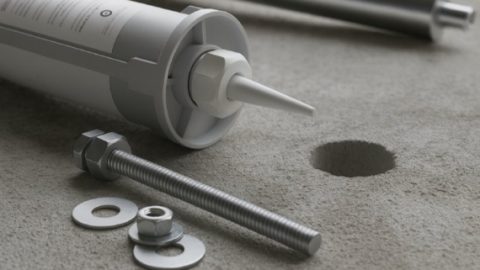
Some construction components are often invisible yet fundamental to structural durability and safety. Anchors are special fasteners securing components in bases such a...
Some construction components are often invisible yet fundamental to structural durability and safety. Anchors are special fasteners securing components in bases such as concrete, brick or stone. They enable secure fixing of railings, columns, steel structures, machines and even household shelves. Anchors transfer loads from the attached component to the base, guaranteeing stability.
Depending on manufacturing technology and base material, they work by mechanical expansion or chemical bonding. Correct selection and installation concern both strength and safety. Unsuitable or incorrectly fitted components can cause serious structural damage. This article examines anchor types, operating principles and selection.
Contents
- Anchor types
- How anchors work
- Selecting the right anchor
- Anchor installation
- Standards and certifications
- Modern solutions and trends
- Summary
Anchor types
Many anchor types differ in operating principle, material and purpose. The correct type affects fastening strength. The most common anchors and brief descriptions follow.
- Mechanical anchor, expansion, sleeve or wedge — expands in the hole when the bolt is tightened. Suitable for securing structural components to dense, undamaged concrete.
- Steel anchor — very strong and compression-resistant, often used in industry and heavy steel structures. Good where fast installation and immediate load capacity matter.
- What is a chemical anchor? This fastening uses a special resin which cures into an exceptionally durable bond with the base. It works very well in cracked concrete, solid brick and irregular substrates where a mechanical anchor could cause cracking.
- Frame and light-duty anchors — for smaller loads, mainly mounting profiles, brackets, façade components and installation hardware.
- Ground anchors — used in civil engineering to stabilise structures, slopes and retaining walls. They provide high load capacity even in difficult ground conditions.
How anchors work
Understanding how a concrete anchor works or one for another substrate allows correct selection for the application. Each transfers load from the component to the foundation to keep the structure stable and safe. Mechanical anchors develop holding force by expanding a sleeve or wedge inside the hole.
Chemical anchors work differently, using resin that cures into a very durable bond. This allows use even in cracked concrete or near edges without cracking risk. Steel anchors provide exceptional compression resistance and are indispensable for heavy industrial structures. Whatever the type, effectiveness depends on hole preparation, base cleanliness and precise installation according to manufacturer recommendations.
Selecting the right anchor
Choosing the correct anchor is important to structural safety. Many people ask which concrete anchor will be best. The answer depends on component weight and operating conditions. Light installations need frame or expansion anchors, while greater loads are better served by steel or chemical anchors.
Cracked concrete or vibration-exposed locations benefit from chemical anchors that cause no stresses and guarantee durable bonding. High-capacity steel anchors are indispensable in industrial and steel structures. Selection must include material, installation method, embedment depth and environmental conditions such as moisture and temperature.
Anchor installation
Correct installation determines anchor load capacity and durability. Each type requires a different setting method, though general principles are similar. Clean the surface thoroughly and prepare a hole of the correct diameter and depth. A mechanical anchor needs its bolt tightened after insertion to expand and lock it. Many installers using chemical anchors for concrete wonder how to use themto achieve maximum strength.
Thoroughly remove dust from the hole and inject resin with a special dispenser before placing the threaded rod. After cure, the compound forms a very strong, vibration-resistant connection. Follow manufacturer recommendations for curing time, torque and permissible loads for every anchor type.
Standards and certifications
Every construction anchor should meet the relevant technical standards and have certifications confirming quality and safety. This matters especially for heavy loads requiring reliable fixing. Many installers ask which is better, chemical or steel anchors? The answer often depends on project documentation and standard requirements.
ETA-approved or CE-certified anchors guarantee testing for load capacity and environmental resistance. Good products also include detailed installation instructions and technical data for selecting by base material. Certified anchors ensure structural safety and simplify technical acceptance and compliance with current building regulations.
Modern solutions and trends
Construction technology has given modern anchors improving load capacity, durability and weather resistance. Manufacturers introduce innovations making installation easier and fastening safer. Many investors ask which chemical concrete anchor is best for modern projects. The answer depends on design requirements and load type. Interesting anchoring-system trends include
- High-performance anchors — increased load capacity for difficult conditions, such as cracked concrete or underwater installations.
- Modern chemical resins — vinyl ester and epoxy formulations guaranteeing fast cure and high temperature resistance.
- Torque-controlled installation systems — ensure precise anchor setting and eliminate installation error risk.
- Environmentally friendly anchors — made from lower-carbon-footprint materials and environmentally friendly resin ingredients.
- Digital anchor selection tools — online applications and calculators helping select the right type for a specific application and load.
Summary
Anchors are essential in every robust structure. Correct selection and installation guarantee durable, safe fastening. For many people, asking what a chemical anchor isis the starting point for learning modern anchoring methods. This high-strength solution is ideal where traditional mechanical anchors are insufficient. Whatever the type, choose proven, certified products and follow manufacturer recommendations carefully.
Choose modern, proven solutions
Explore our store range!Related articles
Wood screws vs metal screws – understand the differences and avoid installation mistakes
What are the main differences when comparing wood screws with metal screws, and how do they affect correct installation? The main difference lies in thread geometry an...
Read article · 7 min
Everything worth knowing about grease nipples
Modern machinery and equipment depend not only on their design but, above all, on how they are maintained. Correct servicing of lubrication points is one of the most i...
Read article · 6 min
Kluber greases – why does choosing the right lubricant matter?
In precision engineering and heavy industry, there is no room for half measures. Every machine, whatever its purpose, needs proper protection to operate reliably for m...
Read article · 5 min