
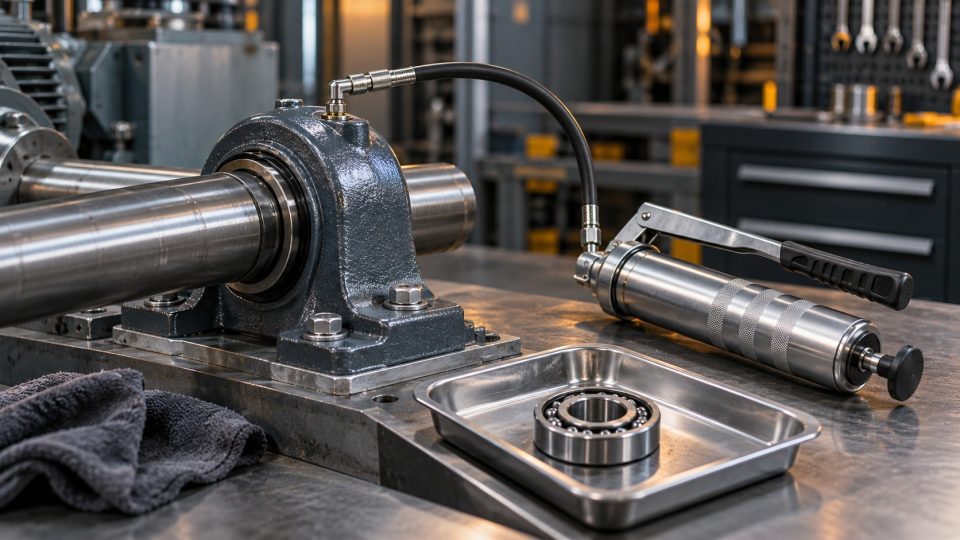
How should bearings be lubricated? Correct bearing lubrication has three tasks: separate mating surfaces with an oil film, reduce friction and wear, and protect the in...
How should bearings be lubricated?
Correct bearing lubrication has three tasks: separate mating surfaces with an oil film, reduce friction and wear, and protect the interior against corrosion and contamination. Buying good grease alone is insufficient. Bearing-arrangement life also depends on base oil viscosity, thickener type, lubricant quantity, delivery method, relubrication interval and maintenance cleanliness. Both insufficient and excessive grease can cause a temperature rise and premature failure.
Selection must be based on machine data, not a universal recommendation such as two pumps every month. Required information includes bearing type and dimensions, rotational speed, load, ring temperature, shaft orientation, environmental conditions and housing sealing. Factory-sealed bearings and BRL high-temperature designs require particular care because arbitrarily adding incompatible grease may worsen operating conditions rather than improve them.
Key information at a glance
Topic Practical rule Most common risk |
Topic Practical rule Most common risk |
Topic Practical rule Most common risk |
Topic Practical rule Most common risk |
Topic Practical rule Most common risk |
Topic Practical rule Most common risk |
Why does a bearing need lubrication?
In a rolling bearing, balls or rollers load the raceways over a small area. Despite an apparently smooth finish, metal has microscopic irregularities. A suitable oil layer limits their direct contact. Grease carries the oil: the thickener holds it near the working zone, and base oil is released in the quantity needed to form a film.
Grease also reduces sliding friction in the cage, protects steel against moisture and may help seal the housing. It should not completely block the free space in a high-speed arrangement, however. During startup, rolling elements distribute the lubricant and push excess out of the active zone. If the grease has nowhere to move, it is worked intensively, increasing resisting torque and temperature.
Incorrect lubrication produces symptoms resembling other faults: noise, vibration, heating, leakage or a change in lubricant colour. Before relubricating, rule out excessive interference, misalignment, damaged seals, contamination and overload. Adding grease to a poorly mounted bearing does not eliminate the cause.
Grease or oil — which should be chosen?
Grease is the most common solution because it stays in the bearing arrangement, simplifies sealing and reduces maintenance. It suits many motors, fans, pumps, rollers and conveying assemblies. Oil is beneficial at very high speeds, where heat must be removed, contaminants carried away in circulation or several components lubricated by a common system.
The decision depends on machine design. Do not replace oil with grease merely to stop a leak, or dilute grease with oil without an engineered design. An oil system requires the correct level, flow, filtration and venting. A grease system requires a controlled quantity, passages delivering fresh lubricant to the right place and an escape route for old grease.
Operating conditions Most common selection approach What to check before deciding |
Operating conditions Most common selection approach What to check before deciding |
Operating conditions Most common selection approach What to check before deciding |
Operating conditions Most common selection approach What to check before deciding |
Operating conditions Most common selection approach What to check before deciding |
Operating conditions Most common selection approach What to check before deciding |
How should bearing grease be selected?
Base oil viscosity
Viscosity should enable a film to form at operating temperature. High temperature and high speed reduce the viscosity needed at startup, but the film must still support the load. Excessively viscous oil increases resistance in a fast machine, while overly thin oil may fail to separate surfaces in a slow, heavily loaded arrangement. Select for the temperature actually reached by the bearing, not storage temperature.
Thickener and consistency
The thickener determines grease structure, mechanical stability and behaviour in contact with water and temperature. Lithium and lithium-complex greases are common. Special applications also use polyurea and calcium-complex thickeners and PFPE-based products, among others. NLGI grade describes consistency, not quality. Very soft lubricant flows more easily, while harder lubricant stays in certain housings better. Selection depends on design and delivery method.
Additives and material compatibility
Antiwear, antioxidant, anticorrosion and EP additives can improve operation under specific conditions. However, not every package suits every speed, temperature, cage or seal. Molybdenum-disulphide grease may be justified in certain slow, loaded mechanisms, but should not automatically be chosen for a high-speed precision bearing.
Grease compatibility
Before changing the product, check base oil, thickener and additive compatibility. Two individually suitable formulations may soften, harden, separate or lose temperature resistance when mixed. If compatibility is unconfirmed, controlled replacement is safer: remove the old lubricant according to the machine instructions, clean the arrangement and fill with the intended product.
How much grease should be applied to a bearing?
The exact quantity depends on the free space in the bearing and housing, speed and sealing method. During initial mounting, grease should cover the rolling elements, raceways and cage, but some free space is left in a fast machine for lubricant movement. Complete filling may be justified in very slow mechanisms where grease also blocks contaminant ingress, but requires design confirmation.
Manufacturers estimate relubrication quantities using relationships based on bearing outside diameter and width. The result is not a universal initial fill or permission to fill the entire housing. Consider lubrication-passage position, discharge path, existing lubricant quantity and operating conditions. Use grams rather than grease-gun strokes. One pump can deliver different volumes depending on tool model, temperature and back pressure.
After filling or relubricating, monitor temperature and vibration. A brief, moderate temperature rise may accompany lubricant distribution, but a prolonged upward trend is an alarm signal. Do not compensate by adding more grease without diagnosis.
How to relubricate a bearing correctly, step by step
- Identify the bearing and grease. Check the designation, lubrication chart, previously used product and recommended quantity.
- Assess machine condition. Record temperature, noise, vibration and any leakage before starting work.
- Clean the lubrication point. Remove dust and old grease from the nipple to avoid forcing contaminants inside.
- Confirm the discharge path. If the housing has a drain plug, follow the machine instructions so that old lubricant can escape.
- Apply the measured quantity. Lubricate slowly in small doses, monitoring back pressure and the bearing arrangement's behaviour.
- Do not rupture seals with pressure. A sudden rise in resistance may mean a blocked passage or overfilling.
- Start and observe. Monitor temperature, noise and leakage during stabilisation.
- Record the action. Record the date, product, quantity, machine condition and person performing the maintenance.
Many housings are relubricated during operation because rotating components distribute fresh lubricant. This is not a universal safety rule for every machine, however. If nipple access is within a moving zone, lubrication may require shutdown, energy isolation or an automatic dispenser. Manufacturer instructions and the plant safety procedure take precedence.
How should the relubrication interval be set?
The interval depends on bearing type and dimensions, speed, load, temperature, shaft orientation, vibration, impacts and contamination. The catalogue starting point usually assumes defined reference conditions. Higher temperature, a vertical shaft, strong vibration, moisture or dust may require correction. An assembly with several bearings often uses the interval appropriate to its most demanding point.
Relubrication should occur before the existing grease loses its properties. Excessively long intervals lead to lubricant starvation, oil oxidation and corrosion. Excessively short intervals with an unchanged dose gradually overfill the housing. Good practice combines scheduling with monitoring trends in temperature, vibration, ultrasound, power consumption and the appearance of discharged lubricant.
An automatic dispenser helps deliver small quantities regularly, but requires output setting, checks that the line is clear and allowance for ambient temperature. Long lines and thick grease increase resistance. Automation does not remove the need to check that lubricant actually reaches the bearing.
Effects of temperature, speed, load and environment
Factor Effect on lubrication Practical action |
Factor Effect on lubrication Practical action |
Factor Effect on lubrication Practical action |
Factor Effect on lubrication Practical action |
Factor Effect on lubrication Practical action |
Factor Effect on lubrication Practical action |
Factor Effect on lubrication Practical action |
Standard bearing, C3/C4 clearance or high-temperature design?
A standard bearing suffices when ring temperature, speed and load remain within catalogue parameters and grease and seals retain their serviceability for the required period. Elevated housing temperature does not automatically require a special version. Measure it and determine whether the heat source is the production process, friction, excess grease or a mounting error.
C3 and C4 mean internal clearance greater than normal. Greater clearance can compensate for an interference fit and expansion of the inner ring, which may be hotter than the outer ring. It is not a grease grade or a guarantee of temperature resistance. C3 is sometimes chosen in motors and fans, while C4 is used where an even greater clearance reduction is expected. Selection should follow an operating-clearance calculation because excessive clearance can increase noise, vibration and shaft movement.
A high-temperature bearing is needed when ordinary steel, seals or grease do not provide the required life and increased clearance alone does not solve the problem. A complete version is then selected: material, surface treatment, clearance, shields and factory lubrication. Check permissible speed at the same time, as very hot designs may have much lower limits than a standard bearing of the same dimensions.
How should BRL high-temperature bearings be lubricated?
The BRL ENC150, ENC200, ENC250, ENC270C, ENC270CL and ENC330 series are supplied with lubrication matched to their thermal class. They should not be treated as an empty housing that can be filled with any high-temperature grease. Lubricant changes, relubrication or cleaning require confirmation for the specific designation and operating conditions.
BRL series Factory lubrication solution and design Maintenance conclusion |
BRL series Factory lubrication solution and design Maintenance conclusion |
BRL series Factory lubrication solution and design Maintenance conclusion |
BRL series Factory lubrication solution and design Maintenance conclusion |
BRL series Factory lubrication solution and design Maintenance conclusion |
BRL series Factory lubrication solution and design Maintenance conclusion |
In BRL documentation, the version abbreviated as ENC270 appears as ENC270C, alongside ENC270CL. The different letters are not cosmetic: they indicate different lubrication and speed capabilities. The higher the nominal temperature, the more important speed restrictions, expansion control and avoiding lubricant contamination become.
Common bearing lubrication errors
- Applying grease without measuring the quantity. Grease-gun strokes are not a reliable unit unless the tool has been calibrated.
- Overfilling the housing. Excess grease increases resistance, temperature and the risk of seal damage.
- Mixing unknown products. Colour cannot establish chemical compatibility or parameters.
- Dirty grease nipple. A single abrasive particle forced into the arrangement can initiate raceway damage.
- Relubricating in response to every high temperature. The cause may already be excess grease, lack of clearance or misalignment.
- Overlooking discharge. Fresh lubricant has no space if old grease remains trapped in a full housing.
- The same interval for every machine. Temperature, speed and contamination significantly change grease life.
- Unauthorised opening of sealed bearings. It can damage the seal and introduce dirt.
Symptoms of incorrect lubrication
Insufficient lubricant often causes increased high-frequency noise, unstable temperature and accelerated raceway wear. Excess may cause a rapid temperature rise after maintenance, grease being forced through seals and increased power consumption. Dark grease does not always mean failure because it may contain additives or oxidation products, but a metallic sheen, water, hard lumps or an overheated smell require analysis.
Assessment should combine several signals. A single temperature reading does not reveal whether the problem is grease, load or mounting. A trend combined with vibration and ultrasound measurements and lubricant inspection provides the most information. If temperature rises rapidly or metallic noise appears, stop the machine according to procedure and inspect the bearing arrangement.
FAQ — bearing lubrication
1. How often should bearings be lubricated?
There is no single interval. It depends on bearing type and dimensions, speed, load, temperature, horizontal or vertical shaft orientation, vibration and contamination. Follow manufacturer recommendations and adjust the schedule based on operating trends.
2. Can the entire housing be filled with grease?
In high-speed applications, complete filling usually increases churning and temperature. It may be suitable for some very slow, heavily contaminated mechanisms, but only after design confirmation.
3. How much grease does one grease-gun stroke deliver?
That depends on the tool, stroke, lubricant temperature and back pressure. Calibrate the grease gun by weighing the amount delivered through a defined number of full strokes. The bearing dose is best recorded in grams.
4. Can greases of the same colour be mixed?
No. Colour does not confirm compatibility. Compare base oil, thickener, NLGI grade, additives and temperature range. If data is unavailable, perform a controlled change.
5. Do 2RS bearings need relubrication?
Many 2RS bearings are factory-lubricated for their intended operating period and have no relubrication system. Exceptions exist, so check the documentation for the specific bearing and housing. Do not pierce the seal with a grease gun.
6. Why does a bearing heat up after relubrication?
Fresh grease is being distributed and may temporarily increase resistance. If temperature fails to stabilise or rises rapidly, possible causes include overfilling, a blocked outlet, an excessively viscous product, lack of clearance or mechanical damage.
7. Do C3 and C4 mean high-temperature grease?
No. C3 and C4 denote increased internal clearance. They can compensate for interference and thermal expansion but do not specify grease type, sealing or material resistance.
8. Can any grease rated for 270°C be added to a BRL ENC270 bearing?
No. ENC270C and ENC270CL use different lubrication solutions. Before relubricating, confirm the full designation, product compatibility and BRL recommendations for the specific size.
9. When is oil lubrication better?
Oil is considered for very high speeds, heat removal, contaminant filtration or common lubrication of several components, among other uses. The system must provide the correct level or flow and cleanliness.
10. Does more grease always protect better against dust?
No. Excess can overheat the bearing and push out the seal. Dust protection should rely on correct sealing, clean maintenance and controlled renewal of the grease barrier.
Related categories
Select a bearing and lubrication solution with NERON
Before purchase, prepare the bearing designation, continuous and maximum temperatures, speed, load and a description of moisture and contamination. Explore the bearing range in the NERON shop, compare ball bearings and choose high-temperature bearings for hot bearing arrangements. For BRL series, provide the full ENC designation and operating conditions to select a version with the correct clearance and factory lubrication.
Summary
Correct bearing lubrication requires product, quantity and interval to be selected as one system. A standard bearing works well when grease, seals, temperature, speed and load remain within catalogue limits. C3 or C4 compensates for reduced operating clearance but does not replace high-temperature grease. Conditions exceeding a standard design's capabilities may require a complete BRL ENC150, ENC200, ENC250, ENC270C, ENC270CL or ENC330 bearing. The safest maintenance relies on cleanliness, measured quantities, confirmed compatibility and trend observation rather than arbitrarily adding further doses.
Related articles
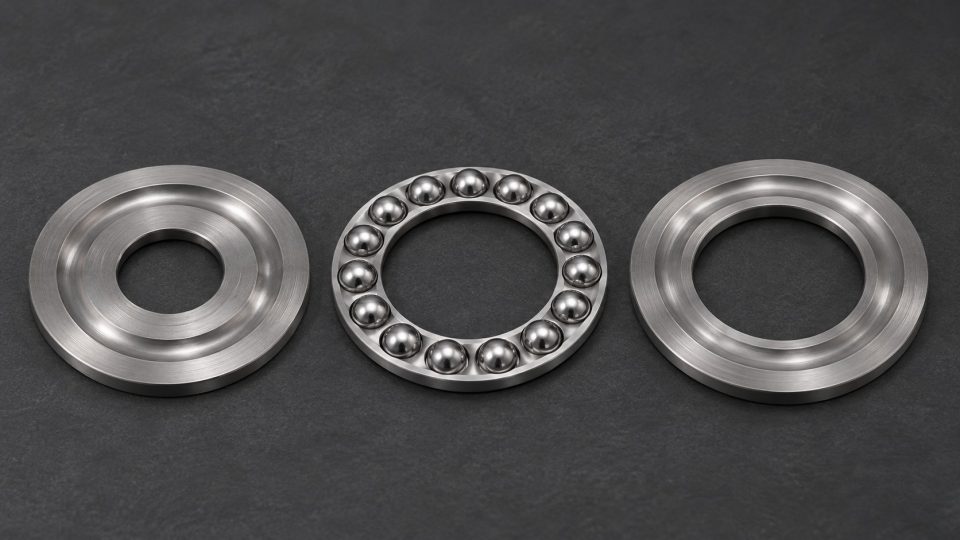
Łożysko oporowe 51105 czy 51205? Co zmierzyć przed wymianą
Okładka pokazuje rozłożone części poglądowo. Wymiary odczytaj z karty danego wykonania. Łożysko 51105 ma wymiary 25 × 42 × 11 mm, a 51205 ma 25 × 47 × 15 mm. Oba mają ...
Read article · 3 min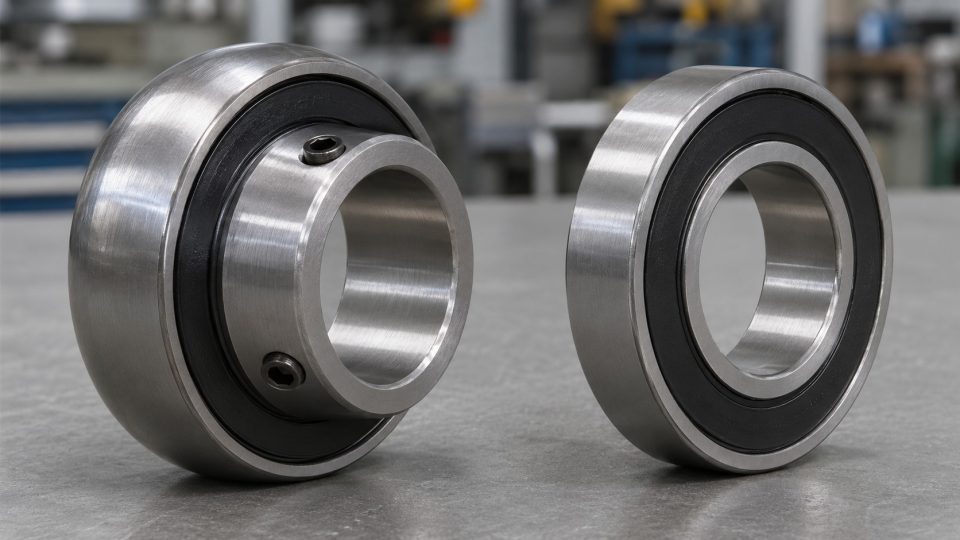
UC205 a 6205 — dlaczego wymiary 25 i 52 mm nie wystarczą?
UC205 i 6205 nie są bezpośrednimi zamiennikami tylko dlatego, że mają otwór 25 mm i średnicę zewnętrzną 52 mm. Przy zakupie sprawdź również kształt powierzchni zewnętr...
Read article · 3 min
causes of premature bearing wear
Causes of premature bearing wear – mounting errors, lubrication and contamination The most common causes of premature bearing wear are inadequate lubrication, lubrican...
Read article · 12 min