
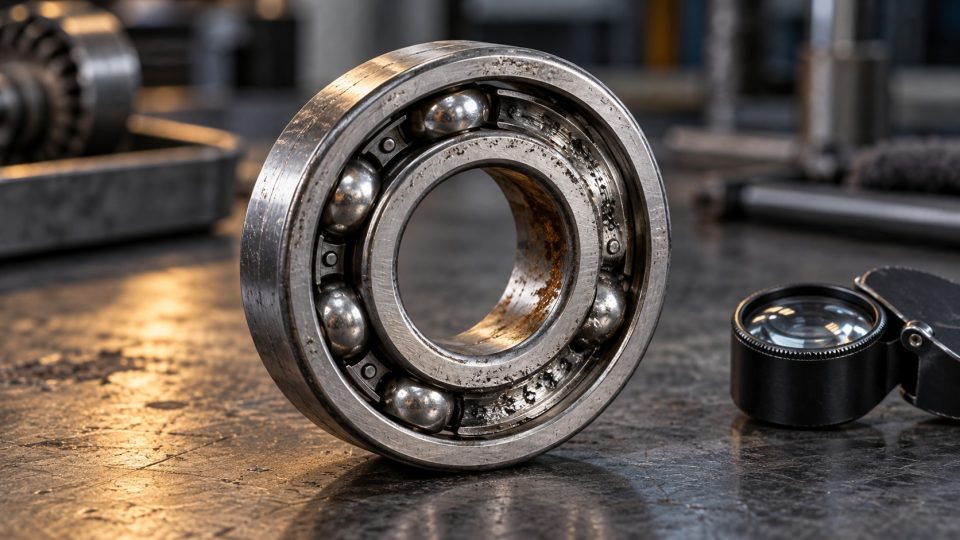
How can bearing damage be recognised? Bearing damage rarely begins with the machine suddenly stopping. Warning signs usually appear first: a new kind of noise, a gradu...
How can bearing damage be recognised?
Bearing damage rarely begins with the machine suddenly stopping. Warning signs usually appear first: a new kind of noise, a gradual rise in vibration, higher housing temperature, increased shaft clearance, changed power consumption or lubricant contamination. Recognising these symptoms early allows downtime to be planned, shaft and seat damage to be limited, and secondary gearbox, seal or coupling failure to be avoided.
However, one symptom is not enough for a reliable diagnosis. A hot housing may result from excess grease, insufficient clearance, seal friction or overload. Noise may come from a raceway, cage, contamination, loose mounting or another drive component. Bearing condition should therefore be assessed using trends and several independent sources of information. After disassembly, preserve the marks needed to determine the root cause.
Key information at a glance
Symptom Possible meaning What to check first Recommended response |
Symptom Possible meaning What to check first Recommended response |
Symptom Possible meaning What to check first Recommended response |
Symptom Possible meaning What to check first Recommended response |
Symptom Possible meaning What to check first Recommended response |
Symptom Possible meaning What to check first Recommended response |
Symptoms of a damaged bearing during operation
Bearing noise
A serviceable bearing does not always run silently. More important than loudness alone is the change relative to the machine's normal condition. Rough noise may indicate contamination or an unsuitable lubricant film. Regular knocking synchronised with rotation may be associated with a local indentation or raceway spalling. A metallic squeal may result from sliding, lubricant starvation, excessive preload or friction between mating components.
Cage noise, seal noise and loose mounting can sound like raceway damage. Sound also travels through the shaft and body, so the loudest location is not always the source. Listening to a housing with a mechanical stethoscope or ultrasound probe should be done at a repeatable point, at the same speed and load. A sudden loud sound accompanied by temperature or vibration requires a prompt response.
Temperature rise
After startup, bearing temperature usually rises and then stabilises. A change in the profile is an alarm signal: a faster rise than before, failure to stabilise or a new, higher level under the same conditions. Do not base a decision on one universal temperature, because the permissible level depends on bearing type, grease, load, speed, seal material and measurement location.
Overheating may result from too much grease being intensively churned in the free space, or from insufficient grease and film breakdown. Other causes include an excessively tight fit, insufficient operating clearance, excessive preload, misalignment, overload and seal friction. Analyse temperature together with vibration, motor current and lubrication history.
Increased shaft clearance and runout
Increasing radial or axial clearance may result from raceway and rolling-element wear, loose mounting, ring creep on the journal or seat degradation. Machine symptoms may include reduced accuracy, coupling vibration, seal leakage, an uneven rotor gap or a change in product quality.
Do not eliminate clearance by arbitrarily tightening a nut without checking the design. In adjustable bearings, this changes preload and may cause overheating. Determine whether movement occurs inside the bearing, at the fit, in the housing mounting or in another joint.
Symptoms before failure
At an advanced stage, sudden surges in vibration and temperature, irregular impacts, intense metallic noise, an overheated-grease smell, smoke, dark lubricant leakage, visible metal chips and increased drive torque may appear. The machine may lose speed, draw more current or intermittently bind.
Such signals must not be used to justify running until the end of the shift. Cage disintegration or a locked bearing can destroy the shaft, housing and neighbouring components, while a rotating ring can rapidly wear away the fit surface. The shutdown decision should account for personnel safety, speed, system energy and the consequences of locking.
What can be seen after disassembly?
Raceway damage
Flaking, also called chipping or spalling, creates material losses on the raceway or rolling elements. It can be a natural result of fatigue at the end of service life, but premature spalling often indicates overload, contamination, incorrect fit, insufficient clearance, alignment errors or unsuitable lubrication. Indentations spaced at the rolling-element pitch may result from mounting blows or vibration during standstill.
Scratches and grooves indicate contaminants being dragged through the contact, sliding or incorrect mounting. A dull, polished or smeared surface may indicate an excessively thin lubricant film and asperity contact. Regular transverse washboard-like stripes may result from electrical current flow. The load pattern on the raceway is particularly valuable: it shows whether loading matched the assumptions and whether the rings were correctly positioned.
Corrosion and fretting
Moisture corrosion occurs when water or an aggressive medium reaches steel surfaces. Stains, pitting and rust are visible, while oxide particles accelerate further wear. Sources may include condensation during standstill, pressure washing, ineffective sealing, contaminated grease or incorrect storage.
Fretting develops on fit surfaces because of very small relative movements. It often leaves a reddish-brown or black deposit. False Brinell marks, by contrast, appear on the raceways of a stationary bearing exposed to vibration. The depressions correspond to ball or roller spacing. This problem occurs in standby machines, during transport and in equipment standing beside operating vibration sources.
Discolouration and grease condition
Brown, blue or black discolouration may indicate elevated temperature, but it must be assessed together with grease and surface condition. Dark, hard or burnt grease indicates oxidation and overheating. A watery consistency, milky colour, sand grains and metal chips indicate contamination.
Before washing the bearing, take grease samples from different locations and document their colour, smell and position. Immediate cleaning removes marks that may reveal the contamination entry path, temperature or wear zone.
Bearing vibration diagnostics
Vibration diagnostics can detect defects before they become clearly audible. A sensor measures vibration acceleration, velocity or displacement at a fixed point on the housing. Tracking trends at similar speed, load and temperature provides the greatest value. A single measurement without a baseline can confirm a serious problem, but makes its development rate harder to assess.
Damage to the outer ring, inner ring, rolling elements and cage generates characteristic frequencies dependent on bearing geometry and rotational speed. Early micro-impacts are high-frequency and are clearly revealed by envelope analysis. As a defect develops, vibration energy rises, harmonics and sidebands appear, and the spectrum may become broadband in the late stage.
Method What it detects Advantage Limitation |
Method What it detects Advantage Limitation |
Method What it detects Advantage Limitation |
Method What it detects Advantage Limitation |
Method What it detects Advantage Limitation |
Method What it detects Advantage Limitation |
Interpret results together with the design, number of teeth, variable speed and other vibration sources. A loose housing, misalignment, pump cavitation or damaged coupling may mask or amplify the bearing signal. Speed-related analysis is useful for variable-speed machines, while critical equipment benefits from continuous monitoring with thresholds based on the baseline condition.
Incorrect lubrication as a cause of failure
Lubricant separates the rolling surfaces, dissipates heat and protects against corrosion. Insufficient viscosity, too little grease, an extended relubrication interval or grease delivery outside the working zone cause film breakdown. Dulling, micropitting, smearing and overheating may appear on the raceways.
Excess grease is also harmful. The rolling elements churn it intensively, increasing resisting torque and temperature, and grease may be forced into the seal. Mixing incompatible products may change consistency and oil-release capability. When changing grease, check base oil and thickener compatibility, not just the NLGI grade.
The relubrication interval depends on speed, temperature, bearing size and type, shaft orientation, vibration and contamination. Apply the dose through a clear passage and ensure that old grease can escape. If temperature rises rapidly after relubrication, do not automatically add another dose.
Mounting errors that reduce life
- Transmitting force through rolling elements. Driving the inner ring in through the outer ring, or vice versa, causes raceway indentations.
- Striking with a steel hammer. Risks include chipping, cracks, cage deformation and local damage.
- Skewed seating. Skewing during pressing scratches surfaces, damages shoulders and causes misalignment.
- Incorrect fit. Too loose a fit promotes creep and fretting, while too tight a fit reduces clearance and may stretch and crack a ring.
- Dirty workstation. Hard particles leave indentations that later initiate spalling.
- Overheating during mounting. An open flame and uncontrolled temperature can damage steel, grease and seals.
- Incorrect adjustment of adjustable bearings. Excessive clearance impairs guidance, while excessive preload increases temperature.
- Failure to check the shaft and seat. A new bearing installed on a worn surface quickly suffers the same failure.
Most common causes of bearing damage
Cause Typical marks Symptoms during operation Preventive action |
Cause Typical marks Symptoms during operation Preventive action |
Cause Typical marks Symptoms during operation Preventive action |
Cause Typical marks Symptoms during operation Preventive action |
Cause Typical marks Symptoms during operation Preventive action |
Cause Typical marks Symptoms during operation Preventive action |
Cause Typical marks Symptoms during operation Preventive action |
Cause Typical marks Symptoms during operation Preventive action |
Cause Typical marks Symptoms during operation Preventive action |
Cause Typical marks Symptoms during operation Preventive action |
Several causes often act simultaneously. A leak admits water that degrades the grease, impaired lubrication raises temperature, and higher temperature accelerates grease and seal ageing. Effective repair must break the entire chain rather than being limited to bearing replacement.
How to safely determine the cause of failure
- Record conditions before shutdown: speed, load, temperature, noise, vibration, time since lubrication and recent work.
- Mark housing and ring positions and the direction of rotation so that marks can later be related to loading.
- Take a grease or oil sample before cleaning and secure it in a clean container.
- Check tightening torques, fits, journal, seat, seals and lubrication-passage flow.
- Disassemble without creating new indentations or scratches that could be mistaken for the original damage.
- Photograph every surface before washing and lay out parts in disassembly order.
- Compare the load pattern, damage type and measurement data with machine conditions.
- For a critical application, send the bearing for specialist analysis and retain the other components of the bearing arrangement.
Replacing a product without analysis often leads to another failure after a similar time. If an excessively tight journal was the cause, for example, the next bearing will also lose operating clearance. If shaft current is the problem, the new raceway will develop micropitting again. Failure documentation is therefore an investment in reliability rather than a formality.
How can bearing life be extended?
- Select the correct type and load rating. Account for radial, axial and impact loads, speed, temperature and required life.
- Check clearance and fit. Selection should produce the correct operating clearance after mounting and warming up.
- Ensure correct alignment. Check the shaft, housing, coupling and deflection under load.
- Use clean mounting practices. Use suitable sleeves, a press or an induction heater, and do not transmit force through the rolling elements.
- Select the lubricant. Base oil viscosity, thickener, additives and temperature range must suit the application.
- Set the quantity and schedule. Relubrication should follow calculations, conditions and monitoring, rather than a fixed calendar alone.
- Protect against water and dust. Check seals, venting, filtration and washing procedures.
- Monitor trends. Regularly measure vibration, temperature, noise, current consumption and grease condition under the same conditions.
- Respond to small changes. Early correction of lubrication, alignment or loose mounting is less expensive than shaft repair.
- Analyse every premature failure. Determine the root cause and check whether corrective actions actually changed the trend.
FAQ – bearing damage
What does a damaged bearing sound like?
It may rumble, knock, squeal or produce an irregular metallic sound. The noise type depends on the defect, speed, load and design. The crucial factor is a change from normal sound, confirmed by vibration measurement.
Is a hot bearing always damaged?
No. Temperature also rises with excess grease, heavy load, seal friction or incorrect fit. A new trend, rapid rise, failure to stabilise or exceeding lubricant and bearing-arrangement component limits are alarm signals.
Does increased clearance mean replacement is necessary?
First locate the clearance and compare the measurement with the requirements. Movement may originate inside the bearing, at a worn journal, in a loose housing or in mounting. Significant, increasing clearance accompanied by vibration usually requires prompt intervention.
How can damage be detected without disassembly?
Methods include vibration and envelope analysis, ultrasound, temperature measurement, listening, oil or grease analysis and power-consumption monitoring. Combining methods and analysing trends gives the best result.
What do metal chips in grease mean?
They may come from wear of raceways, cage, rings or mating surfaces. Take a sample, check particle quantity and type, and assess the bearing and seals. Further relubrication without diagnosis may conceal the evidence.
Can you drive or operate equipment with a noisy bearing?
Remaining time to failure cannot safely be determined by sound alone. If noise is new, increasing or accompanied by temperature, clearance or vibration, the equipment should be assessed. Shutdown is necessary where there is a risk of locking.
Why does a new bearing fail shortly after mounting?
Common causes are incorrect fit, misalignment, contamination, damage during pressing, incorrect clearance, a wrong grease dose or failure to eliminate the previous cause. Being new does not protect the product from a fault in the bearing arrangement.
How can electrical-current damage be recognised?
Microcraters and regular washboard-like stripes may be visible on the raceways. Increasing howling and vibration appear in the machine. Confirmation requires inspection under magnification and assessment of current flow through the shaft.
Can bearing corrosion be removed so the bearing can remain in use?
Pitting on raceways changes contact geometry and initiates fatigue, so cleaning does not restore the original surface. The decision depends on the location and extent of corrosion, but an operating bearing with a damaged raceway usually requires replacement.
How often should bearings be inspected?
Frequency depends on machine criticality, damage development rate, conditions and measurement capabilities. Critical machines are monitored continuously or frequently, while others follow a plan based on risk and previous trends.
Need a new bearing or help with selection?
If diagnostics confirm wear, record the full designation, dimensions, seal type, clearance class and operating conditions before purchase. Explore the NERON bearing range. If in doubt, send the sales department photographs of the markings and a machine description — this will help select the correct replacement rather than an arbitrary substitute based on dimensions alone.
Summary
The most common signs of bearing damage are changed noise, rising temperature and vibration, increased clearance, metal chips in grease and deteriorating shaft guidance. None is completely conclusive, so diagnosis should combine observation, measurements, operating data and inspection after disassembly.
Most premature problems are associated with lubrication, contamination, water, fit, misalignment and mounting errors. Early trend monitoring helps plan replacement, but a lasting solution requires eliminating the root cause. Correct selection, clean mounting, controlled grease quantity and regular diagnostics significantly improve the chances of achieving the bearing's full life.
Related categories
- Bearings
- Ball bearings
- Spherical roller bearings
- Cylindrical roller bearings
- Tapered roller bearings
Related articles
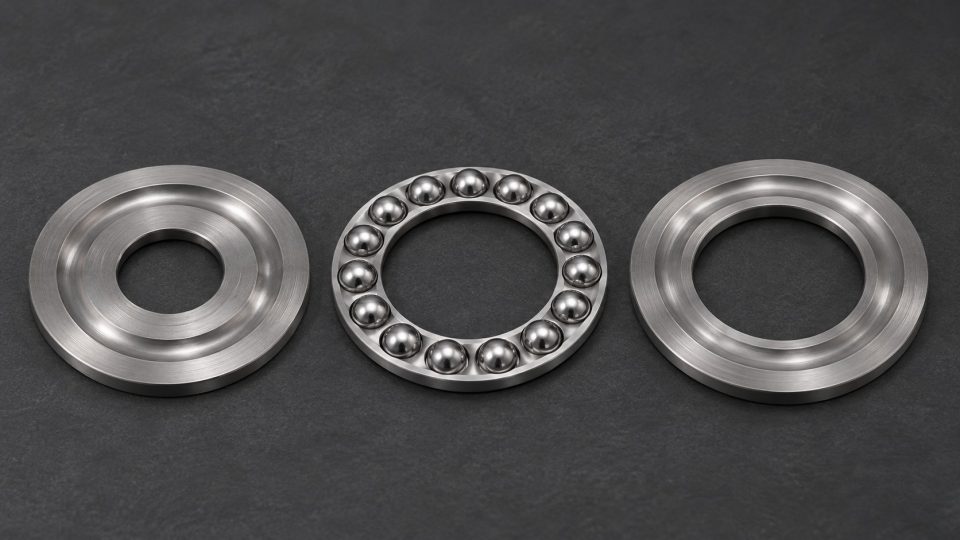
Łożysko oporowe 51105 czy 51205? Co zmierzyć przed wymianą
Okładka pokazuje rozłożone części poglądowo. Wymiary odczytaj z karty danego wykonania. Łożysko 51105 ma wymiary 25 × 42 × 11 mm, a 51205 ma 25 × 47 × 15 mm. Oba mają ...
Read article · 3 min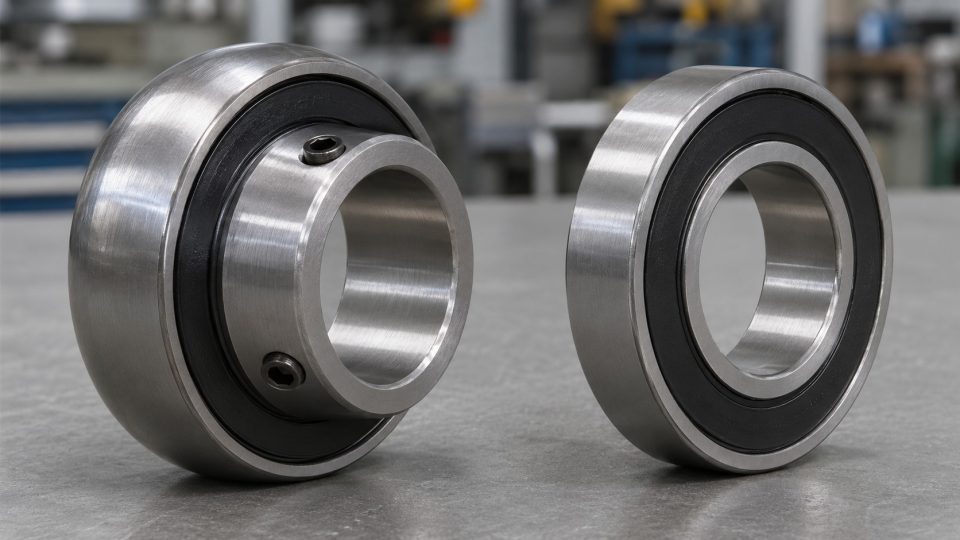
UC205 a 6205 — dlaczego wymiary 25 i 52 mm nie wystarczą?
UC205 i 6205 nie są bezpośrednimi zamiennikami tylko dlatego, że mają otwór 25 mm i średnicę zewnętrzną 52 mm. Przy zakupie sprawdź również kształt powierzchni zewnętr...
Read article · 3 min
causes of premature bearing wear
Causes of premature bearing wear – mounting errors, lubrication and contamination The most common causes of premature bearing wear are inadequate lubrication, lubrican...
Read article · 12 min