

Bolted joint problems generally begin after a few days of operation rather than during assembly. Vibration, changing loads and start-stop cycles gradually loosen the c...
Bolted joint problems generally begin after a few days of operation rather than during assembly. Vibration, changing loads and start-stop cycles gradually loosen the connection. Self-locking nut applications therefore matter wherever joint stability, reduced downtime and predictable machine operation are important.
A self-locking nut is not an ordinary nut with another name. It increases resistance to unscrewing and maintains clamping despite vibration and dynamic loads. In practice, this means fewer failures from loose joints and less risk of secondary damage to mating components.
Where self-locking nuts have practical applications
They are most often found in systems that move or transmit vibration, including production machines, industrial fans, conveyors, drives, motor housings, power units, steel structures and automotive applications. In these locations, a conventional hexagon nut may lose joint preload over time even if tightened correctly.
In maintenance, self-locking nuts are used where retightening would be costly or difficult, such as enclosed areas, guards, restricted-access mounting points and assemblies operating without lengthy service stops. If one loose bolt can cause misalignment, noise or further damage, a self-locking nut has a practical justification.
Workshops and series assembly also choose this solution for consistency. The assembly team need not create extra locking with spring washers or chemical products each time, provided the design specifies the particular self-locking nut type and correct tightening torque.
How a self-locking nut works
The mechanism depends on construction. The best-known version has a polyamide insert, often called a nyloc type. The insert increases friction between bolt and nut threads. Screwing it on produces noticeable resistance, hindering vibration-induced self-loosening.
The second group is all-metal self-locking nuts. Without a plastic insert, they achieve locking through deformation of part of the thread or special body geometry. This works better at higher temperatures, around oils and greases and where plastic could lose properties faster.
The distinction has practical importance. A polyamide-insert nut works well in many standard applications but is not universal. Near heat sources or in aggressive environments, an all-metal version can be safer.
Self-locking nuts — applications by operating conditions
Selection should not begin with thread size alone. First establish the joint's operating conditions. Four factors decide in practice, vibration, temperature, disassembly frequency and load class.
If a joint mainly experiences moderate vibration and temperatures are not high, a polyamide-insert nut generally works. It is common in light machinery, enclosures, auxiliary mountings and assemblies under standard service conditions.
For elevated temperatures near an engine, exhaust, process furnace or high thermal-load installation, consider all-metal self-locking nuts. The same applies to chemical contact, process oils or frequent washing with technical cleaning products.
Service applications should also account for assembly-disassembly cycles. Insert nuts can lose locking effectiveness after repeated use. If the assembly is regularly dismantled, check manufacturer recommendations and assess whether a metal nut or another thread-locking method would be more economical.
When self-locking is better than an ordinary nut
The simplest answer is when unscrewing cannot be left to chance. In a static joint without vibration or significant load changes, a standard nut may suffice. Overengineering solely because a solution sounds more professional makes little sense.
Problems occur with dynamic operation. Even small vibrations repeated over hundreds of hours can reduce clamping force. A self-locking nut adds mechanical protection and reduces self-loosening risk. This matters especially where one failed mounting point triggers further failures.
However, the nut alone does not fix assembly errors. Incorrect bolt pitch, dirt, poor surface contact or arbitrary torque reduce locking effectiveness. Joint quality depends on the entire system, not one fastener alone.
What to check during selection
First check thread compatibility, diameter, pitch, tolerance and manufacturing standard. Next check strength class matched to the bolt. A weak nut will be the weak point in a heavily loaded joint even if its locking function works correctly.
Next consider material and coating. Zinc-coated steel suits many typical industrial applications, but damp, outdoor or corrosion-exposed environments need consideration of stainless steel or other resistant solutions. Avoid arbitrary material combinations that can accelerate galvanic corrosion.
Nut height and available mounting space also matter. Every millimetre counts in compact assemblies, especially when using a spanner in restricted space. Service access matters too. An effectively secured connection that cannot be dismantled efficiently is not always best.
Common mistakes when using self-locking nuts
The most common mistake is treating them as universal. Not every self-locking nut suits high temperatures, frequent disassembly or heavy shock loads. For demanding conditions, start with application parameters before selecting the product type.
A second mistake is repeatedly using a component that the relevant standard requires to be replaced. Saving on one nut may be illusory if it leads to a loose guard, disturbed adjustment or emergency stoppage.
The third mistake is ignoring torque. Too little fails to provide clamping force, too much can damage the thread, bolt or nut. Responsible joints should always follow technical documentation and manufacturer parameters instead of an installer's feel.
Where this solution works best
In industrial production, self-locking nuts are standard in assemblies exposed to vibration and repeated motion, including conveyor lines, drives, geared motors, assembly stations and guards. In automotive applications they secure suspension, auxiliary systems and body components, always according to manufacturer specifications.
Machine construction also uses them to reduce periodic servicing. Correct selection can extend joint inspection intervals, but does not replace scheduled checks. It is a risk-reduction tool, not exemption from technical supervision.
In workshops, servicing and routine repairs, their benefit is straightforward, faster restoration of a more loosening-resistant joint without building an extra locking assembly. Purchasing also benefits from selecting fasteners by standard, material and application alongside other needed items. This simplifies procurement and shortens order consolidation.
When to plan a stock reserve
Plants regularly repairing vibrating assemblies should stock basic self-locking nut sizes, especially common maintenance and assembly diameters. The lack of such a small component can delay repair more than a missing higher-value part because the machine cannot restart without a complete joint.
Operational purchasing benefits from repeatable standards. If a plant uses specific threads, classes and materials, retain one selection approach instead of seeking substitutes every time. This reduces mistakes and helps both stores and installers.
Technical suppliers such as the Neron store offer broad availability in one place, from fasteners to other components for routine assembly and service. Plants gain fewer fragmented orders and faster replenishment.
A self-locking nut is small, but its selection greatly affects joint stability, machine uptime and service cost. Under vibration, changing loads or difficult environments, treat it as deliberately selected process protection rather than an extra.
Related articles
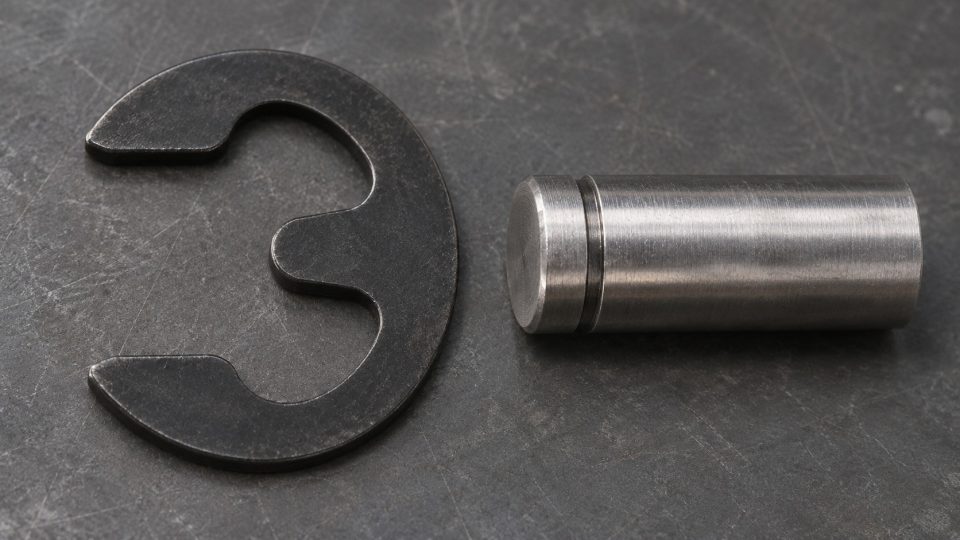
Płytka osadcza DIN 6799 — co oznacza rozmiar 8 mm?
Jeśli wymieniasz płytkę osadczą DIN 6799, sprawdź najpierw średnicę na dnie rowka. W oznaczeniu DIN 6799–8 liczba 8 odnosi się do nominalnej średnicy rowka d₂. Średnic...
Read article · 3 min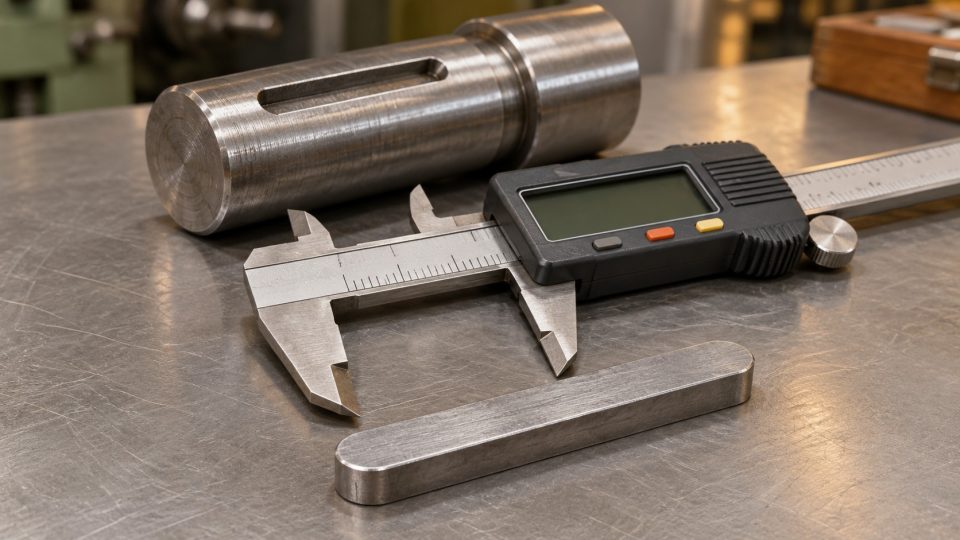
DIN 6885 parallel key — how to measure it and select a replacement?
A DIN 6885 parallel key is selected to suit the shaft and hub keyways, not solely the shaft diameter. Before purchasing, establish the width b, height h, length l, end...
Read article · 4 min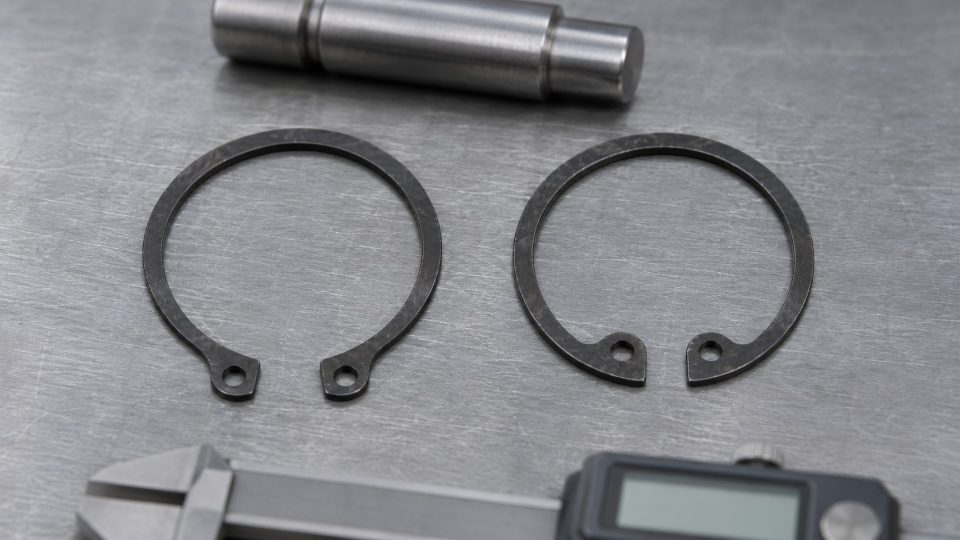
DIN 471 or DIN 472 circlip? How to select the size
DIN 471 denotes a retaining ring for a shaft, while DIN 472 denotes a ring for a bore. Before purchasing, establish the installation location, nominal shaft or bore di...
Read article · 5 min