
When a frame, workstation enclosure, guard or lightweight automation frame needs building quickly on the shop floor, the requirement is simple, build it without unnece...
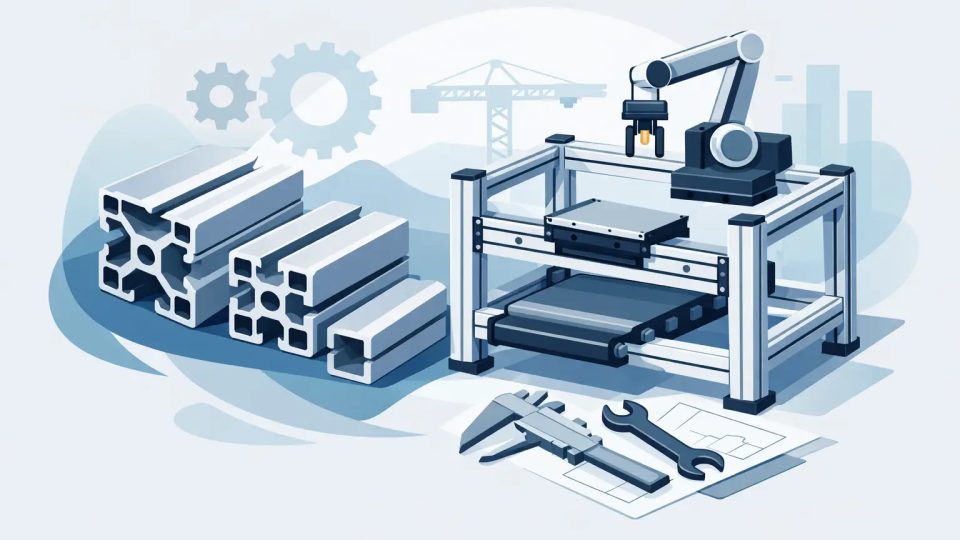
When a frame, workstation enclosure, guard or lightweight automation frame needs building quickly on the shop floor, the requirement is simple, build it without unnecessary machining or the risk of imminent reworking. Aluminium profiles for machine construction are therefore standard in many plants, workshops and maintenance departments. They provide repeatability, expandability and shorter assembly times than traditional welded solutions where modularity matters.
Where aluminium profiles for machine construction work best
They are most often used where a structure is not a one-off, such as assembly stations, workbenches, feeder frames, machine enclosures, safety fencing, sensor supports, cable brackets and light conveyors. If the assembly must change with the process, an aluminium profile generally has an advantage over a welded structure.
This does not mean aluminium is suitable for everything. Under very high dynamic loads, high temperatures or severe shocks, steel may still be better. The choice depends on the balance between load capacity, weight, assembly ease and expected number of modifications.
What an aluminium profile system provides
Modularity is the greatest advantage. A slotted profile allows connectors, brackets, plates, hinges, feet, rollers, cable holders and guards to be attached without redrilling the whole structure. This shortens assembly and simplifies servicing.
A second benefit is organised design. Standardised cross-sections make accessory compatibility easier to predict and avoid assembly delays from one missing screw or slot nut type. Procurement values this as much as mechanics. Fewer unusual items mean easier reordering and less downtime risk.
Self-weight also matters. A lighter structure simplifies transport, installation and later workstation relocation. During line expansion or shop-floor reorganisation, this quickly affects crew working time.
How to select a profile for the application
Do not begin with price per metre. First establish the structure's function, whether the profile will carry load, provide spacing, form a guard or act as an auxiliary part. A light guard needs a different cross-section from a frame supporting a drive assembly.
Cross-section and stiffness
The most common cross-sections are 20x20, 30x30, 40x40, 45x45 and larger rectangles such as 40x80 or 45x90. Small sections work well for light automation, sensor mountings and auxiliary enclosures. Tables, frames and posts more often use 40 or 45 mm sections for greater stiffness and more available accessories.
Avoid unnecessary oversizing, but too light a profile causes deflection, geometry problems and reworking. If a frame supports a drive, operator panel, feeder or variably loaded equipment, extra stiffness generally pays.
System slot and compatibility
Slot size is also crucial. It determines slot nuts, hammer-head bolts, caps, brackets and many other mounting parts. If the plant already uses a system, retain that compatibility. Different standards may look similar on a drawing but often create unnecessary assembly problems when mixed.
Operating conditions
Account for the environment. Easy cleaning matters in dusty areas. Technical chemicals or moisture require corrosion resistance and suitable metal accessories. An aluminium profile itself resists corrosion well, but the whole structure is only as durable as its weakest element, often a connector, foot or fastening accessory.
Connectors and accessories determine functionality
The profile alone is only the base. Stability and convenient operation are determined by connectors inside, brackets, plates, slot nuts, screws, hinges, handles, adjustable feet and components securing guards and infill panels. Mistakes occur here more often than in cross-section selection.
An internal connector provides a neat appearance and unobstructed external surfaces but requires profile preparation. A bracket is simpler and convenient for quick builds, but takes space and may not suit compact layouts. Reinforcing plates improve corner stiffness but add mounting items. There is no universal solution.
Plan supplementary equipment at the design stage, including grommets, cable holders, panel mountings, line routing, caps, castor bases and feet. Many structures work mechanically but later lack space for pneumatic lines or collision-free guard installation.
When aluminium profiles are better than welded structures
For rapid workstation commissioning, aluminium profiles offer an advantage during fabrication, without welding, weld cleaning, painting or as many machining operations. Staged assembly is also easier, first the frame, then equipment, enclosure and extras.
The second argument is modification. Production layouts rarely remain unchanged. A new sensor, moved drive, added shelf, reversed feed direction or extra guard is often needed. An aluminium system generally allows this without cutting the whole structure.
Conversely, a welded frame may be stiffer within the same envelope and withstand severe operation better. If the structure will remain unchanged for years and carry heavy loads, profiles may not be cost-optimal. Choose by actual use rather than habit.
Common profile ordering mistakes
First, ordering profiles without a full accessory list. Construction then stops in stores for missing slot nuts, screws, brackets or caps. Second, overlooking end machining, tapping and connection method. Profiles must be prepared for any specified end-face joints.
Overall frame tolerances and geometry are also often overlooked. Guards, doors and guides require not just component length but accurate bolting and assembly sequence. Even correctly selected components do not compensate for rushed assembly.
Another issue is excessive system fragmentation. If every project uses another slot, cross-section and connector, stock grows faster than benefits. Partial standardisation is better for maintenance and purchasing even if every project is not perfectly optimised.
What to check before purchasing
Technical purchasing concerns the completeness of the whole system as well as the product. Check profiles, connectors, fasteners, cable-routing and guard accessories and supplementary workstation components. More items from one place shorten the process and reduce assembly shortages.
Range consistency matters too. Expansion or recreation months later needs the same cross-section and accessory standards. This is more practical for manufacturers than a one-off lowest price. Many therefore use a regular, proven supplier offering broad technical categories through one ordering channel, such as the Neron store.
Should aluminium profiles for machine construction be standardised?
In most plants, yes, if use is regular. Standardising two or three main sections and one slot system simplifies design, speeds ordering and eases service. Mechanics need not repeatedly check which slot nut fits, and purchasing can keep sensible stocks of common items.
This does not exclude exceptions. Some applications need a heavier profile, special foot, unusual hinge or customised infill. A well-established standard does not block these solutions. It simply limits unnecessary disorder.
The greatest benefit comes not from buying the cheapest metre of profile, but from considering the whole structure from the outset, including loading, assembly, expansion and accessory availability. This usually determines whether the workstation is built efficiently or one small part is missing just when the machine should already run.
Related articles
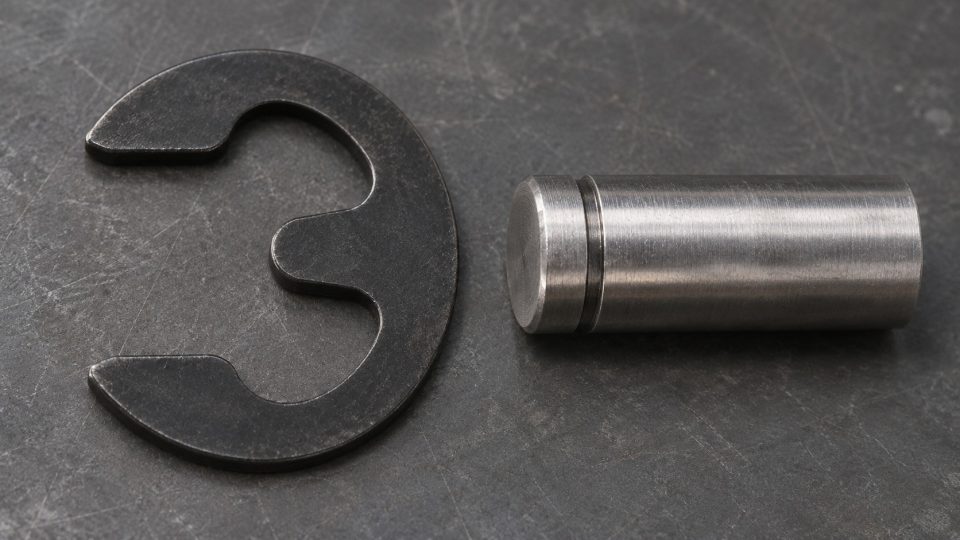
Płytka osadcza DIN 6799 — co oznacza rozmiar 8 mm?
Jeśli wymieniasz płytkę osadczą DIN 6799, sprawdź najpierw średnicę na dnie rowka. W oznaczeniu DIN 6799–8 liczba 8 odnosi się do nominalnej średnicy rowka d₂. Średnic...
Read article · 3 min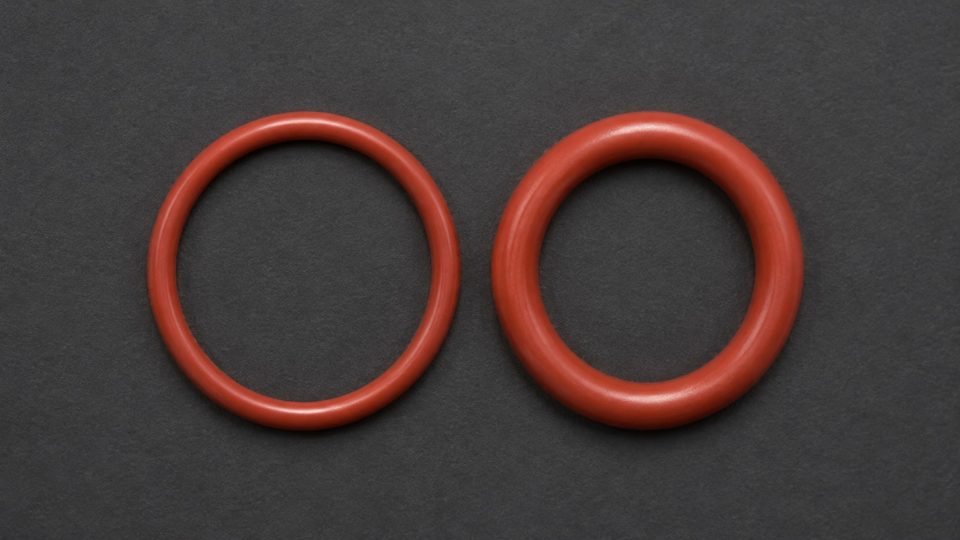
O-ring 24 mm na zewnątrz — jak odróżnić 20 × 2 od 18 × 3?
Jeśli O-ring ma około 24 mm średnicy zewnętrznej, zmierz jeszcze jego otwór i grubość przekroju. Nominalnie zarówno 20 × 2 mm, jak i 18 × 3 mm dają 24 mm na zewnątrz. ...
Read article · 3 min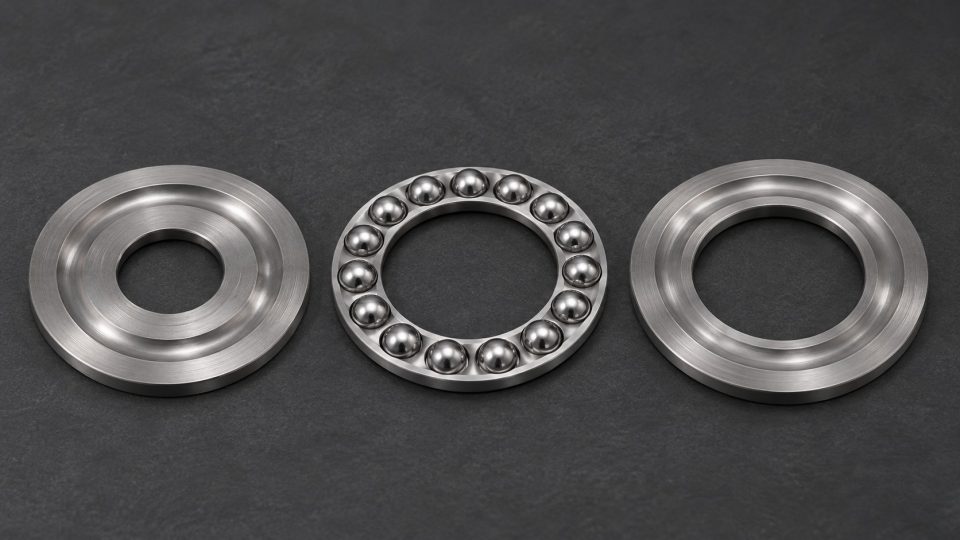
Łożysko oporowe 51105 czy 51205? Co zmierzyć przed wymianą
Okładka pokazuje rozłożone części poglądowo. Wymiary odczytaj z karty danego wykonania. Łożysko 51105 ma wymiary 25 × 42 × 11 mm, a 51205 ma 25 × 47 × 15 mm. Oba mają ...
Read article · 3 min