
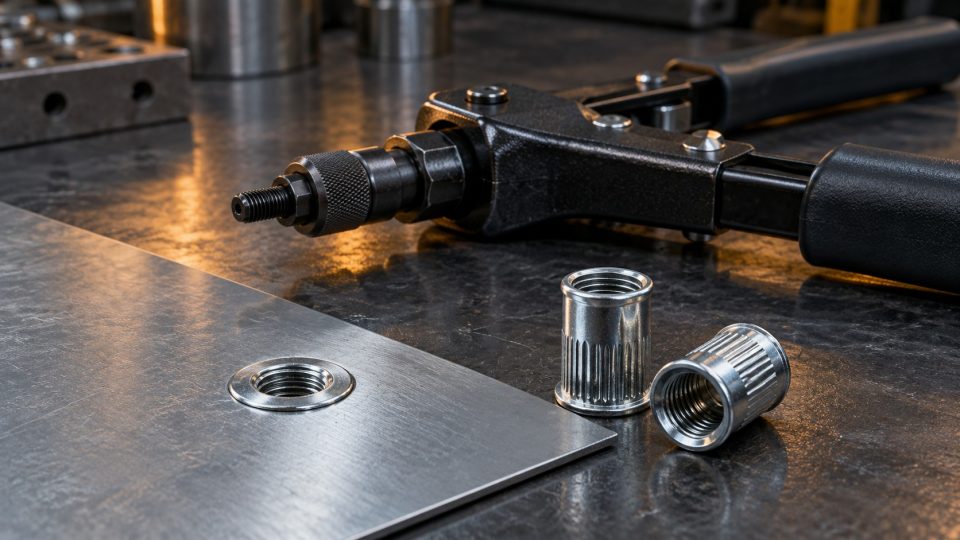
Rivet nuts are used to create durable threaded connections in thin materials such as sheet metal, sections or enclosure components. They provide a bolt fixing without ...
Rivet nuts are used to create durable threaded connections in thin materials such as sheet metal, sections or enclosure components. They provide a bolt fixing without needing access to the rear of the component being joined. They are therefore often used in industry, automotive applications, machine manufacturing and servicing.
Contents
- What are rivet nuts and where are they used?
- How do rivet nuts work and what happens during installation?
- Preparing the material before installation
- What does rivet nut installation involve?
- How do you set rivet nuts for a durable connection?
- Common installation mistakes
- Rivet nuts — how to use them in everyday applications
- Correct rivet nut installation — the key to a durable connection
Correct installation requires understanding how a rivet nut connection works, proper material preparation and the right tool. In practice, many problems arise from an incorrect hole diameter or setting force.
What are rivet nuts and where are they used?
A rivet nut is a special internally threaded sleeve that forms a stable mounting point once installed. Unlike a conventional nut, it does not require holding the other side during bolting. This makes it suitable where access inside the structure is limited.
These components come in different materials and sizes. The specific model depends on factors including base material thickness, load type and joint operating conditions. They are most often used in
- steel and aluminium structures,
- industrial equipment enclosures,
- vehicle body components,
- control cabinets,
- lightweight mounting structures.
How do rivet nuts work and what happens during installation?
A rivet nut works by controlled deformation of its rear section. After the component is placed in the hole, the installation tool moves the mandrel, causing the body to expand on the other side of the material. The resulting bulge locks the component in position.
The way rivet nuts workdepends on factors including their construction, material and setting method. A correctly selected component should sit flush against the base and provide a stable thread for repeated bolt installation and removal.
Preparing the material before installation
Before starting, prepare the installation location thoroughly. The most important stage is making a correctly sized hole. A hole that is too small may hinder insertion, while one that is too large reduces contact area and can cause the rivet nut to spin. Before installation,
- check material thickness,
- select the correct rivet nut size,
- make a hole according to the manufacturer's recommendations,
- remove drilling burrs,
- clean swarf and dirt from the surface.
Careful base material preparation has a major effect on the durability of the entire connection, particularly for components exposed to vibration or frequent loading.
What does rivet nut installation involve?
Installation is not complicated, but requires the correct sequence. First prepare the tool and fit the correct mandrel for the component size. Installation has several stages.
Stage | Action description |
|---|---|
Hole preparation | Making and cleaning the installation location |
Positioning the component | Inserting the rivet nut into the prepared hole |
Setting | Deforming the rear section of the sleeve |
Inspection | Checking fastening stability and quality |
Those wondering how to install rivet nutsshould remember that component parameters must suit the specific application. Using the right tool alone does not replace proper material preparation.
How do you set rivet nuts for a durable connection?
Setting deforms the body so its rear section forms a locking flange of sorts. Control tool force during this process, as excessive pressure can damage the thread or deform thin material.
The way how to set rivet nutsdepends on the setting tool and specifications of the particular model. Hand tools are often sufficient for occasional jobs. For more connections, pneumatic or battery-powered tools provide greater repeatability. During setting, check the following.
- stable tool positioning relative to the hole,
- even mandrel guidance,
- no gap between component and material,
- ending the process when the correct setting is achieved.
Common installation mistakes
Connection problems most often result from errors made before setting itself. Incorrect sizing or lack of parameter control can weaken the whole structure.
Problem | Possible cause |
|---|---|
Rivet nut spins | Installation hole too large |
Damaged thread | Excessive setting force |
Loose connection | Incorrect component selection |
Difficult installation | Dirty or poorly prepared hole |
Rivet nuts — how to use them in everyday applications
Correct use of these components primarily requires matching them to the specific task. Rivet nuts are used where a threaded fastening needs to be made quickly in thin material. How do you use themto maintain connection durability? Use appropriate tools, follow assembly parameters and regularly inspect the fastenings made.
This also means selecting the correct rivet nut type for operating conditions. Flanged models suit components where uniform pressure distribution matters, while more resistant versions are used in locations exposed to greater loads. Before final installation, perform a trial on the same material to check that the connection meets requirements.
Correct rivet nut installation — the key to a durable connection
Rivet nut installation is simple but requires precision. A properly prepared hole, correctly selected component and controlled setting produce a stable and durable connection. Understanding installation principles makes component selection easier and reduces the risk of mistakes during work.
Rivet nuts can therefore be effective both in professional industrial applications and precision workshop jobs. When looking for suitable rivet nuts, explore the range at the Neron store, with components suited to different assembly jobs.
Related articles
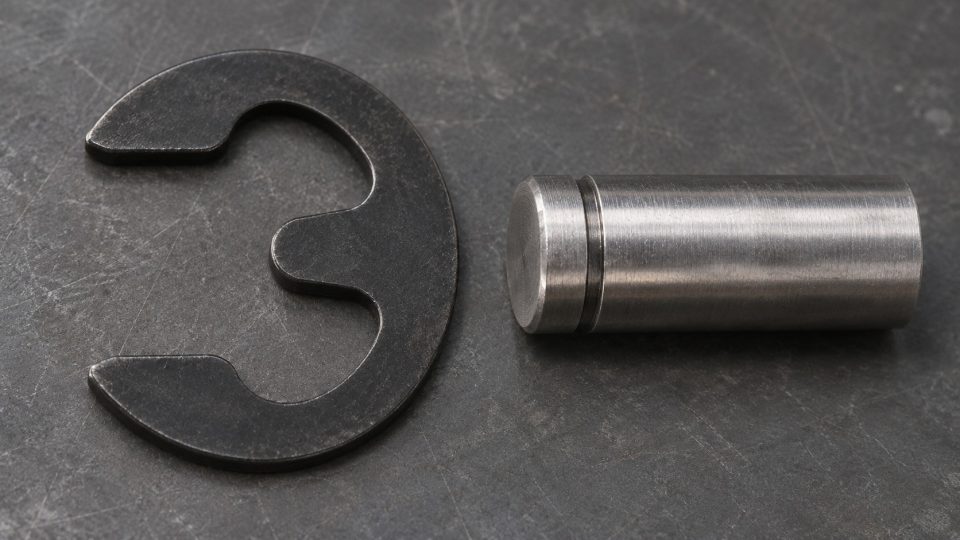
Płytka osadcza DIN 6799 — co oznacza rozmiar 8 mm?
Jeśli wymieniasz płytkę osadczą DIN 6799, sprawdź najpierw średnicę na dnie rowka. W oznaczeniu DIN 6799–8 liczba 8 odnosi się do nominalnej średnicy rowka d₂. Średnic...
Read article · 3 min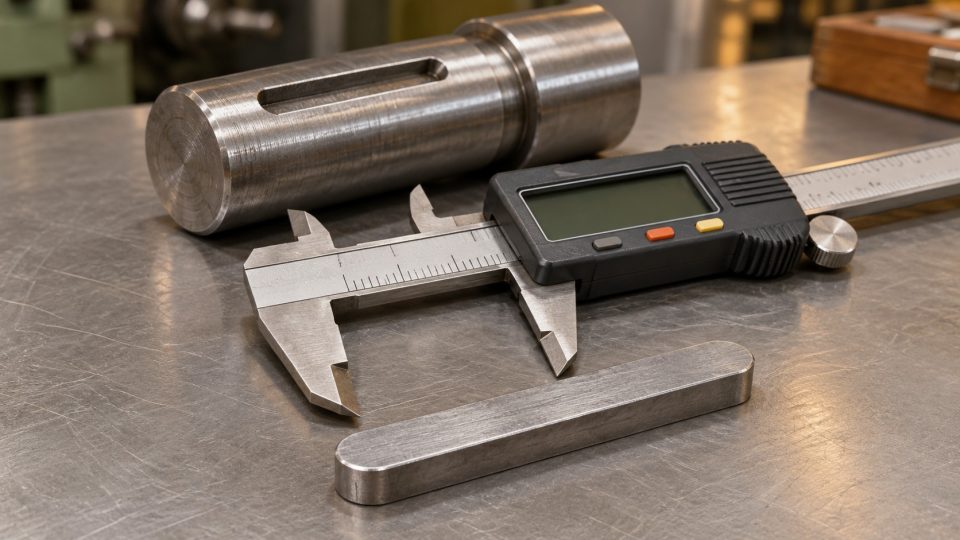
DIN 6885 parallel key — how to measure it and select a replacement?
A DIN 6885 parallel key is selected to suit the shaft and hub keyways, not solely the shaft diameter. Before purchasing, establish the width b, height h, length l, end...
Read article · 4 min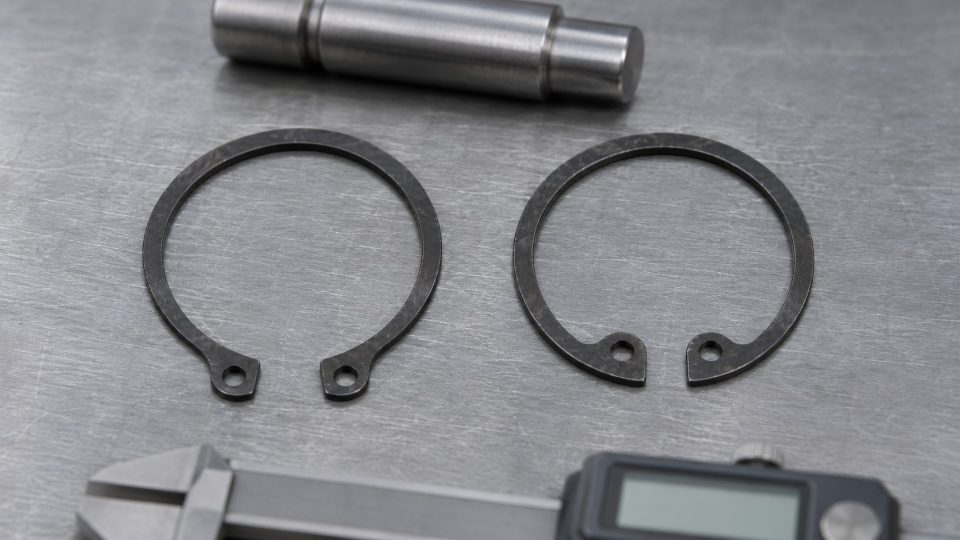
DIN 471 or DIN 472 circlip? How to select the size
DIN 471 denotes a retaining ring for a shaft, while DIN 472 denotes a ring for a bore. Before purchasing, establish the installation location, nominal shaft or bore di...
Read article · 5 min