
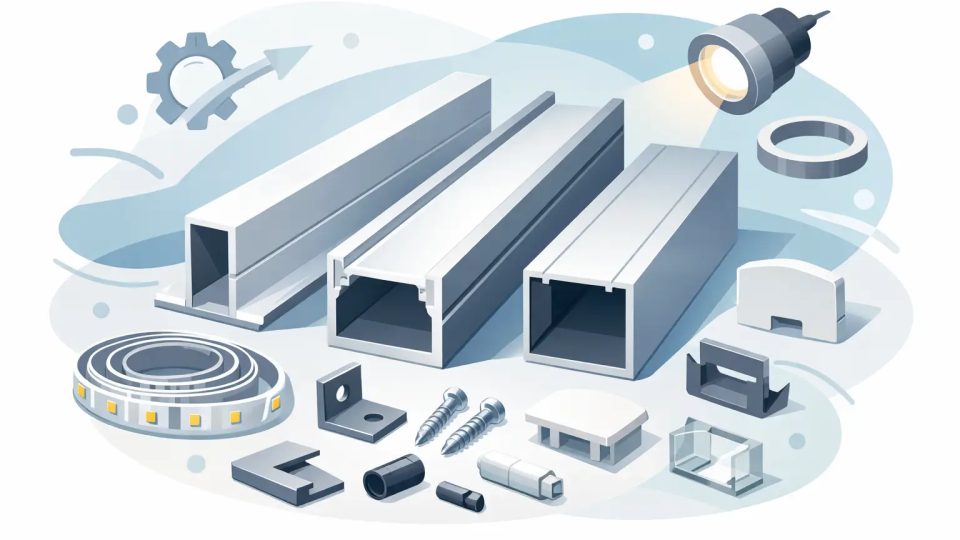
When building a workstation, machine guard or light transport frame, the profile is only the start. Aluminium profile accessories determine stability, ease of assembly...
When building a workstation, machine guard or light transport frame, the profile is only the start. Aluminium profile accessories determine stability, ease of assembly and later expansion. They define the connection method, adjustment range, finish and ease of servicing.
Industrial applications require not just matching dimensions, but repeatable assembly and spare availability. If a structure must be built quickly and work smoothly in a hall, workshop or assembly area, accessory selection must be taken as seriously as profile selection.
What aluminium profile accessories do
Aluminium profiles are popular because they enable modular structures without machining comparable to traditional steel. They can be cut, bolted, expanded and modified during assembly and after commissioning. This flexibility only makes sense if all hardware matches the profile cross-section, slot and planned load.
Accessories serve several areas together. They connect profiles at the correct angle and maintain geometry, allow additional panels, doors, rollers, handles and guards, and affect safety, especially where the structure operates near an operator or forms part of a machine.
The most common mistake is considering only the price of one connector. A cheap solution may suffice for a lightweight visual enclosure, but an assembly table or machine frame needs whole-system stiffness. Differences appear after assembly when the structure flexes, loses angles or needs extra reinforcement.
Main aluminium profile accessory groups
Fasteners form the largest group, primarily brackets, internal connectors, joining plates, screws, slot nuts and keys. They enable quick, repeatable connections without welding. Depending on the system, choose easy assembly or a neater hidden connection.
The second group is support and levelling components, adjustable feet, joints, castors and bases. Maintenance often finds these crucial because even a well-bolted structure will not work correctly if it cannot be levelled on the real floor. Perfectly level production floors are the exception rather than the rule.
The third group covers enclosure and finishing accessories, caps, handles, hinges, locks, cover profiles, seals and guides. They may appear secondary but greatly affect everyday function. Service doors without suitable hinges and latches quickly become an operational problem.
The fourth group routes services and mounts equipment, including cable holders, panel mountings, sensor brackets, screen supports, shelves and pneumatic mountings. In modern workstations, aluminium profiles rarely remain just a frame. They usually carry many additional installations.
What to check when selecting fasteners
First check profile-system compatibility, including slot width, cross-section, connection type and hardware diameter. Even small differences may require reworking or slow assembly. Repeat purchasing should use one standard within the plant or project.
Second is loading. Not every bracket or slot nut suits load-bearing structures. Simple parts suffice for lightweight enclosures, but longer spans, doors, filled guards or mobile structures benefit from stronger connectors and more bolting points. This raises unit cost but reduces later corrections.
Third is assembly method. Some accessories must be slid into a slot before closing the structure, while others can be added later. Teams regularly expanding workstations value this difference. Quickly adding a component without dismantling the entire section saves service time.
When to choose brackets and when internal connectors
Brackets are simple, quick to install and clear to every installer. They suit availability, easy replacement and fast bolting without special operations. Their disadvantages can be greater visibility and taking space outside the profile.
Internal connectors are generally chosen for appearance, no projecting parts and better use of surrounding space. They suit guards, doors and workstations where every centimetre counts. But assembly may be more demanding and later modifications offer less convenient joint access.
There is no universal choice. Many structures combine both, using brackets at service locations and less visible points, and hidden connectors where compactness and appearance matter.
Aluminium profile accessories in workstations and guards
Industrial enclosures need more than a skeleton. Plan plate, polycarbonate and protective mesh fixing, cable routing and doors. Select accessories for the entire workstation rather than frame joints alone.
Machine guards particularly need hinges, locks, handles and infill fasteners. Frequently opened guards need hardware that withstands operating cycles without losing adjustment after a few weeks. Workstations chiefly need levelling feet, tool holders and cable organisation.
Mobile structures also need castors, brakes and corner reinforcements. Do not take shortcuts here. A frame stable at rest may flex when moved across the hall, especially carrying equipment or components of changing weight.
Common ordering mistakes
A common problem is ordering accessories without checking the slot system. Similar trade names can hide dimensional differences causing poor fit or weak retention. A second mistake is underestimating supporting items such as caps, washers, covers or extra nuts for later expansion.
Operating conditions are often overlooked too. Moisture, dirt, chemicals and frequent washing make accessory material and finish important. Frequent adjustment or disassembly also matters. Not every component tolerates repeated bolting well.
Avoid assembling a project from arbitrary sources. For larger item lists, range consistency, replenishment and quick fulfilment matter alongside price. Plants under time pressure often value these more than a minimal saving on one part.
How to order efficiently and reduce reworking
Start with a simple division into load-bearing parts, mounting parts, functional hardware and finishing. This helps check the bill of materials and avoids one small missing component blocking assembly. Small items most often delay commissioning.
Standardisation also works well. Repeated workstations using the same sections should retain uniform nuts, screws, feet and hinges. This simplifies storage, order consolidation and repairs. Maintenance gains less improvisation during interventions.
Regular technical purchasing also benefits from a broad range in one place. Structural accessories, fasteners, cable routing and supporting materials can be ordered together. This reduces orders and speeds operational work. Many industrial customers therefore choose suppliers understanding rapid procurement, such as the Neron store.
Correctly selected accessories are part of the whole structure. If compatible with the system, designed for actual loads and quickly reorderable, they make assembly smoother and the finished workstation work as intended.
Related articles
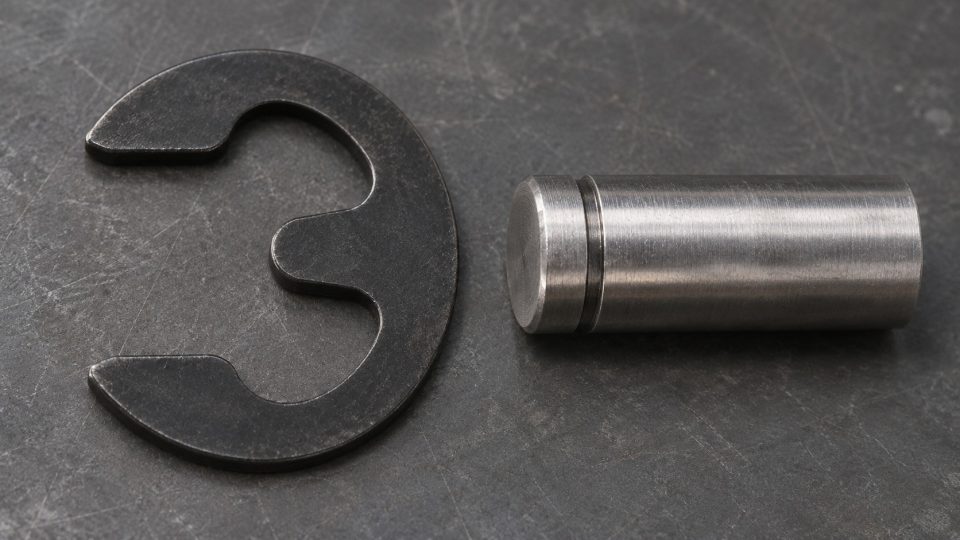
Płytka osadcza DIN 6799 — co oznacza rozmiar 8 mm?
Jeśli wymieniasz płytkę osadczą DIN 6799, sprawdź najpierw średnicę na dnie rowka. W oznaczeniu DIN 6799–8 liczba 8 odnosi się do nominalnej średnicy rowka d₂. Średnic...
Read article · 3 min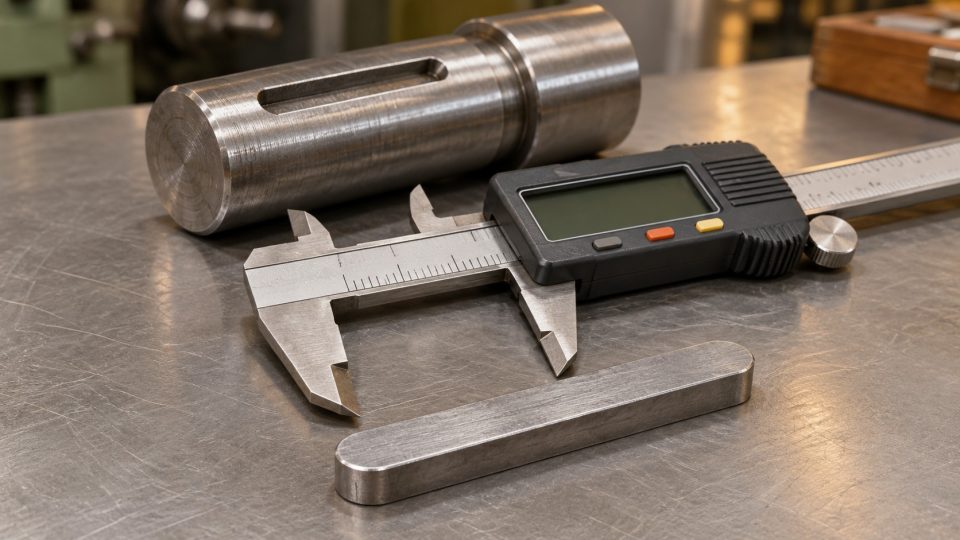
DIN 6885 parallel key — how to measure it and select a replacement?
A DIN 6885 parallel key is selected to suit the shaft and hub keyways, not solely the shaft diameter. Before purchasing, establish the width b, height h, length l, end...
Read article · 4 min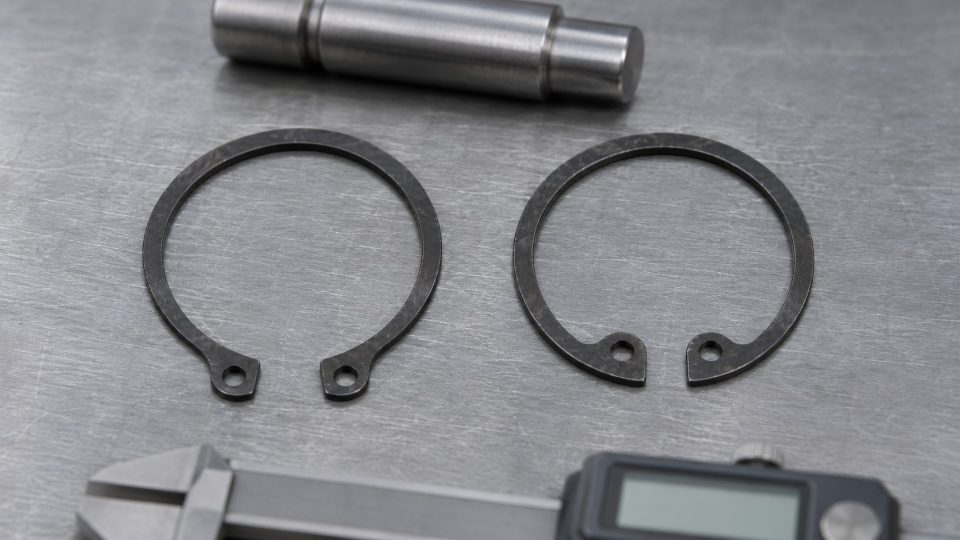
DIN 471 or DIN 472 circlip? How to select the size
DIN 471 denotes a retaining ring for a shaft, while DIN 472 denotes a ring for a bore. Before purchasing, establish the installation location, nominal shaft or bore di...
Read article · 5 min