
Occupational health and safety is one of the most important issues in the workplace. Following health and safety regulations not only helps avoid costly fines and othe...
Occupational health and safety is one of the most important issues in the workplace. Following health and safety regulations not only helps avoid costly fines and other consequences, but also effectively protects employees' health, contributing to greater efficiency. It is worth understanding what occupational health and safety means, which regulations are relevant and which products are most useful in this area.
What is occupational health and safety? Definition and importance
The Polish abbreviation “BHP” stands for occupational health and safety. The term covers various principles intended to ensure hygienic and safe conditions for carrying out professional duties. It encompasses several important areas , from protection against various hazards and ergonomics to psychological considerations.
The origins of the modern approach to occupational health and safety are closely linked to the Industrial Revolution. As the first factories emerged, so did the need for legal regulations protecting people working with heavy, potentially dangerous machinery. Over the years, health and safety regulations have been continuously revised to reflect new equipment and more effective protection methods. Workplace safety is therefore now at a very high level, although compliance with the rules remains essential. In Poland, the history of occupational health and safety began in the 20s of the twentieth century. In 1927, the first presidential regulation established principles for combating occupational diseases, and in 1928, legislation directly addressing occupational health and safety was introduced.
Health and safety legislation – what do you need to know?
Occupational health and safety in Poland is governed by several laws that together provide a comprehensive set of rules ensuring appropriate conditions for professional duties. The Constitution of the Republic of Poland has the leading role, specifically Article 66, which establishes workplace safety as one of the most important employee rights. Detailed guidelines are set out in Part X of the Polish Labour Code and in legislation covering particular areas, including the Act on the National Labour Inspectorate (PIP) and the Act on Technical Supervision. These are supplemented by industry-specific regulations, including rules for mining and construction companies, as well as national PN standards.
How do these regulations work in practice, in a real workplace? Essentially, all employees are responsible for observing health and safety rules, which is why every employee must undergo occupational health and safety training, as must the employer. Companies employing more than 100 people must also establish a health and safety service. Organisations with more than 600 employees must additionally have a full-time health and safety specialist for every 600 employees. Smaller businesses can also employ health and safety services and specialists. Failure to comply with health and safety regulations can incur serious penalties: offences carry fines of 1–30 thousand PLN, while gross negligence can even result in several years of imprisonment for the employer.
The employer's role and health and safety duties
The employer's basic health and safety duty is to provide conditions that allow employees to carry out their tasks safely and hygienically. The workplace must also provide personal protective equipment suited to each role, particularly where workers are exposed to hazards such as chemicals or high temperatures. Another important requirement is providing occupational health and safety training, enabling employees to obtain current, reliable information. Employers may also introduce additional rules to manage occupational risks and promote a workplace safety culture. This helps employees become more aware of both hazards and protective measures.
The importance of health and safety training for employees
Health and safety training is mandatory for all employees of companies in Poland. Employers should provide both initial and periodic training. Both are important sources of useful information on workplace hygiene and safety, and significantly increase employee awareness. Professional, properly delivered courses can substantially reduce workplace accident risks and the frequency of injuries caused by hazardous conditions. Health and safety products, particularly personal protective equipment, also play a major role.
Protective equipment – the key to safe working
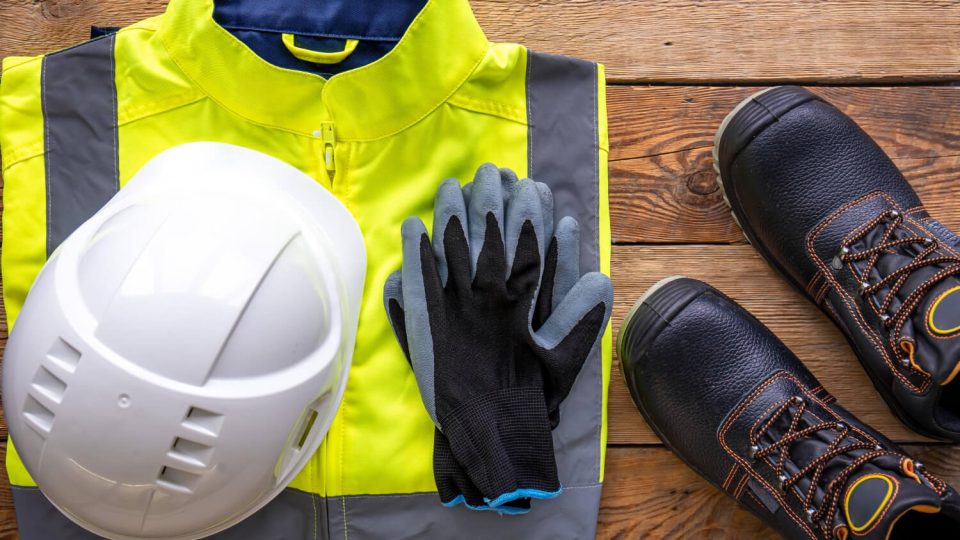
Alongside health and safety knowledge, the key to workplace safety is correctly selected equipment. Recommendations vary considerably by role. The decisive factor is the type of hazards employees face: mining workers, for example, primarily need protection against dust, while electricians need products protecting against short circuits or voltage surges. For roadwork and construction, reflective vests and appropriately coloured safety helmets are fundamental. Protective equipment often primarily improves worker visibility, but that is not its only purpose: the materials used must also protect against various factors encountered at work.
How should you choose health and safety equipment? Consider, among other things, the requirements of the particular role : depending on the tasks, items such as gloves, work footwear, antistatic socks, cleaning products or safety glasses may be required. These can provide effective protection against workplace accidents and injuries. Choose only proven solutions from trusted technical suppliers. Each health and safety product should also comply with the relevant certifications confirming an optimal level of protection.
Related articles
Wood screws vs metal screws – understand the differences and avoid installation mistakes
What are the main differences when comparing wood screws with metal screws, and how do they affect correct installation? The main difference lies in thread geometry an...
Read article · 7 min
Everything worth knowing about grease nipples
Modern machinery and equipment depend not only on their design but, above all, on how they are maintained. Correct servicing of lubrication points is one of the most i...
Read article · 6 min
Kluber greases – why does choosing the right lubricant matter?
In precision engineering and heavy industry, there is no room for half measures. Every machine, whatever its purpose, needs proper protection to operate reliably for m...
Read article · 5 min