
Types of bearings — construction, applications and differences Bearings are basic components used in machines, industrial equipment, vehicles and drive systems. Their ...
Types of bearings — construction, applications and differences
Bearings are basic components used in machines, industrial equipment, vehicles and drive systems. Their purpose is to reduce friction between mating components and ensure smooth rotary or linear motion. Depending on construction and purpose, there are many types of bearings, differing in design, load capacity and range of applications.
Ball bearings
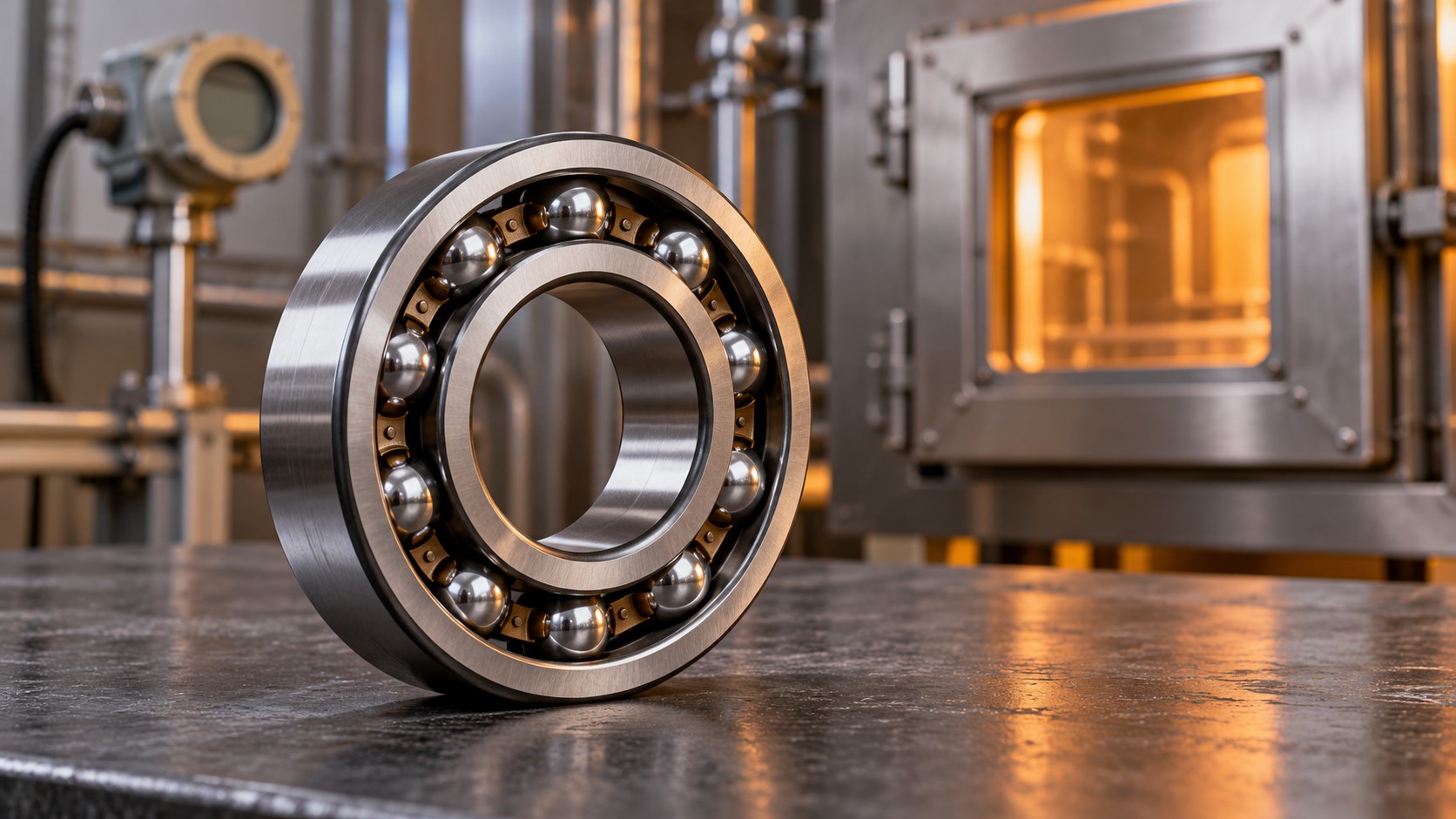 Illustrative construction example: a ball bearing. The rendering does not identify a particular catalogue number or load rating.
Ball bearings are among the most popular and versatile bearing types. They feature low rolling resistance, suitability for high rotational speeds and relatively simple construction.
Applications:
-
electric motors,
-
fans,
-
pumps,
-
power tools,
-
industrial machinery.
Tapered roller bearings
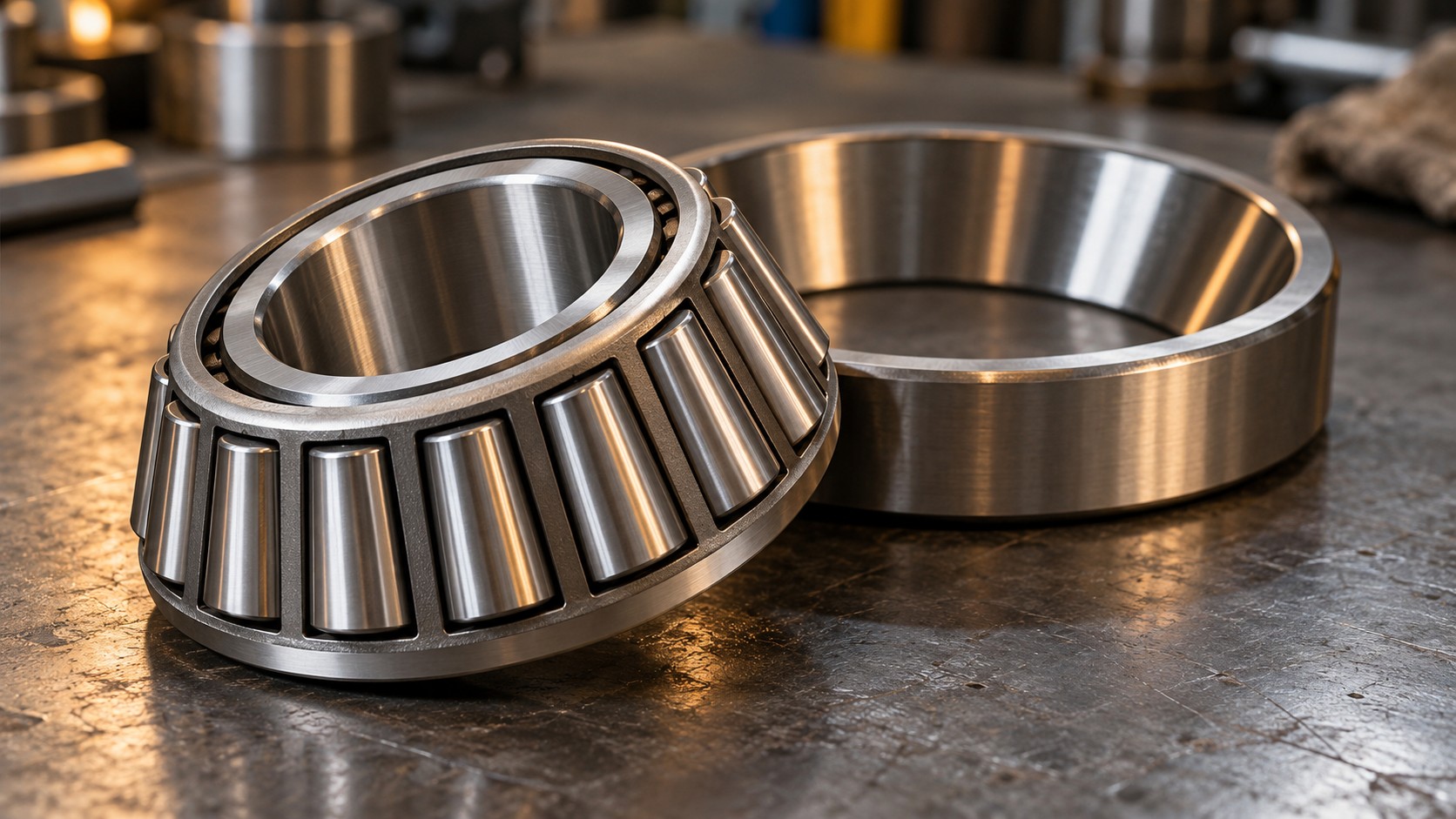 Illustrative construction example: a tapered roller bearing. The rendering does not identify a particular catalogue number or load rating.
Tapered roller bearings are designed to carry high radial and axial loads simultaneously. Their construction makes them common in locations exposed to large forces.
Applications:
-
wheel hubs,
-
agricultural machinery,
-
gearboxes,
-
construction equipment.
Spherical roller bearings
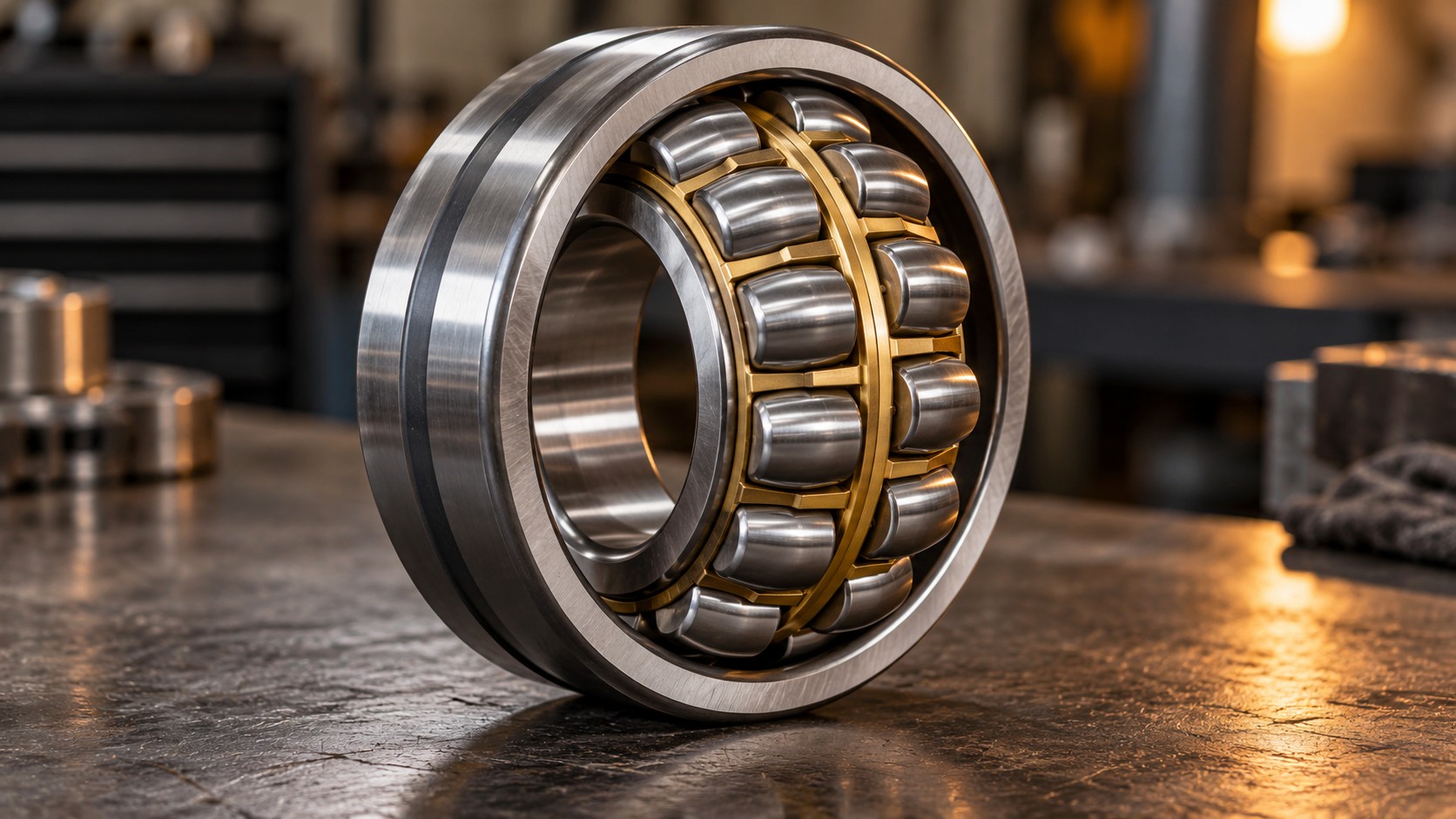 Illustrative construction example: a spherical roller bearing. The rendering does not identify a particular catalogue number or load rating.
Spherical roller bearings are self-aligning and accommodate shaft misalignment very well. They are designed for operation under heavy loads.
Applications:
-
heavy industry,
-
crushers,
-
screens,
-
conveyors.
Cylindrical roller bearings
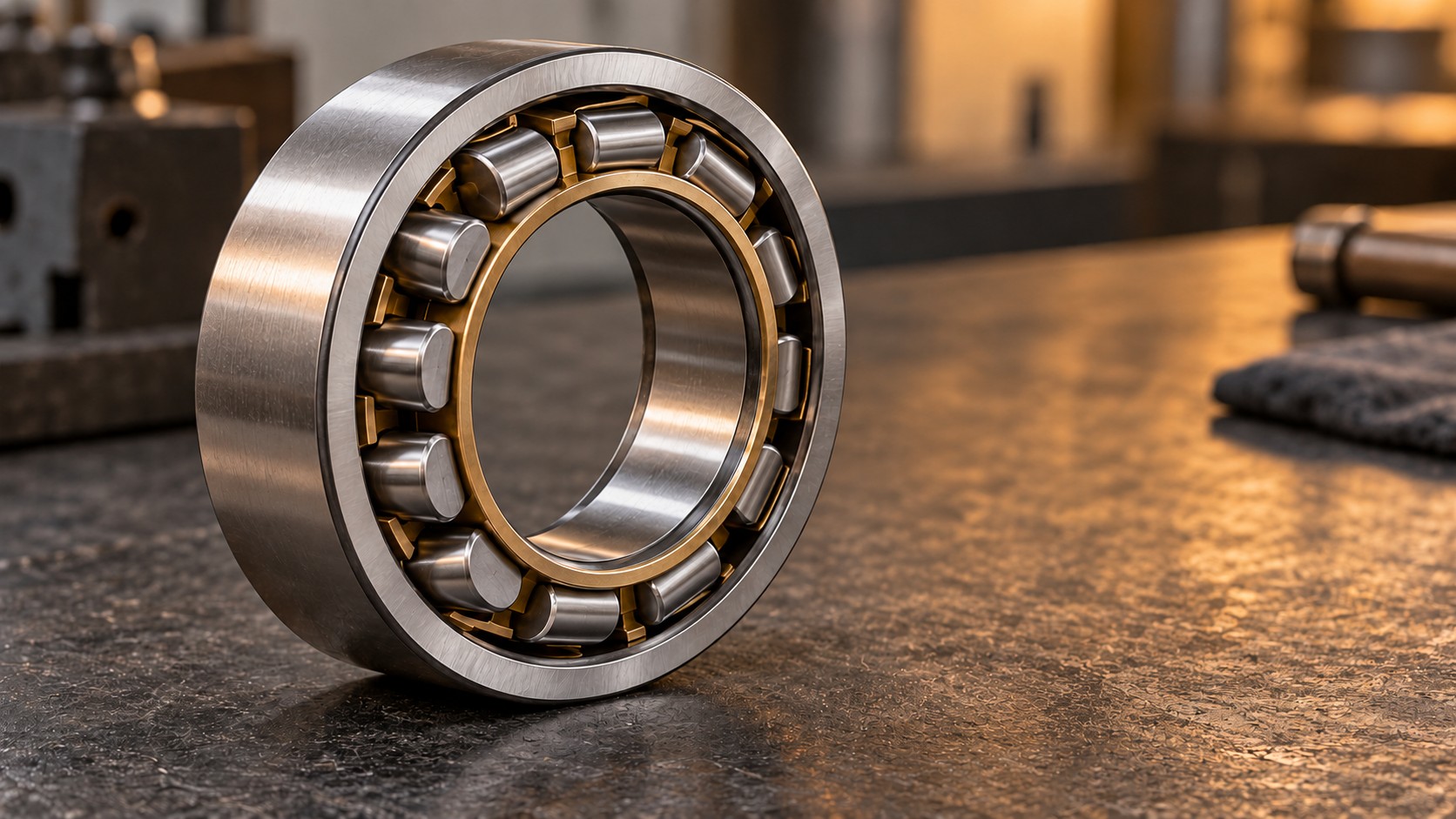 Illustrative construction example: a cylindrical roller bearing. The rendering does not identify a particular catalogue number or load rating.
Cylindrical roller bearings stand out for their very high radial load capacity. They are used in equipment that must carry heavy loads while maintaining high rigidity.
Applications:
-
gearboxes,
-
machine tools,
-
high-power motors,
-
industrial machinery.
Needle roller bearings
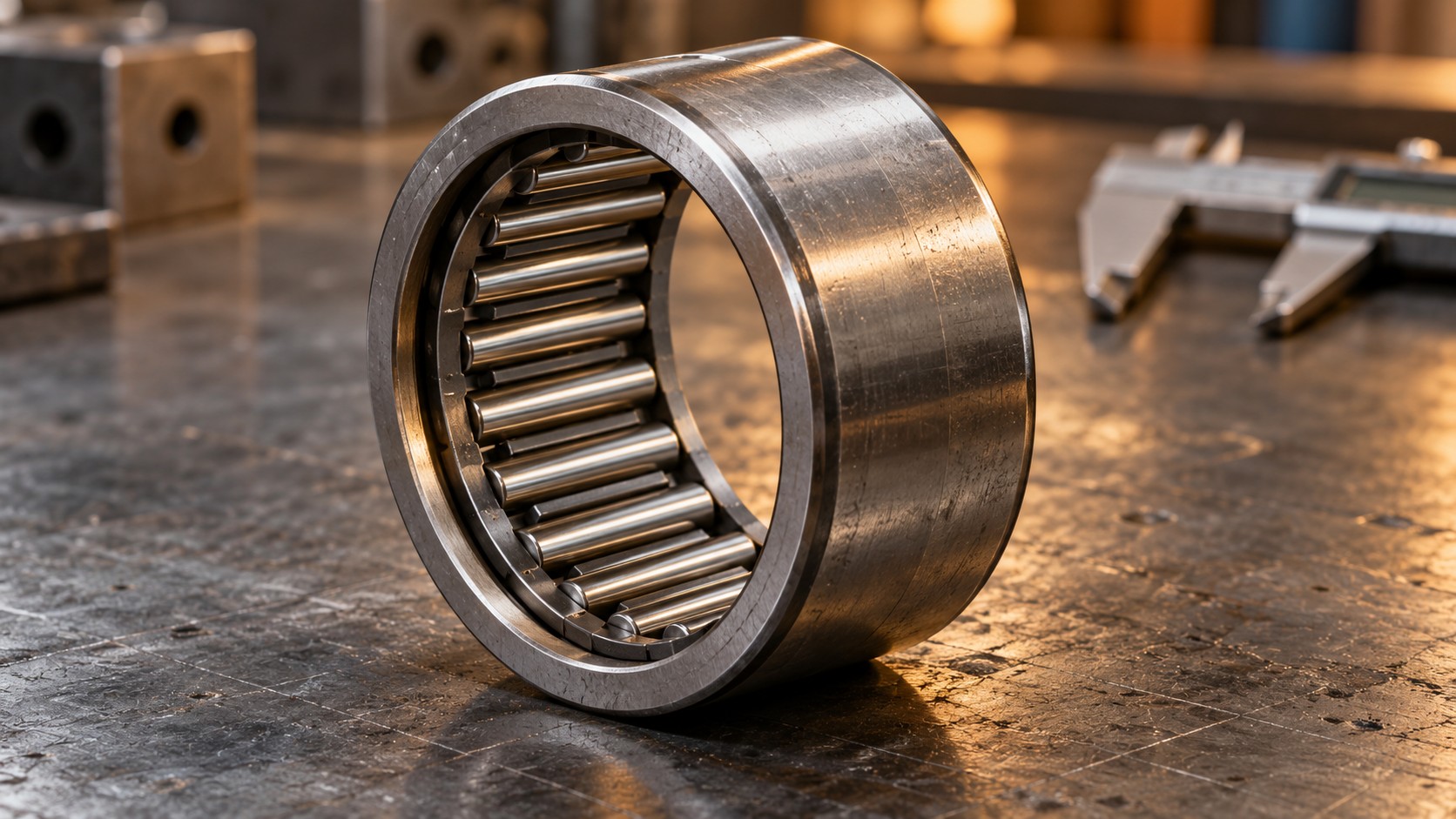 Illustrative construction example: a needle roller bearing. The rendering does not identify a particular catalogue number or load rating.
Needle roller bearings use thin rollers of small diameter, providing very high load capacity within compact dimensions.
Applications:
-
transmissions,
-
clutches,
-
industrial drives,
-
production machinery.
Self-aligning bearings
Self-aligning bearings compensate for alignment errors between the shaft and housing. This makes them well suited to equipment subject to structural deformation.
Applications:
-
agricultural machinery,
-
conveying equipment,
-
industrial fans.
Plain bearings
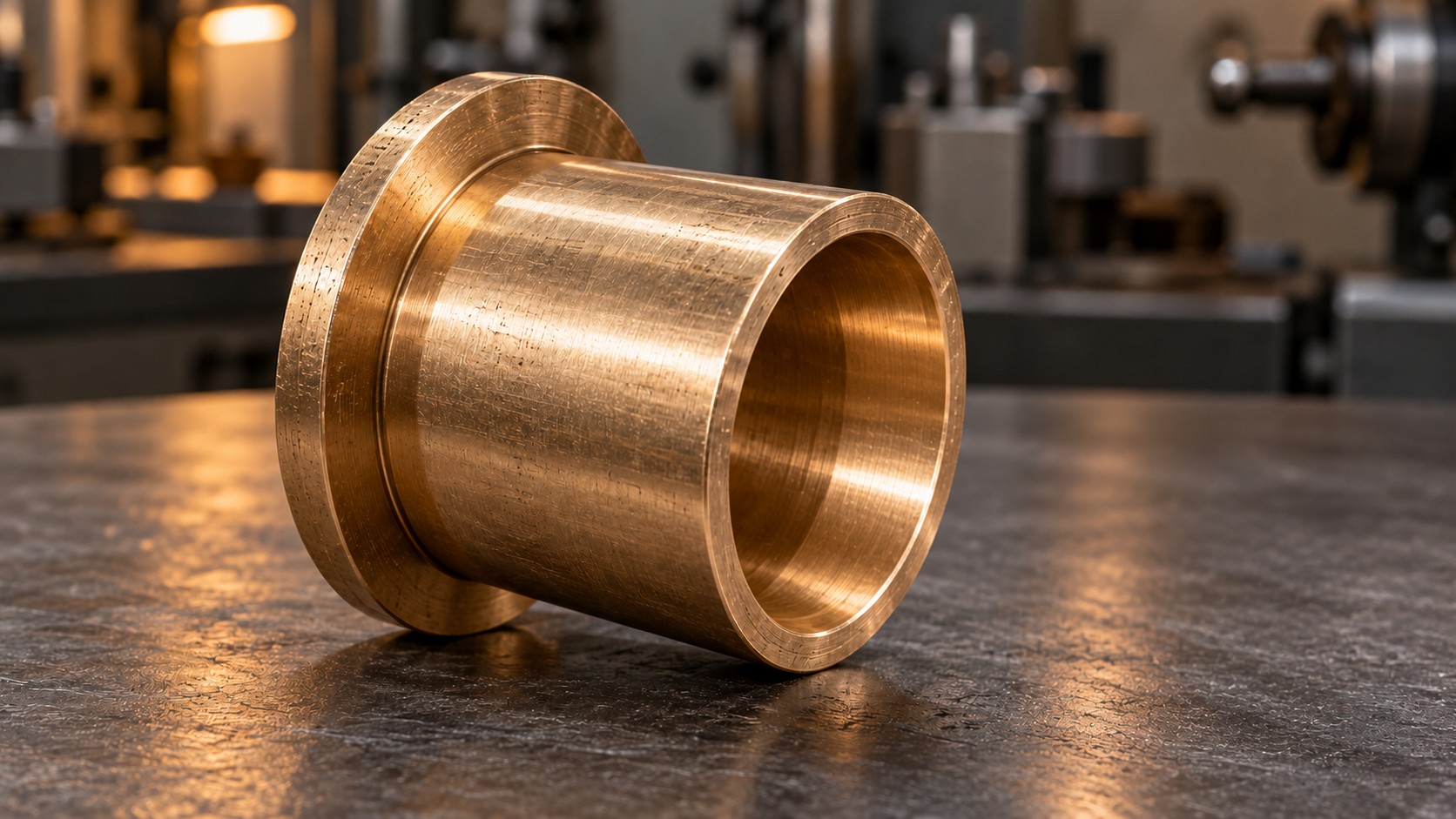 Illustrative construction example: a plain bearing. The rendering does not identify a particular catalogue number or load rating.
Plain bearings have no rolling elements. Loads are carried by mating sliding surfaces, sometimes separated by a lubricant film. A radial bushing and a thrust element serve different load directions; the ability to carry axial forces depends on the design, such as a flange or separate thrust washer.
Applications:
-
hydraulic cylinders,
-
construction machinery,
-
equipment operating under heavy loads.
How do you choose the right bearing type?
When choosing a bearing, consider:
-
load type,
-
rotational speed,
-
operating conditions,
-
ambient temperature,
-
service-life requirements,
-
available installation space.
A correctly selected bearing significantly extends machine service life and reduces the risk of failure.
Summary
Bearing type is selected according to load direction and magnitude, speed, misalignment, temperature and lubrication method. Compare parameters for specific designs and sizes. The names “ball”, “cylindrical roller” or “plain” alone do not establish a single ranking of load capacity, speed or contamination resistance.
Related articles
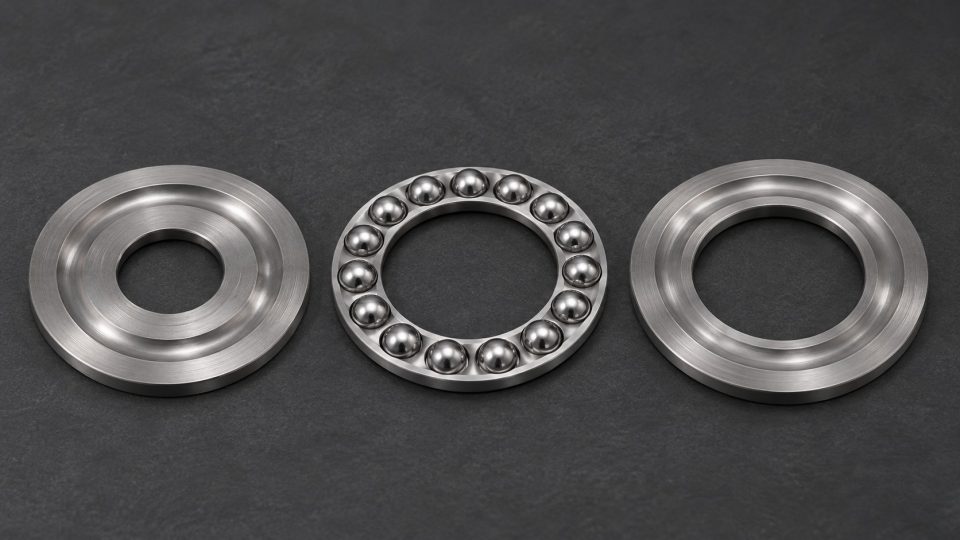
Łożysko oporowe 51105 czy 51205? Co zmierzyć przed wymianą
Okładka pokazuje rozłożone części poglądowo. Wymiary odczytaj z karty danego wykonania. Łożysko 51105 ma wymiary 25 × 42 × 11 mm, a 51205 ma 25 × 47 × 15 mm. Oba mają ...
Read article · 3 min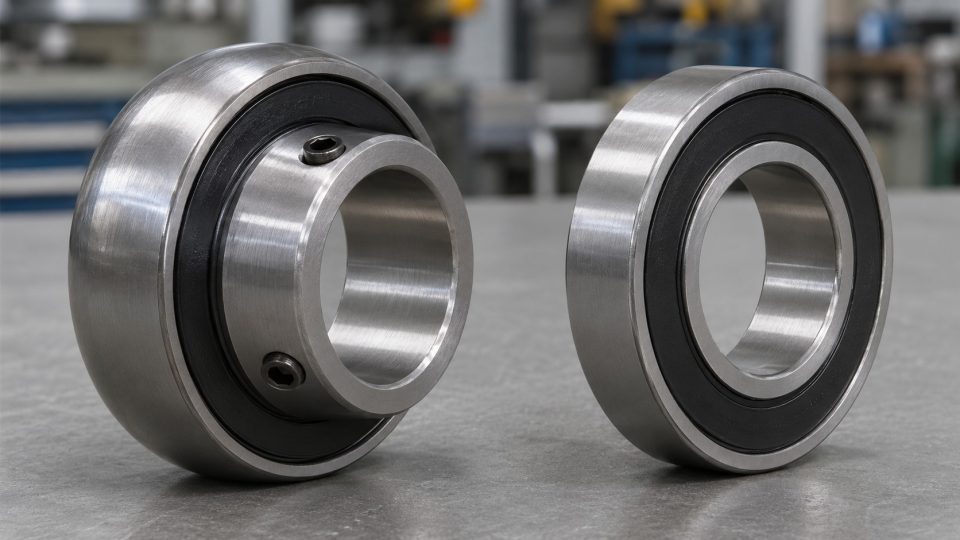
UC205 a 6205 — dlaczego wymiary 25 i 52 mm nie wystarczą?
UC205 i 6205 nie są bezpośrednimi zamiennikami tylko dlatego, że mają otwór 25 mm i średnicę zewnętrzną 52 mm. Przy zakupie sprawdź również kształt powierzchni zewnętr...
Read article · 3 min
causes of premature bearing wear
Causes of premature bearing wear – mounting errors, lubrication and contamination The most common causes of premature bearing wear are inadequate lubrication, lubrican...
Read article · 12 min