
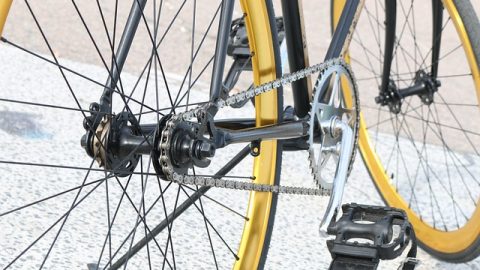
A chain quick link lets you connect and disconnect links quickly without driving out a pin in the chain. If the chain has a so-called quick link, it can be removed usi...
A chain quick link lets you connect and disconnect links quickly without driving out a pin in the chain. If the chain has a so-called quick link, it can be removed using suitable quick-link pliers. This is particularly useful for cleaning, maintenance, repair or chain replacement. This guide explains how to open a chain using a quick link, identify the correct link and what to check during reassembly.
Contents
- How do you check whether a chain has a quick link?
- Which tools are needed to open a quick link?
- How to open a chain using a quick link — step-by-step instructions
- 1. Position the bicycle securely
- 2. Find the quick link
- 3. Place the pliers on the quick link
- 4. Compress the quick link
- 5. Disconnect the chain
- How do you reconnect a chain using a quick link?
- How do you select a quick link for a chain?
- Quick link or connecting pin — how do these joining methods differ?
- Common mistakes when opening a quick link
- Using excessive force
- Trying to open an ordinary link
- Reusing a worn quick link
- Failing to check after assembly
- How do you care for a chain after opening it?
- Ensure the chain is joined correctly
How do you check whether a chain has a quick link?
Before starting work, check how the chain is joined. A quick link differs in appearance from the other links. It generally consists of two specially shaped plates with characteristic holes and guides. The easiest way to find it is to rotate the crank while watching successive links.
If one link clearly differs from the others, it is likely to be a quick link. However, not every chain has one. If it cannot be found, do not try to force a random link apart. In this case, removal depends on the chain design and connection used.
Which tools are needed to open a quick link?
For basic removal, prepare the following.
- chain quick-link pliers,
- work gloves,
- a cloth or paper towel,
- degreaser if the chain will be cleaned afterwards.
Special pliers are the safest solution because they are designed to disconnect quick links without damaging the chain plates. Suitable combination pliers can be used in an emergency, but require greater precision.
How to open a chain using a quick link — step-by-step instructions
1. Position the bicycle securely
Place the bicycle on a stable surface or repair stand. The chain should be as slack as possible to make the quick link accessible. Clean the area around the connection before starting. Dirt and dried grease can make it harder to grip the quick link correctly.
2. Find the quick link
Rotate the crank slowly and watch the links. The quick link should differ in construction from standard chain links. If it is difficult to find, marking its position before starting work may help.
3. Place the pliers on the quick link
Place the plier tips in the quick link's appropriate holes or engagement points. The tool should be stable and its tips must contact the component correctly.
4. Compress the quick link
Closing the plier handles causes the quick-link plates to move relative to each other. This releases the connection. Do not use excessive force. If the quick link does not respond, check the plier position and make sure you are working on the correct link.
5. Disconnect the chain
Once the quick link is released, its parts can be slid out of the appropriate holes. The chain is disconnected and can be removed from the bicycle or serviced as planned. Remember to check the quick link's condition after opening. If deformed, heavily worn or damaged, it is safer to replace it than reuse a damaged component.
How do you reconnect a chain using a quick link?
Reassembly requires correct positioning of both quick-link halves. Pass the component ends through the appropriate holes in the chain plates, then engage them. Depending on the quick-link type, locking it may require an appropriate chain movement or dedicated pliers. After joining, check that both halves are positioned correctly. Then rotate the crank by hand and ensure that the chain runs freely and the quick link does not jam as it passes through the drivetrain.
How do you select a quick link for a chain?
Not every quick link fits every chain. Selection should primarily consider
- chain width,
- number of gears,
- drivetrain type and model,
- chain manufacturer's recommendations,
- the quick link's own specifications.
Using an unsuitable component can cause incorrect drivetrain operation, chain rubbing or difficulties closing it.
Quick link or connecting pin — how do these joining methods differ?
A quick link is designed primarily for easy disconnection and reconnection. It therefore works well for regular servicing and cleaning. Another way to join chain components is with a connecting pin.
In that case, removal and installation require a suitable tool and correct alignment during the work. Always select the connecting component according to the specific chain design and manufacturer's requirements.
Common mistakes when opening a quick link
Using excessive force
If the quick link will not open, do not immediately increase pressure. First check that the pliers are fitted correctly and that you are actually working on the quick link.
Trying to open an ordinary link
Not every link is intended for repeated disconnection. Trying to press a pin out of a standard link can damage the chain or result in an incorrect connection.
Reusing a worn quick link
If a component shows wear or deformation, do not refit it merely to avoid purchasing a new part.
Failing to check after assembly
After closing, check the connection before riding. The quick link must be properly locked and the chain should run smoothly around the entire drivetrain.
How do you care for a chain after opening it?
Removing the chain makes thorough removal of old lubricant and dirt easier. After degreasing, rinse or wipe away cleaning-agent residue and leave the component to dry. Then apply a product intended for chain lubrication. Oil should primarily reach the working areas of the links. Remove excess oil to reduce dust and sand adhesion. Regular inspection helps detect elongation, corrosion, damaged links or quick-link problems earlier.
Ensure the chain is joined correctly
Opening a chain with a quick link is straightforward, provided the chain actually has a detachable quick link. The safest approach is to use dedicated pliers, grip the component correctly and avoid excessive force. Before reassembly, check the quick link's condition and ensure it is suitable for the chain. After closing, inspect the connection and smooth drivetrain operation.
Available from stockLooking for a quick link to fit your chain?
Explore the full range of chains, quick links and pins at the Neron store.
Explore our rangeRelated articles
Wood screws vs metal screws – understand the differences and avoid installation mistakes
What are the main differences when comparing wood screws with metal screws, and how do they affect correct installation? The main difference lies in thread geometry an...
Read article · 7 min
Everything worth knowing about grease nipples
Modern machinery and equipment depend not only on their design but, above all, on how they are maintained. Correct servicing of lubrication points is one of the most i...
Read article · 6 min
Kluber greases – why does choosing the right lubricant matter?
In precision engineering and heavy industry, there is no room for half measures. Every machine, whatever its purpose, needs proper protection to operate reliably for m...
Read article · 5 min