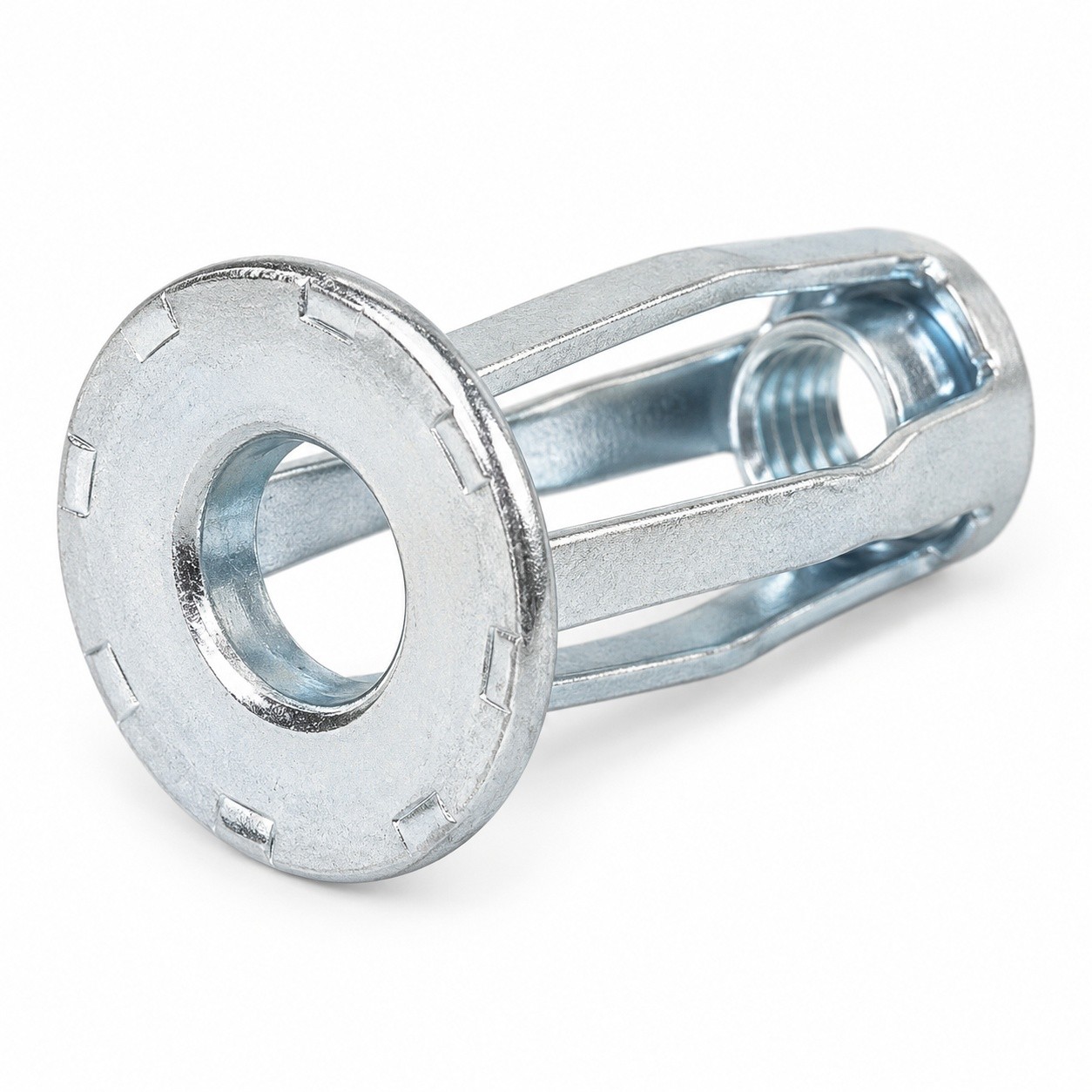
Jack Nut AN 247 M6L — zinc-coated steel, 2500 pieces
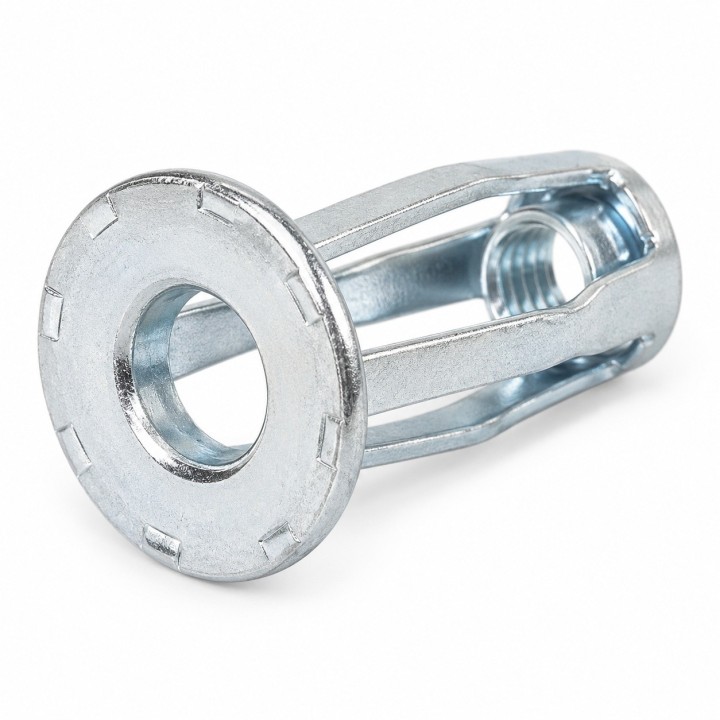
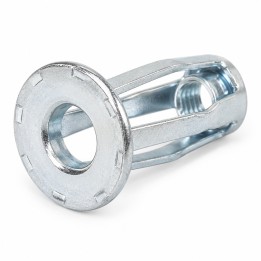
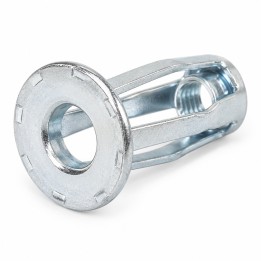
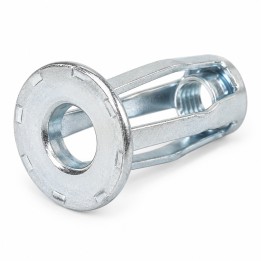
Threaded expanding component for installation with access from one side of the panel. It has four legs connecting the round flange to the threaded end. When the body is pulled up, the legs deform and bear against the back of the material. The variant offered is supplied before expansion.
Technical specifications
- Catalogue designation: AN 247
- Length variant: L
- Nut type: Jack Nut (expanding)
- Internal thread d1: M6
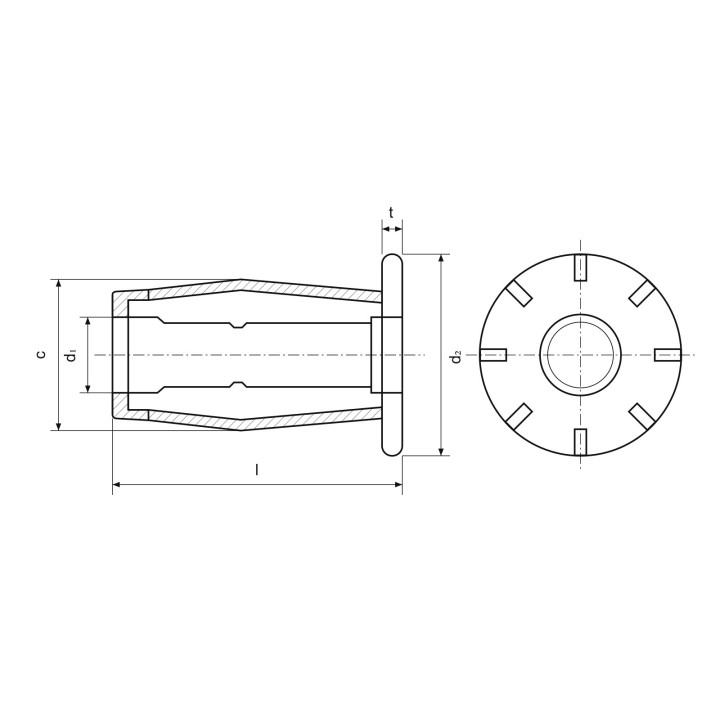
- Flange diameter d2: 16 mm
- Nominal length l: 23 mm (including flange)
- Body dimension c: 12 mm
- Flange thickness t: 1,6 mm
- Thickness of the panel being fastened: 5–10 mm
- Number of expanding legs: 4
- Setting method: From one side, by pulling up the body
- Material: Carbon steel
- Coating: White electroplated zinc
Length l = 23 mm is the overall length — it includes the flange. Flange thickness t = 1,6 mm is part of this dimension. Dimension c = 12 mm is the body dimension shown in the diagram; it does not specify the mounting hole diameter.

Material and application
Carbon steel with a white electroplated zinc coating. Nuts in this family are used to install a thread in thin, soft or brittle materials, such as plastics and panels. The specified panel thickness for M6L is 5–10 mm. Selection for a particular material and load requires the joint to be checked; no load capacity values absent from the documentation have been assigned.
Setting
- Screw the nut onto the mandrel of a suitable installation tool.
- Insert the body through the prepared hole and press the flange against the panel surface.
- Pull the mandrel to spread the four legs on the other side of the panel.
- Unscrew the tool mandrel.
There must be free space behind the panel for the legs to spread. The hole diameter and tool settings must suit the particular variant and be confirmed by an installation trial. The nut does not replace a screw or installation tool.

Scope of delivery and weight
The catalogue weight of the entire pack of 2500 pieces is 10,34 kg. This is the weight of the appropriate full pack, not a conversion from a rounded piece weight or an in-house NERON measurement.
The price includes one pack of 2500 Jack Nuts AN 247 M6L. The screw and tool are not included. Our own product and packaging illustrations depict the product family, not the number of pieces sold or the actual delivery carton. The diagram contains shared dimension symbols; the values for the M6L offered are stated above. The thread and section representation is schematic. The catalogue diagram is not manufacturing documentation.
Frequently asked questions
How many pieces does the price include?
One pack of 2500 nuts AN 247 M6L.
What panel thickness is variant M6L for?
For a 5–10 mm panel. Space must be provided for the four legs to spread behind the panel.
Does length 23 mm include the flange?
Yes. This is the overall length l, and the flange has thickness t = 1,6 mm.
Does dimension c = 12 mm determine the mounting hole?
No. This is a body dimension. The exact hole and tool settings must be confirmed for the particular application.




Comments (0)
Your review appreciation cannot be sent
Report comment
Report sent
Your report cannot be sent