
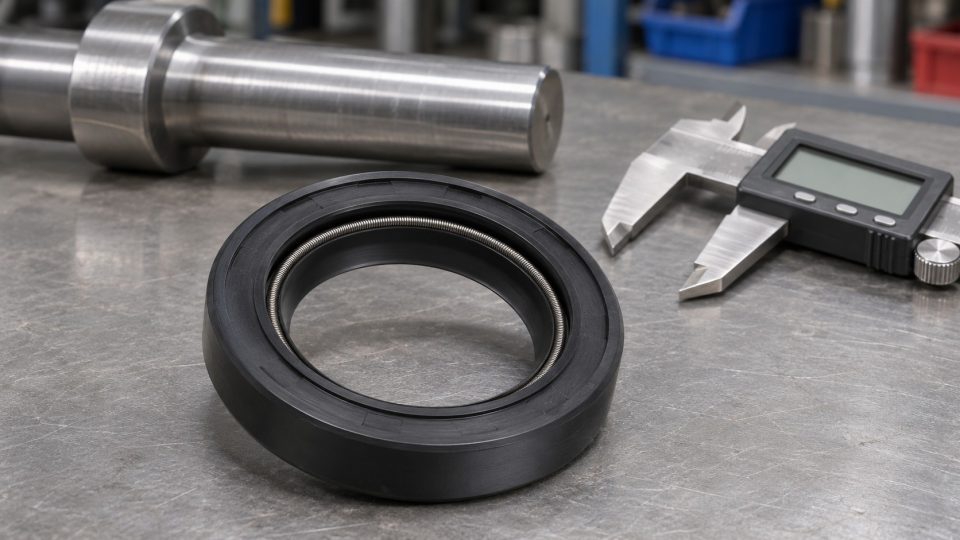
Does your old seal carry the designation 25 × 40 × 7, and do you want to order a replacement? Also record the letters, manufacturer and installation location. The thre...
Does your old seal carry the designation 25 × 40 × 7, and do you want to order a replacement? Also record the letters, manufacturer and installation location. The three numbers help identify the correct shaft seal size, but they do not describe the entire design or material resistance. The following checklist helps you prepare an enquiry containing the information needed for selection.
First copy the full designation
Take clear photographs of both sides of the seal before discarding it. Copy the full character sequence in the original order. Do not omit the suffix. In the designation 25 × 40 × 7 HMSA10 RG SKF the numerical section, design code and material code convey different information.
If the lettering is illegible, indicate the missing information in your enquiry. The rubber's black colour alone does not identify its material. A part number from the machine documentation, an installation drawing or a previous order reference can help.
Example 25 × 40 × 7 HMSA10 RG — what should you check in the data sheet?
NERON offers the SKF 25 × 40 × 7 HMSA10 RG shaft seal. For this designation, interpret the dimensions in millimetres as follows.
- 25 — d₁ nominal diameter of the shaft on which the seal runs.
- 40 — D nominal diameter of the housing bore intended for the seal.
- 7 — b nominal seal width along the shaft axis.
In the SKF catalogue, HMSA10 denotes a design with an additional auxiliary lip, while RG denotes a nitrile rubber compound developed by SKF. This explanation applies to this manufacturer's designation system. It must not automatically be applied to similar-sounding symbols used by other brands.
Dimension d₁ is not an instruction to measure the free opening of the flexible lip. During identification, compare the designation with the dimensions of the metal parts and the documentation. An old, deformed seal may help identify the part, but it is not a reference for assessing fit.
Another product with the same dimensions — is it a ready replacement?
NERON also offers the ERIKS 25 × 40 × 7 RST NBR shaft seal. Its name gives the same size and a different type designation. This alone does not confirm interchangeability with the SKF version.
Before changing manufacturer, compare the seal cross-section and design, material, function of the additional lip and application requirements. Do not treat RST, TC and HMSA10 as a single shared code. A replacement must be confirmed using the relevant manufacturers' documentation or technical selection.
What should you add to a shaft seal enquiry?
In addition to the full designation and photographs, prepare the following.
- Installation location the assembly being sealed, shaft and housing-bore dimensions, and available axial space.
- Medium the name of the oil, grease or other substance in contact with the seal. Describing it simply as “oil” may be too general.
- Motion conditions rotational speed and direction of rotation, if known.
- Temperature and pressure continuous conditions and any short-term changes. Do not substitute workshop temperature for operating temperature.
- External conditions dust, water, washing and any observed causes of the previous leak.
An example enquiry might read “I need a seal designated 25 × 40 × 7 HMSA10 RG. Photographs and assembly details are attached. Please check a replacement for the specified oil, temperature, speed and pressure.” Mark unknown values as unavailable instead of assuming typical conditions.
Complete selection before installation
Do not select a material solely by a single limiting temperature. SKF notes that temperature, speed and pressure affect one another. Catalogue maximum values do not mean they may occur simultaneously. Check the requirements for the specific design and medium.
Before installation, also inspect the shaft running surface and seal housing. Submit any observed damage or wear for assessment together with the part details. A new seal of the correct size does not confirm that the cause of the previous leak has been eliminated. Carry out installation according to the instructions for the selected seal and assembly.
Related articles
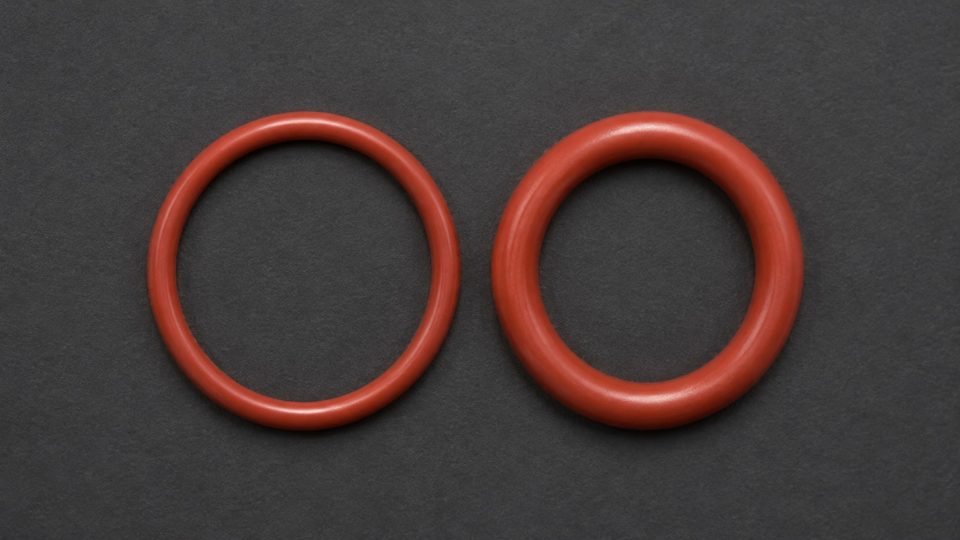
O-ring 24 mm na zewnątrz — jak odróżnić 20 × 2 od 18 × 3?
Jeśli O-ring ma około 24 mm średnicy zewnętrznej, zmierz jeszcze jego otwór i grubość przekroju. Nominalnie zarówno 20 × 2 mm, jak i 18 × 3 mm dają 24 mm na zewnątrz. ...
Read article · 3 min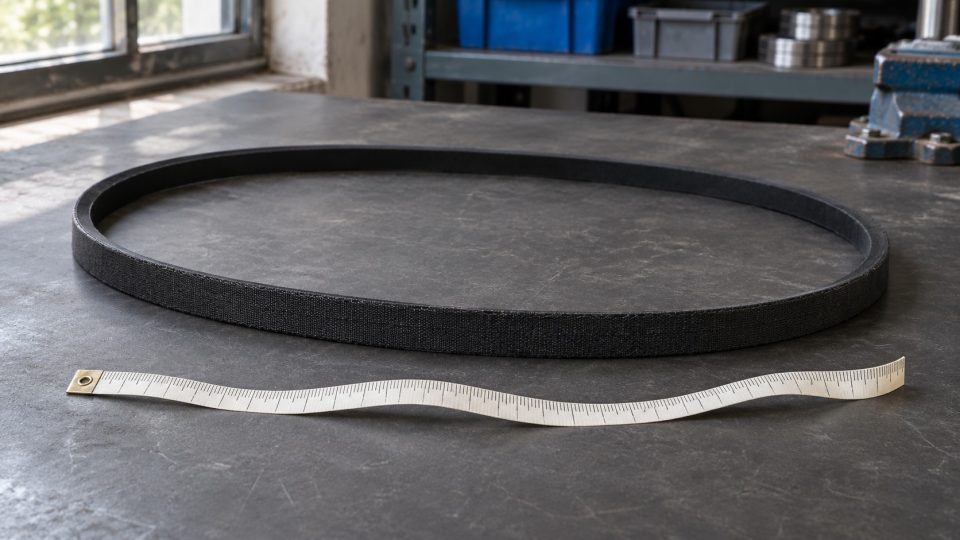
Pasek klinowy Li, Ld czy La — którą długość podać przy zakupie?
W zamówieniu paska klinowego podaj profil, liczbę określającą długość i jej symbol. Sam zapis „1000 mm” pozostawia pytanie: chodzi o obwód wewnętrzny, zewnętrzny czy d...
Read article · 3 min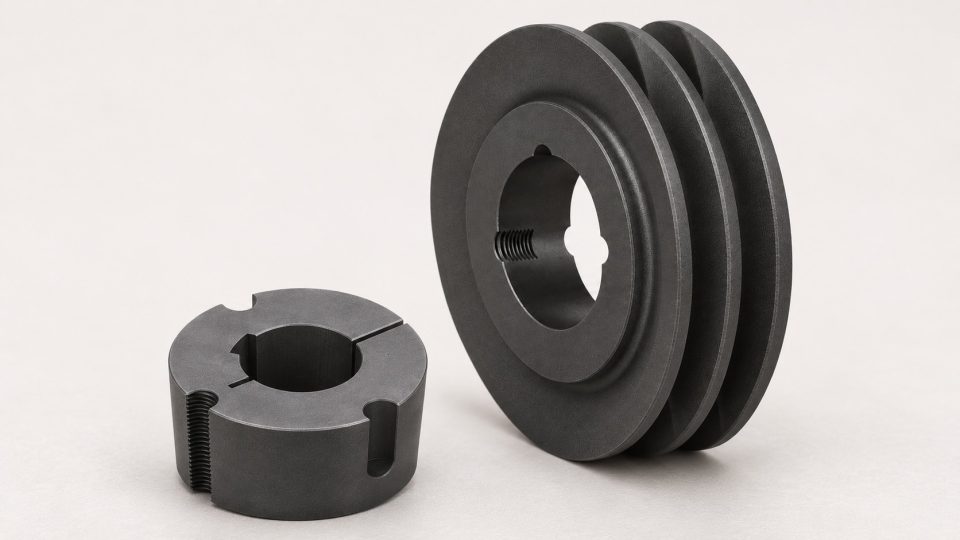
Tuleja Taper Lock 1610/25 — jak dobrać ją do wału i koła pasowego?
Masz wał o średnicy 25 mm i szukasz tulei do koła pasowego? Zacznij od sprawdzenia gniazda w piaście koła. Jeżeli koło jest przewidziane pod tuleję 1610, a wał ma nomi...
Read article · 3 min