
Rivet nuts AN 322 M10x24 — zinc-plated steel, 150 pieces
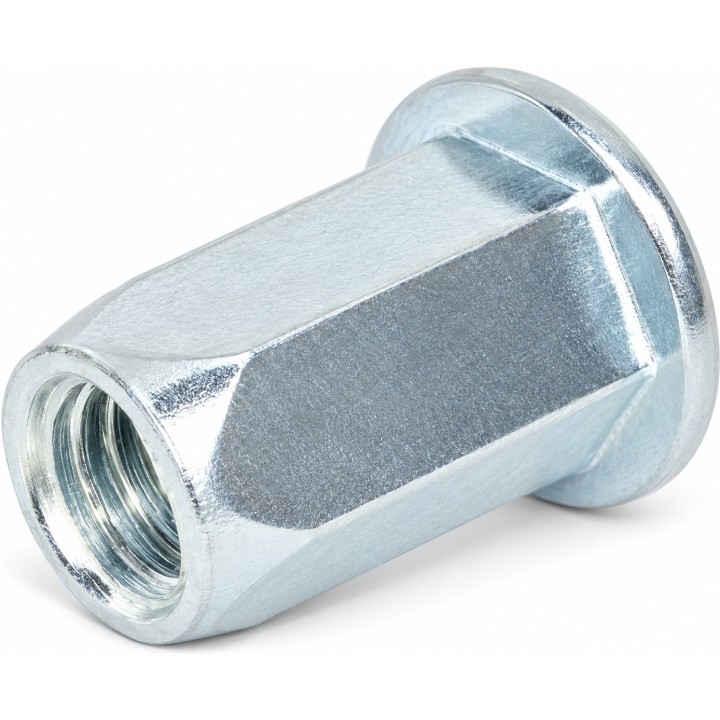
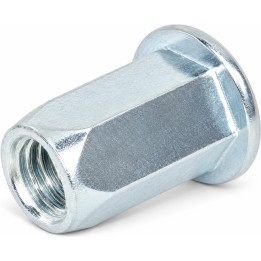
Open-end rivet nuts with a fully hexagonal shank with smooth flat surfaces and a round, flat cylindrical flange. For setting an internal thread in thin components using a rivet-nut tool. The hexagonal body engages a hexagonal hole, limiting rotation of the item.
Specifications before setting
- Catalogue designation: AN 322
- Rivet nut type: Open-end
- Body shape: Hexagonal
- Body surface: Smooth flat surfaces
- Flange type: Cylindrical (flat, round)
- Internal thread d: M10
- Thread type: ISO metric
- Thread tolerance: 6H according to ISO 965
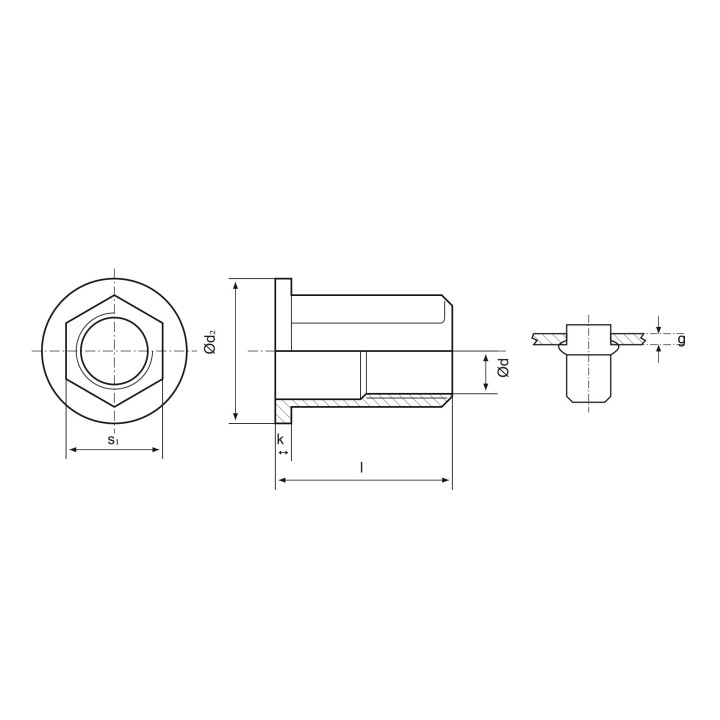
- Width across flats s1: 13 mm
- Flange diameter d2: 19 mm
- Flange height k: 2 mm
- Nominal length l: 24 mm (including flange)
- Grip range g: 1,00–3,50 mm
- Installation hole shape: Hexagonal
- Hole width across flats according to the data sheet: 13,1 mm
- Material: Unalloyed (carbon) steel, EN 10025
- Coating: White electroplated zinc
- Coating designation: A2K
- Coating thickness according to the data sheet: 5 µm
- Passivation according to the data sheet: Cr3+
- Coating standard: ISO 4042
- Dimensional tolerances: To be confirmed
- Installation state: Before setting
Length l = 24 mm includes the flange and is measured from its face to the opposite end. Height k = 2 mm is not added to it.

Material and finish
Unalloyed (carbon) steel EN 10025, ISO metric thread with tolerance 6H according to ISO 965. Coating: white electroplated zinc A2K, 5 µm, passivation Cr3+, ISO 4042. These are catalogue requirements, not a batch test certificate. Tolerances for the remaining dimensions require confirmation. No unstated exact steel grade, hardness, setting force, torque or load capacity has been assigned.
Selection and installation
Grip range 1,00–3,50 mm. The installation hole is hexagonal with width across flats 13,1 mm. This is not the diameter of a round hole. The body width across flats s1 is 13 mm. The grip range and hole are manufacturer data; selection and setting parameters must be confirmed by trials on the intended material. During setting, the deformable body section clamps the material. The open-end version does not provide a sealed closure.

Scope of delivery and weight
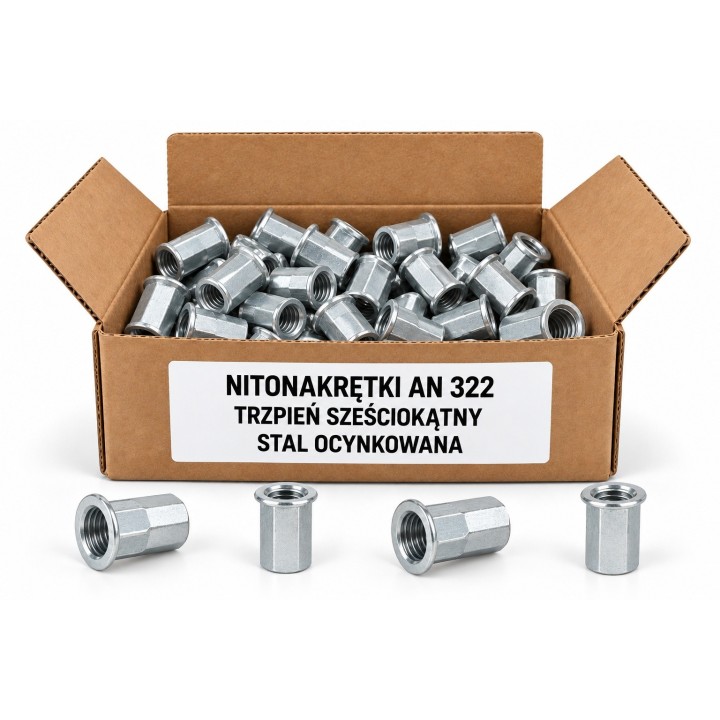
The price covers a pack of 150 pieces AN 322 M10x24. The catalogue weight of the entire applicable pack is 1,80 kg. This is neither NERON's own measurement nor a calculation from a rounded single-piece weight.
The in-house product and packaging graphics illustrate the family; they do not document the exact number of pieces or the delivery carton. The family diagram shows dimensional callouts common to the AN 322 versions; the applicable values are given in the specifications table. The thread and section are schematic. The diagram is not manufacturing documentation.
Frequently asked questions
How many pieces does the price include?
150 pieces.
Does the length include the flange?
Yes, l = 24 mm includes the flange.
What shape are the body and flange?
Hexagonal body, s1 = 13 mm. Round cylindrical flat flange, d2 = 19 mm, k = 2 mm.
What hole and grip range does the documentation specify?
Hexagonal hole with width across flats 13,1 mm; grip range 1,00–3,50 mm. Selection and setting parameters must be checked by trials.





Comments (0)
Your review appreciation cannot be sent
Report comment
Report sent
Your report cannot be sent