


- New
M8 Through disc knob 40 mm with brass insert - 1 pc. images
M8 Through disc knob 40 mm with brass insert - 1 pc.
zł5.98 Grosszł4.86 Net
(zł5.98 szt.)
Pokrętło tarczowe sześciokarbowe o średnicy 40 mm, z otworem przelotowym i mosiężną tuleją gwintowaną M8. Skok gwintu 1,25 mm. Korpus z tworzywa wzmocnionego włóknem szklanym. 1 sztuka. Masa katalogowa oferowanej ilości 0,02122 kg. Termin realizacji: 2 dni.
Pokrętło tarczowe przelotowe M8 z tuleją mosiężną
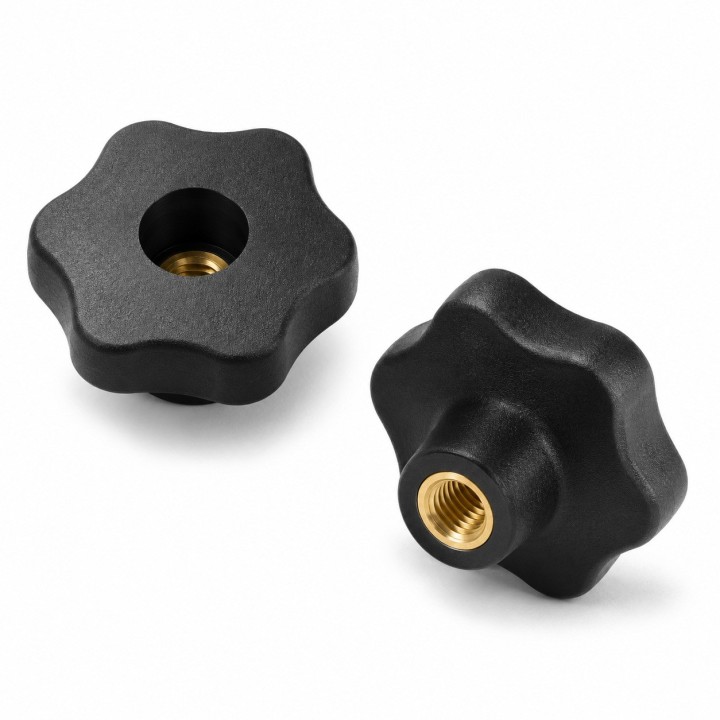
Sześć zaokrąglonych karbów ułatwia ręczny chwyt przy regulacji i dokręcaniu. Czarny korpus wykonano z tworzywa sztucznego wzmocnionego włóknem szklanym. Otwór jest otwarty z obu stron. Gwint metryczny M8 znajduje się w mosiężnej tulei.
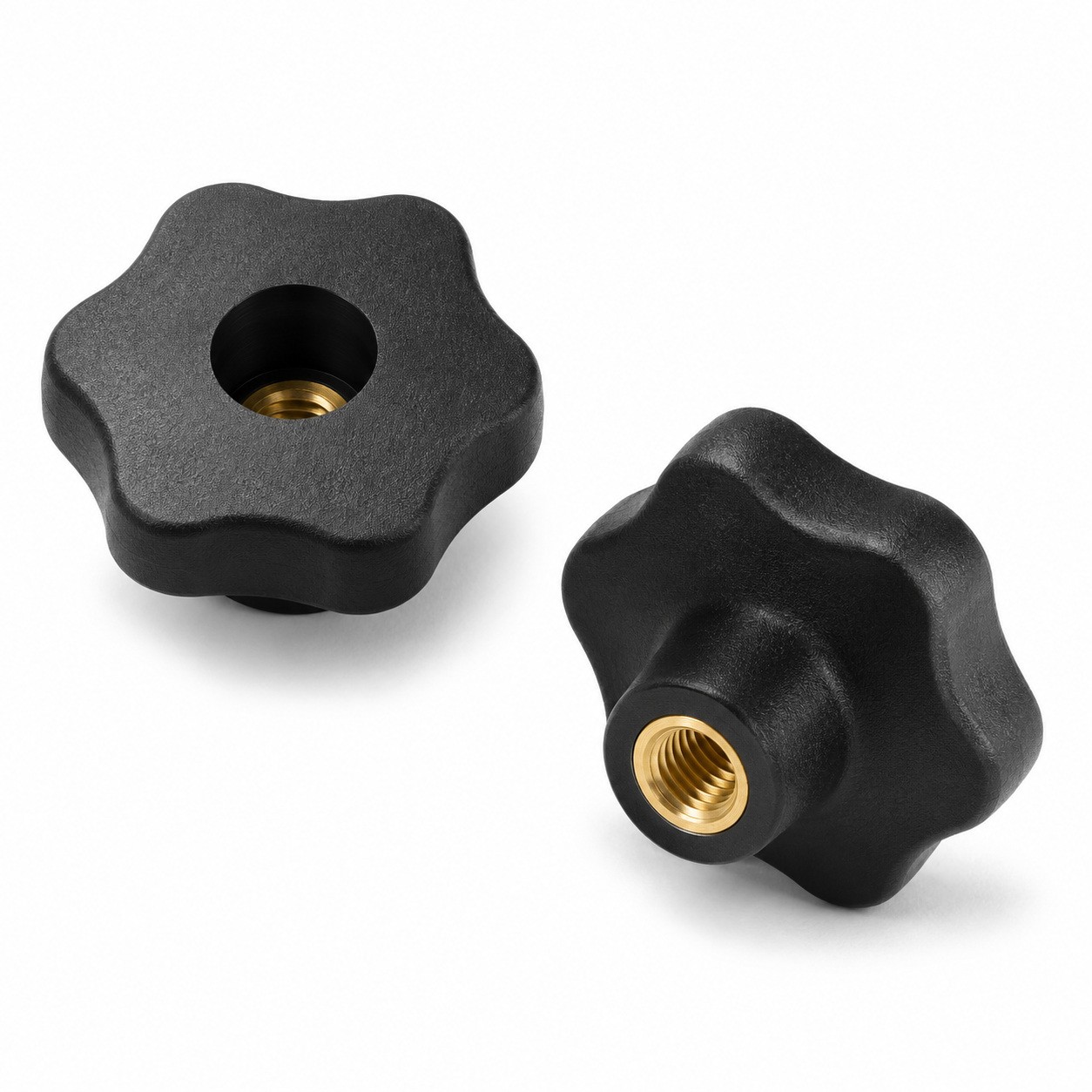
Ilustracja pokrętła od strony otworu i tulei
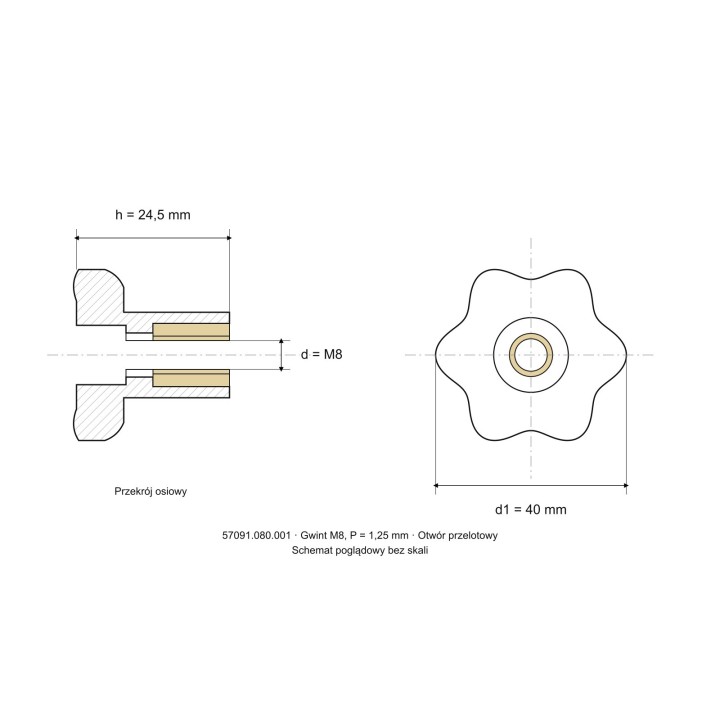
Wymiary i mocowanie
- d = M8 — gwint wewnętrzny.
- P = 1,25 mm — skok gwintu.
- d1 = 40 mm — średnica pokrętła.
- h = 24,5 mm — wysokość całkowita.
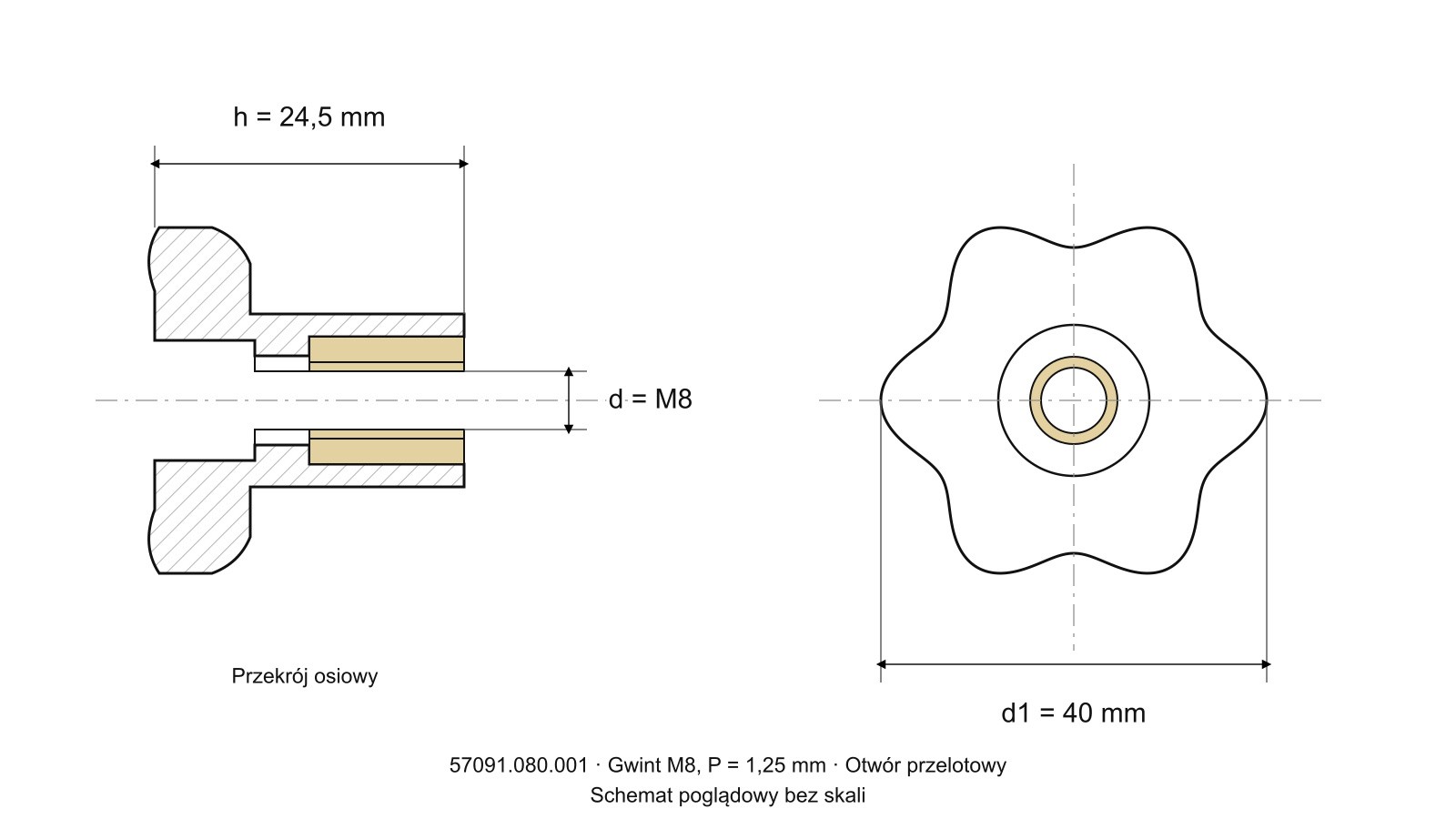
Otwór przelotowy i oznaczenia wymiarów
Identyfikacja i jednostka sprzedaży
1 sztuka. Numer katalogowy 57091.080.001 (57091080001). Masa katalogowa jednej sztuki to 21,22 g. Masa oferowanej ilości wynosi 0,02122 kg.
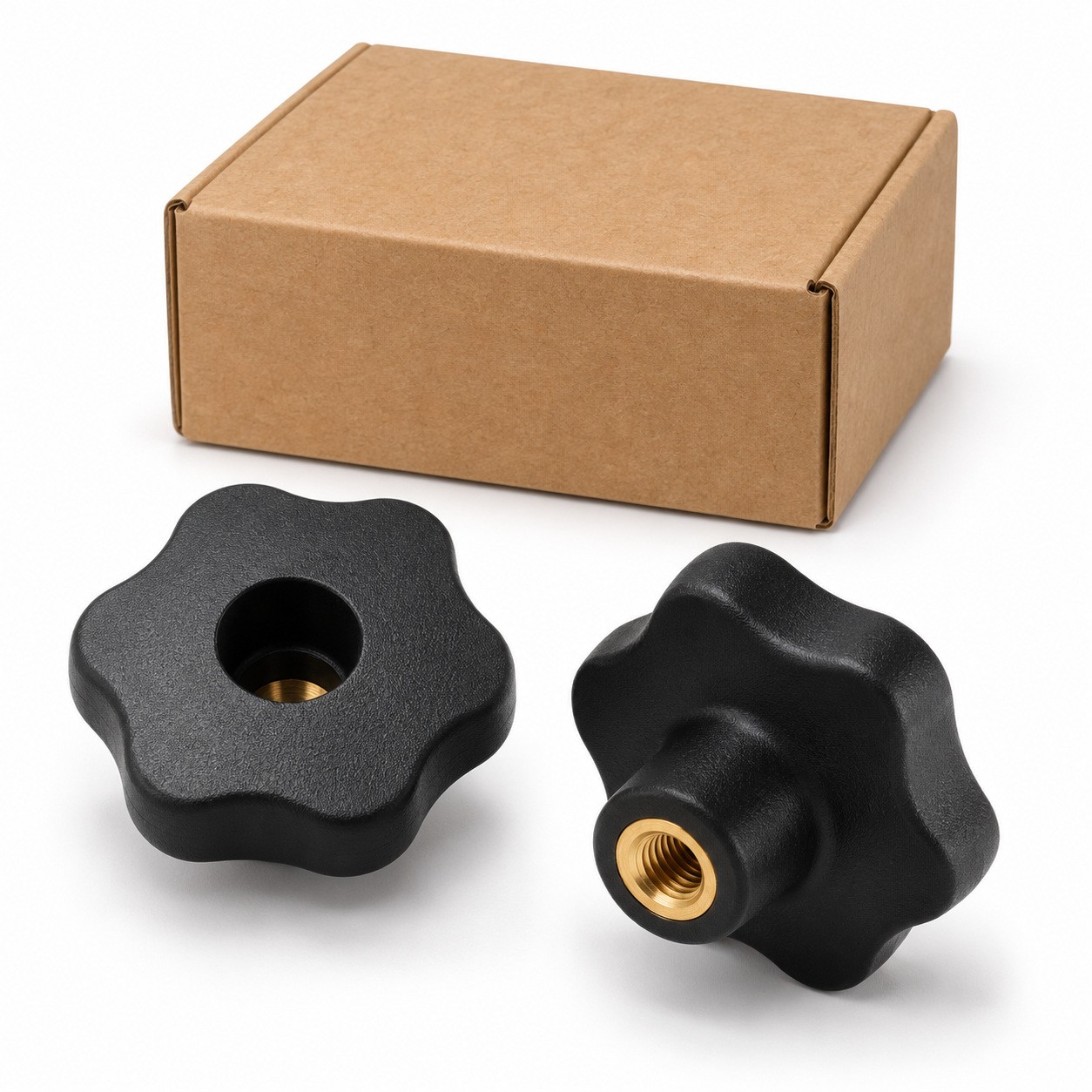
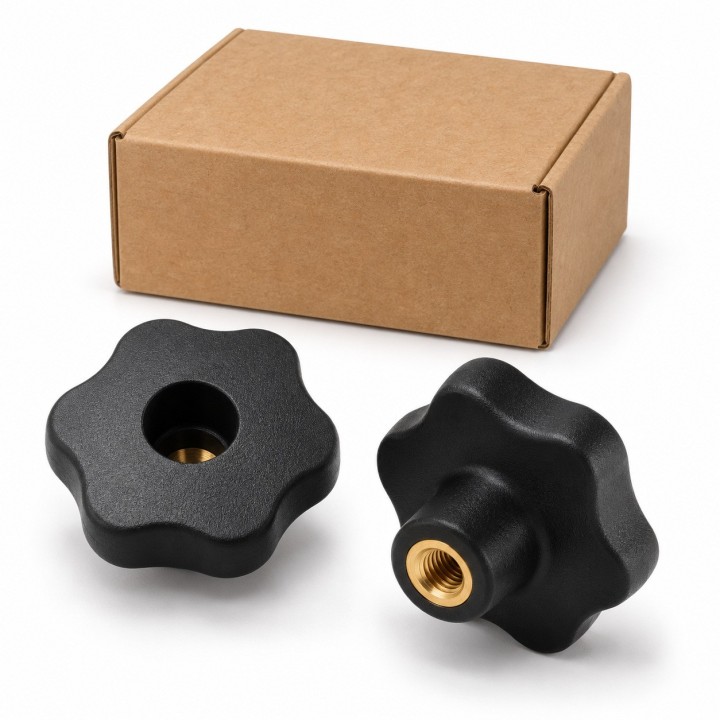
Wizualizacja opakowania referencyjnego
Najczęstsze pytania
Czy otwór jest przelotowy?
Tak. Otwór jest otwarty od góry i od strony tulei.
Jak dobrać element współpracujący?
Powinien mieć gwint zewnętrzny M8 o skoku 1,25 mm.
Z czego wykonano pokrętło?
Korpus jest z tworzywa wzmocnionego włóknem szklanym, a tuleja gwintowana z mosiądzu.
Gdzie sprawdzić rozmiar korpusu?
Na schemacie d1 oznacza średnicę 40 mm, a h wysokość całkowitą 24,5 mm.
-
Brand

-
ReferenceN-57091-M8-D40-Q1
-
Waga0,02122 kg
-
In stock50 Items
-
Sales unitSztuka
-
TypePokrętło tarczowe sześciokarbowe
-
Thread typeMetric internal
-
ThreadM8
-
DesignOtwór przelotowy z tuleją gwintowaną
-
Thread pitch1,25 mm
-
Body materialGlass-fibre-reinforced plastic
-
Catalogue number57091.080.001
-
Bush materialBrass
-
Kolor korpusuCzarny
-
Średnica pokrętła40 mm
-
Masa jednej sztuki21,22 g
-
Masa oferowanej ilości0,02122 kg
-
Liczba sztuk w ofercie1
-
Wysokość całkowita24,5 mm
Workplace safety warnings — in accordance with Regulation (EU) 2023/988 on general product safety:
1. Eye protection:
– Always wear safety goggles or a face shield to protect your eyes from sparks, particles and metal fragments.
2. Hearing protection:
– When working in a noisy environment, use ear defenders or earplugs to prevent hearing damage.
3. Respiratory protection:
– When working in dusty surroundings or in the presence of fumes, wear a filtering mask or an appropriate respirator.
– Ensure proper ventilation of the workstation.
4. Hand and skin safety:
– Use protective gloves that protect against mechanical injuries and chemicals.
– Where necessary, use protective creams to prevent irritation and dry skin.
5. Work clothing:
– Work in protective clothing resistant to sparks and splashes.
– Avoid loose clothing, jewellery and loose hair near machinery.
6. Fire risk:
– Keep the workstation free of flammable materials (e.g. paper, fabrics and chemicals).
– Keep a serviceable fire extinguisher close at hand and know how to use it.
7. Electrical hazards:
– Check the condition of cables and electrical equipment before use.
– Do not use electrical devices in damp conditions.
– Disconnect equipment from the power supply during maintenance or repairs.
8. Use of machinery and tools:
– Regularly inspect the technical condition of machines and tools.
– Use equipment in accordance with the manufacturer's instructions.
– Blades and tools should be maintained regularly and kept in good condition.
– Machines should be fitted with appropriate guards and protective devices.
9. Handling materials:
– Use handling equipment to move heavy components.
– Lift and carry using ergonomic practices to avoid injury.
10. Working with chemicals:
– Store chemicals in labelled, safe containers.
– Use substances in accordance with the manufacturer's instructions and occupational health and safety rules.
– Ensure air circulation when using chemicals.
Other important rules:
– Keep the workstation clean and tidy.
– Ensure adequate lighting in the working area.
– Provide occupational health and safety training.
– Carry out regular safety audits and comply with current regulations.
4 other products in the same category
- New
M12 Disc knobs with brass insert 60 mm - 5 pcs.
zł62.39 Grosszł50.72 Net
Rated out of 5 stars based on
review(s)
- New
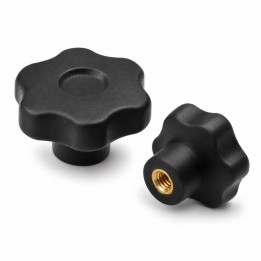
M8 Disc knobs with brass insert 40 mm - 10 pcs.
zł55.79 Grosszł45.36 Net
Rated out of 5 stars based on
review(s)
Viewed products
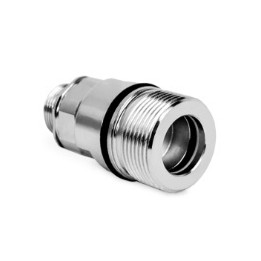
Poppet quick coupling screw-on M30x2 socket F.VD100 L22 300 bar 809508032
zł157.20 Grosszł127.80 Net
Rated out of 5 stars based on
review(s)
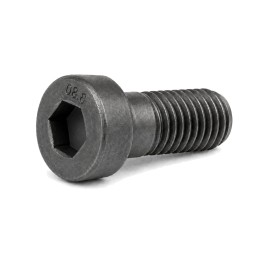
M8x25 low cylindrical-head hexagon socket screw 8.8 uncoated DIN 6912 - 200 pcs.
zł32.50 Grosszł26.42 Net
Rated out of 5 stars based on
review(s)
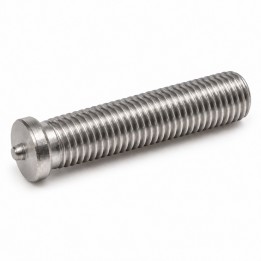
M8x30 threaded welding stud ISO 13918 PT, stainless steel A2 - 10 pcs.
zł10.90 Grosszł8.86 Net
Rated out of 5 stars based on
review(s)
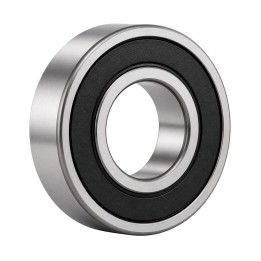
Stainless steel ball bearing SRW4 2RS EZO 6,35x15,875x5,771 mm
zł13.01 Grosszł10.58 Net
Rated out of 5 stars based on
review(s)
Comments (0)
Your review appreciation cannot be sent
Report comment
Report sent
Your report cannot be sent