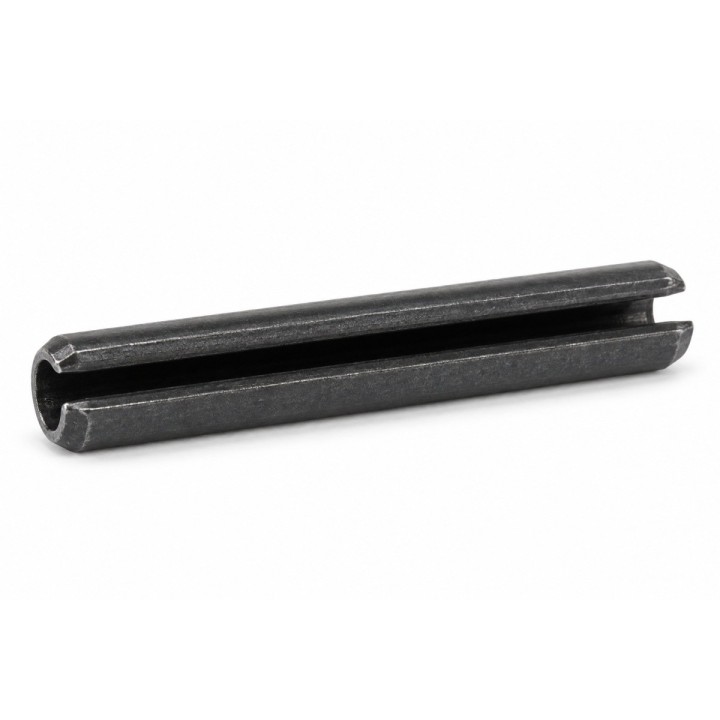
5x18 slotted spring pins ISO 8752/DIN 1481, black steel, 2000 pcs.

5x18 slotted spring pins ISO 8752/DIN 1481, black steel, 2000 pcs.
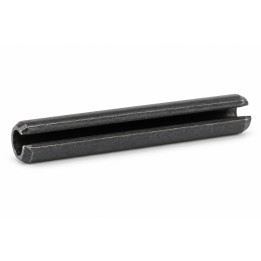
Heavy-duty slotted spring pins are used to locate, join and secure machine parts. The resilient wall adapts to the hole during installation, while the longitudinal slot allows the diameter to decrease.
Technical specifications
- Standard: ISO 8752, formerly DIN 1481.
- Nominal size: 5×18 mm.
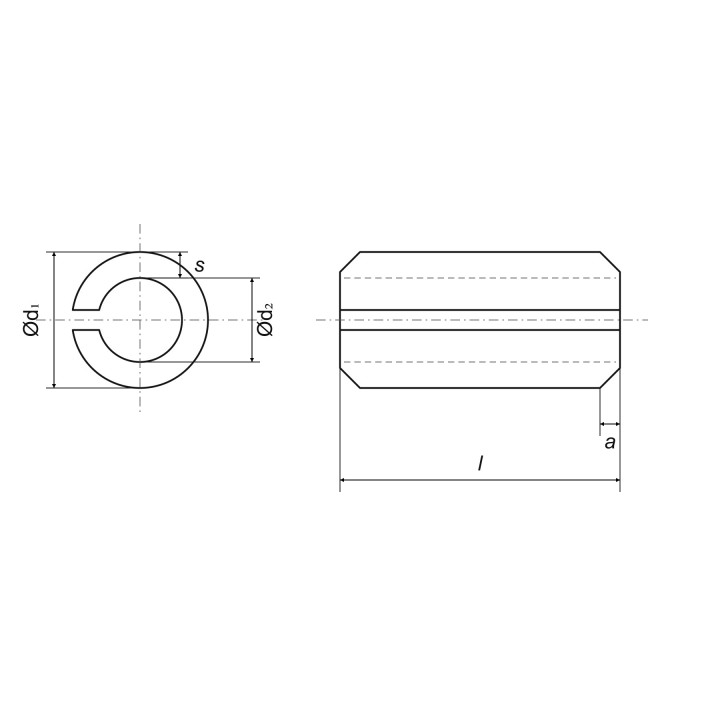
- Nominal diameter d1: 5 mm.
- Length l: 18 mm.
- Outside diameter before installation: 5,4–5,6 mm.
- Auxiliary inside diameter d2: approximately 3,4 mm.
- Wall thickness s: 1 mm.
- Chamfer a: 0,9–1,1 mm.
- Material: hardened spring steel.
- Finish: uncoated, black surface.
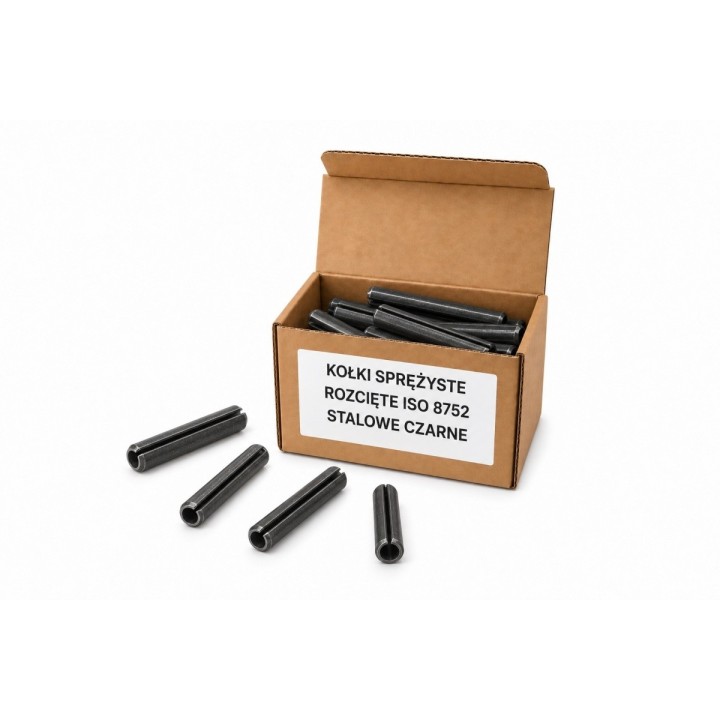
- Quantity per pack: 2000 pcs.

Installation and scope of delivery
The recommended mounting hole has a nominal diameter of 5 mm and tolerance class H12. After installation in the smallest permissible hole, the pin slot should not close completely. Insert the pin axially; select the fit and installation method to suit the material and joint loads.
Sales unit: 1 entire pack containing 2000 pieces. The price is for the entire pack.

Pack weight
Indicative catalogue weight of the corresponding full pack of 2000 pieces: 3,20 kg. This is the catalogue weight of this pack; it is neither a weighing result from NERON nor the result of multiplying a rounded single-piece weight.
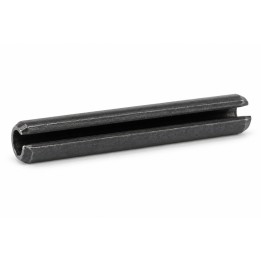
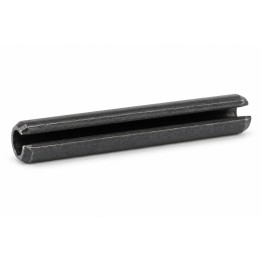
The images show the design of the pin family. The size and quantity for this offer are specified above. The drawing is illustrative.

-
StandardISO 8752 (DIN 1481)
-
Sales unitpack
-
MaterialHardened spring steel
-
Length [mm]18
-
Diameter [mm]5
-
Wall thickness1 mm
-
CoatingUncoated
-
Quantity per pack2000 pcs
-
Pack mass3,20 kg
-
Diameter before installation5,4–5,6 mm
-
Inside diameterapproximately 3,4 mm
-
Chamfer0,9–1,1 mm
1. Eye protection:
– Always wear safety goggles or a face shield to protect your eyes from sparks, particles and metal fragments.
2. Hearing protection:
– When working in a noisy environment, use ear defenders or earplugs to prevent hearing damage.
3. Respiratory protection:
– When working in dusty surroundings or in the presence of fumes, wear a filtering mask or an appropriate respirator.
– Ensure proper ventilation of the workstation.
4. Hand and skin safety:
– Use protective gloves that protect against mechanical injuries and chemicals.
– Where necessary, use protective creams to prevent irritation and dry skin.
5. Work clothing:
– Work in protective clothing resistant to sparks and splashes.
– Avoid loose clothing, jewellery and loose hair near machinery.
6. Fire risk:
– Keep the workstation free of flammable materials (e.g. paper, fabrics and chemicals).
– Keep a serviceable fire extinguisher close at hand and know how to use it.
7. Electrical hazards:
– Check the condition of cables and electrical equipment before use.
– Do not use electrical devices in damp conditions.
– Disconnect equipment from the power supply during maintenance or repairs.
8. Use of machinery and tools:
– Regularly inspect the technical condition of machines and tools.
– Use equipment in accordance with the manufacturer's instructions.
– Blades and tools should be maintained regularly and kept in good condition.
– Machines should be fitted with appropriate guards and protective devices.
9. Handling materials:
– Use handling equipment to move heavy components.
– Lift and carry using ergonomic practices to avoid injury.
10. Working with chemicals:
– Store chemicals in labelled, safe containers.
– Use substances in accordance with the manufacturer's instructions and occupational health and safety rules.
– Ensure air circulation when using chemicals.
Other important rules:
– Keep the workstation clean and tidy.
– Ensure adequate lighting in the working area.
– Provide occupational health and safety training.
– Carry out regular safety audits and comply with current regulations.

Comments (0)
Your review appreciation cannot be sent
Report comment
Report sent
Your report cannot be sent