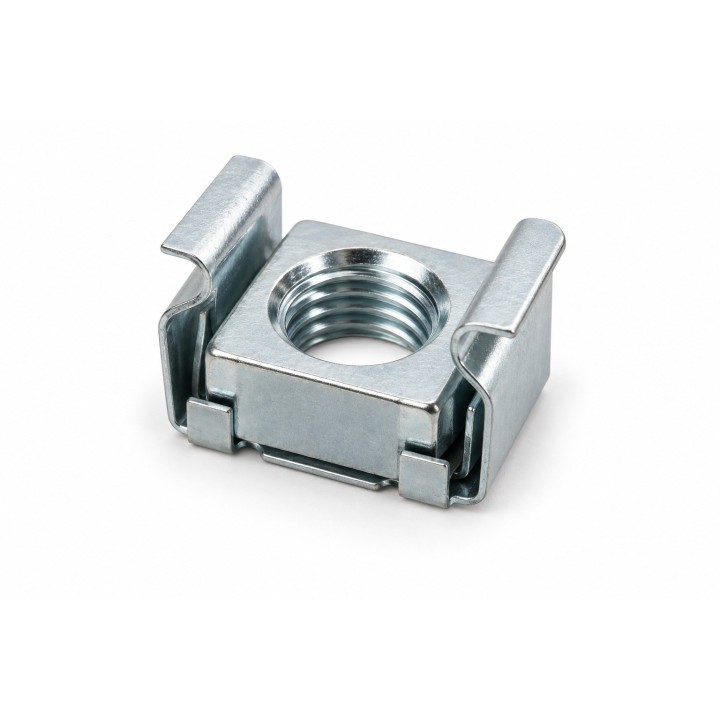
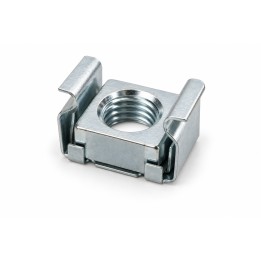
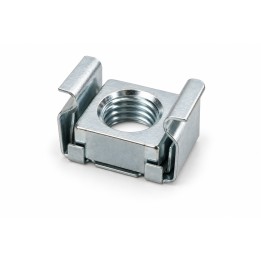
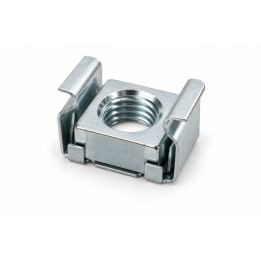
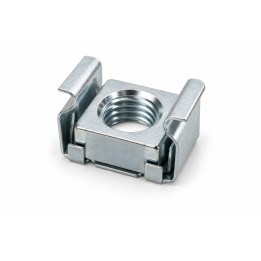
M3 cage nut AN 87, hole 5,3 mm, sheet thickness 1,0–1,6 mm, 500 pcs.

Cage nut M3 for a square hole 5,3 × 5,3 mm
Nut for creating an attachment point for an M3 screw in thin sheet metal or a panel with a suitably prepared square hole. It consists of an internally threaded nut and a separate spring cage. Two cage tabs retain the component in the mounting hole; the nut remains seated inside the cage. Variant selection depends on the thread, hole size and sheet thickness.
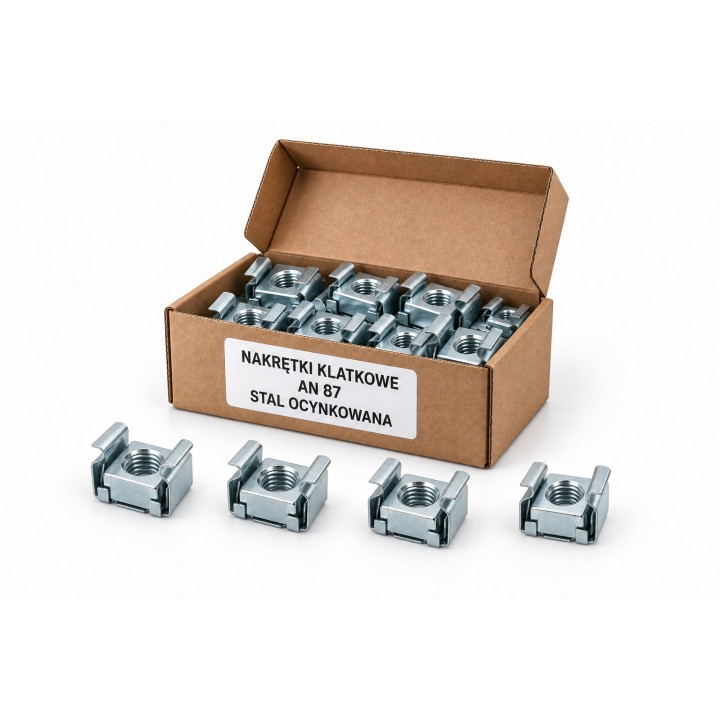
Sale: 1 full pack = 500 pieces. The price applies to the entire pack.
Technical specifications
- Designation: AN 87.
- Internal thread Ød₁: M3.
- Square mounting hole: 5,3 × 5,3 mm.
- Confirmed sheet-thickness range t: 1,0–1,6 mm.
- Nut material: carbon steel.
- Cage material: spring steel.
- Coating: white electro-zinc plating, designation A2K.
- Sales unit: pack of 500 pieces.

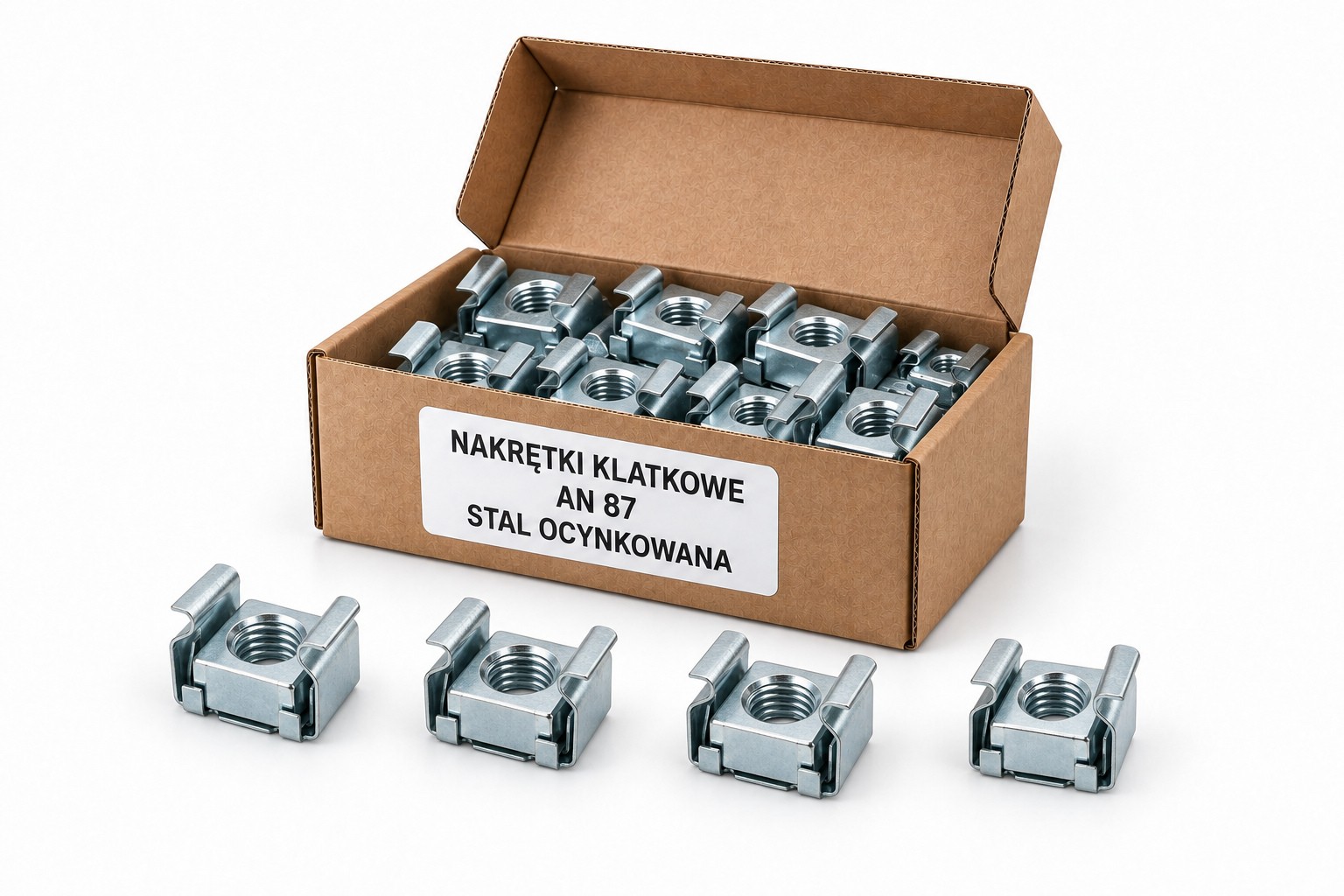
Scope of delivery: 500 cage nuts. The carton illustration shows an example arrangement and does not determine the quantity sold on this product page.
Nominal dimensions of the corresponding variant
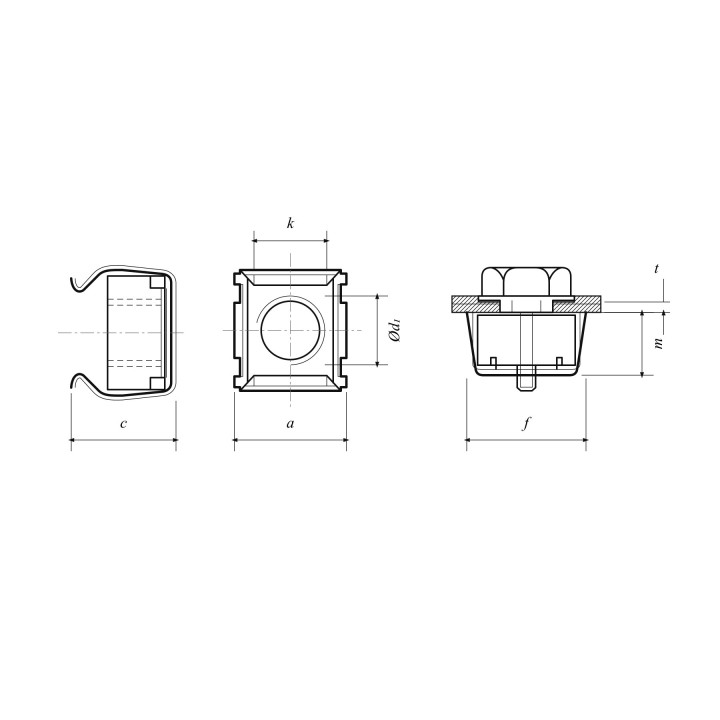
- a: 9,4 mm.
- c: 5,9 mm.
- f: 9,8 mm.
- k: 4,8 mm.
- m: 3,7 mm.
Dimensional diagram

Our own illustrative diagram shows the dimensional labels and how the nut is seated in sheet metal. It is neither manufacturing documentation nor confirmation of tolerances. The photos show a representative design of the cage nut AN 87; the corresponding thread, sheet-thickness range and dimensions of this variant are given in the specifications.
Approximate weight
Approximate weight of a pack of 500 pieces: 680 g (0,68 kg). Calculated from the catalogue weight of the full pack: 0,68 kg / 500 pieces × 500 pieces. Rounded to the nearest whole gram at the end. This is not a measurement performed by NERON.

-
ConditionNew
-
StandardAN 87
-
Sales unitpack
-
Number of pieces per pack500
-
MaterialSteel
-
TypeCage nut
-
Dimension k [mm]4,8
-
Dimension F [mm]9,8
-
Surface treatmentWhite electroplated zinc
-
Thread diameter [M]M3
-
Approximate pack mass [g]680
-
Dimension A [mm]9,4
-
Dimension C [mm]5,9
-
Mounting hole dimension [mm]5,3 × 5,3
-
Minimum sheet thickness [mm]1,0
-
Maximum sheet thickness [mm]1,6
-
Dimension m [mm]3,7
1. Eye protection:
– Always wear safety goggles or a face shield to protect your eyes from sparks, particles and metal fragments.
2. Hearing protection:
– When working in a noisy environment, use ear defenders or earplugs to prevent hearing damage.
3. Respiratory protection:
– When working in dusty surroundings or in the presence of fumes, wear a filtering mask or an appropriate respirator.
– Ensure proper ventilation of the workstation.
4. Hand and skin safety:
– Use protective gloves that protect against mechanical injuries and chemicals.
– Where necessary, use protective creams to prevent irritation and dry skin.
5. Work clothing:
– Work in protective clothing resistant to sparks and splashes.
– Avoid loose clothing, jewellery and loose hair near machinery.
6. Fire risk:
– Keep the workstation free of flammable materials (e.g. paper, fabrics and chemicals).
– Keep a serviceable fire extinguisher close at hand and know how to use it.
7. Electrical hazards:
– Check the condition of cables and electrical equipment before use.
– Do not use electrical devices in damp conditions.
– Disconnect equipment from the power supply during maintenance or repairs.
8. Use of machinery and tools:
– Regularly inspect the technical condition of machines and tools.
– Use equipment in accordance with the manufacturer's instructions.
– Blades and tools should be maintained regularly and kept in good condition.
– Machines should be fitted with appropriate guards and protective devices.
9. Handling materials:
– Use handling equipment to move heavy components.
– Lift and carry using ergonomic practices to avoid injury.
10. Working with chemicals:
– Store chemicals in labelled, safe containers.
– Use substances in accordance with the manufacturer's instructions and occupational health and safety rules.
– Ensure air circulation when using chemicals.
Other important rules:
– Keep the workstation clean and tidy.
– Ensure adequate lighting in the working area.
– Provide occupational health and safety training.
– Carry out regular safety audits and comply with current regulations.

Comments (0)
Your review appreciation cannot be sent
Report comment
Report sent
Your report cannot be sent