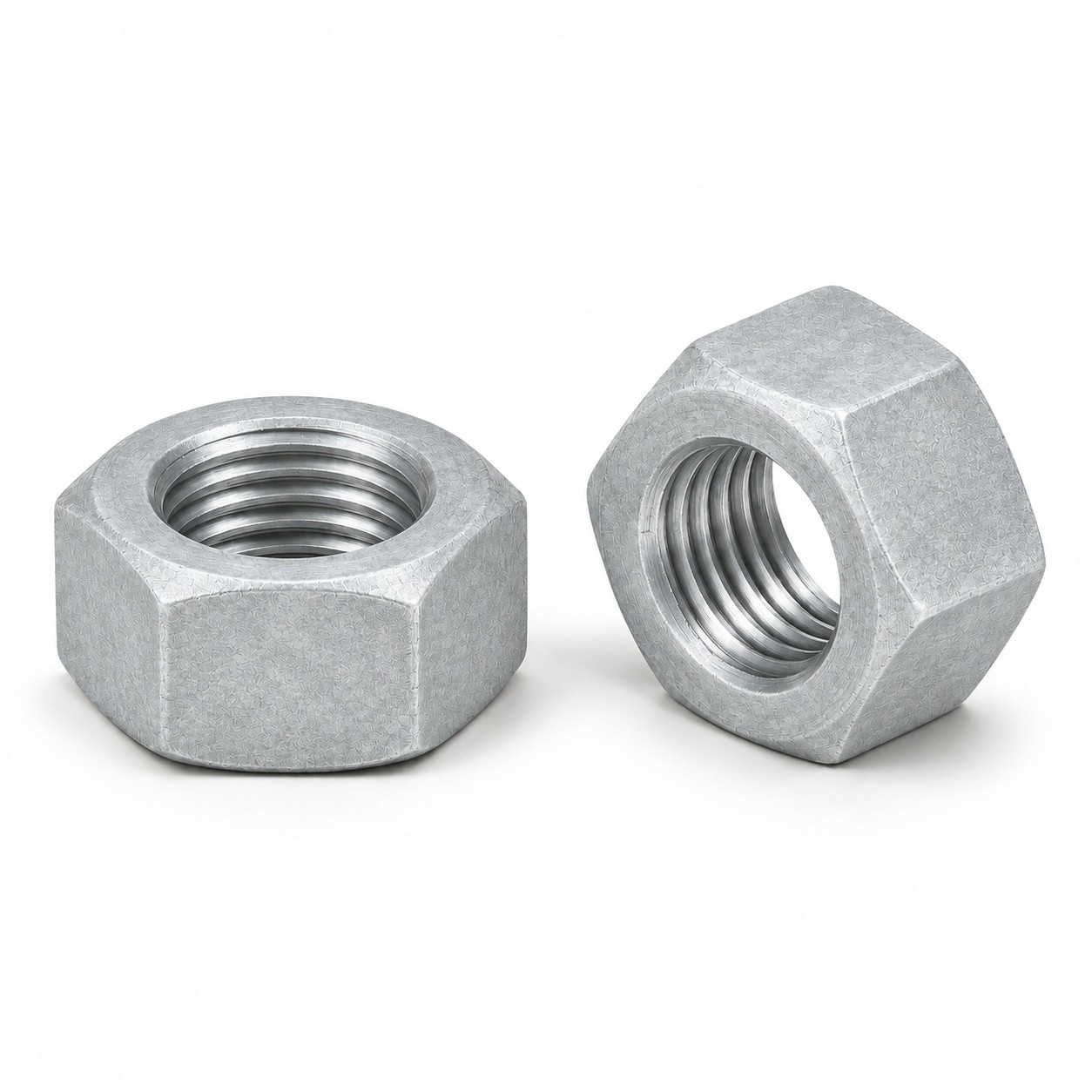
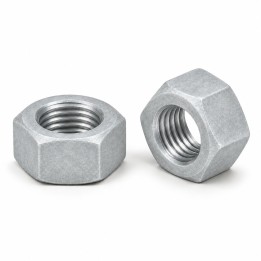
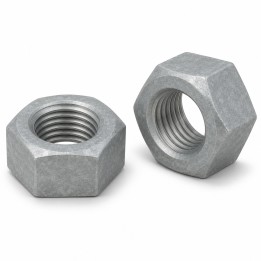
Hexagon nuts M12 DIN 934 — hot-dip galvanised, 10 pcs.
Steel nuts with a through metric coarse thread M12×1,75. Nut property class: 8. The surface is hot-dip galvanised, designated tZn.
Technical specifications
- Product type: Regular hexagon nut
- Standard: DIN 934
- Related standard: PN 82144
- Material: Steel
- Property class: 8
- Surface: Hot-dip galvanised (tZn)
- Thread diameter: M12
- Thread pitch: 1,75 mm
- Thread type: Metric coarse
- Nut height m: 9,64–10 mm — before galvanising
- Width across flats s: 19 mm — nominal before galvanising
- Product grade: A — dimensions before galvanising
- Dimensional tolerance standard: ISO 4759-1
- General requirements: DIN 267-1
- Mechanical properties — reference: DIN 267-4
- Coating — reference: ISO 10684
- Dimension basis: Catalogue dimensions before coating application
- Quantity per pack: 10 pcs.
- Sales unit: pack
Selection for the joint
For hot-dip galvanising, select a compatible nut and bolt thread fit system. Diameter M12 and pitch 1,75 mm alone do not confirm compatibility. Check the designations and documentation of the specific batch. Oversized nuts marked Z or X must not be combined with undersized bolts marked U.
The stated dimensions m and s and product grade A refer to catalogue dimensions before coating application. They are not measurements of a finished galvanised piece. No separate thread tolerance class after galvanising is confirmed for this specific offer; 6H, 6AZ or 6AX has not been assigned automatically.
The standards are given as catalogue references. They do not confirm full DIN 934 and ISO 4032 interchangeability or constitute a test result for the specific batch. Coating thickness, steel grade, tightening torque or operating temperature are not specified without confirmation for this offer.
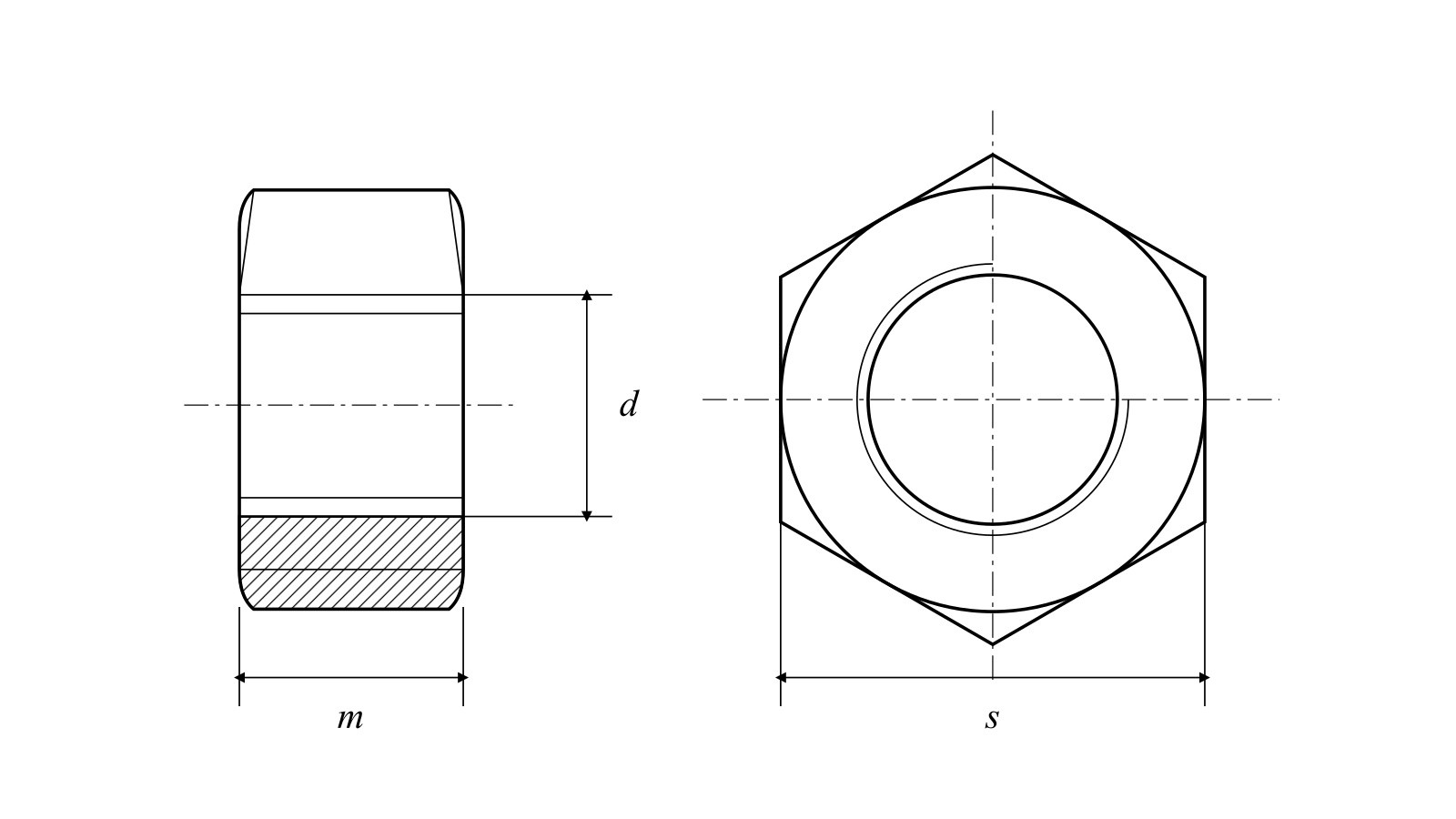
Diagram dimensions and references
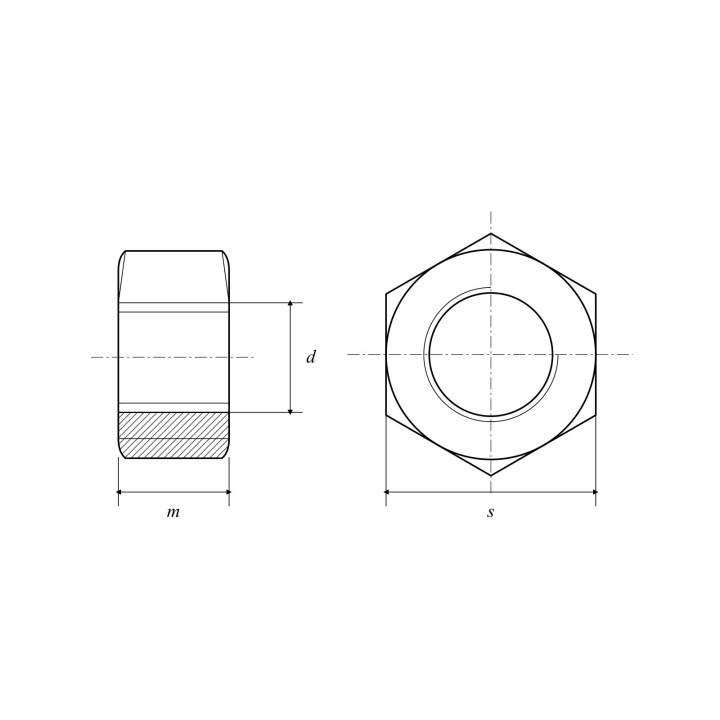
d — metric thread M12; nominal diameter 12 mm.
P — coarse thread pitch: 1,75 mm.
m — catalogue height before galvanising: 9,64–10 mm.
s — nominal catalogue width across flats before galvanising: 19 mm.
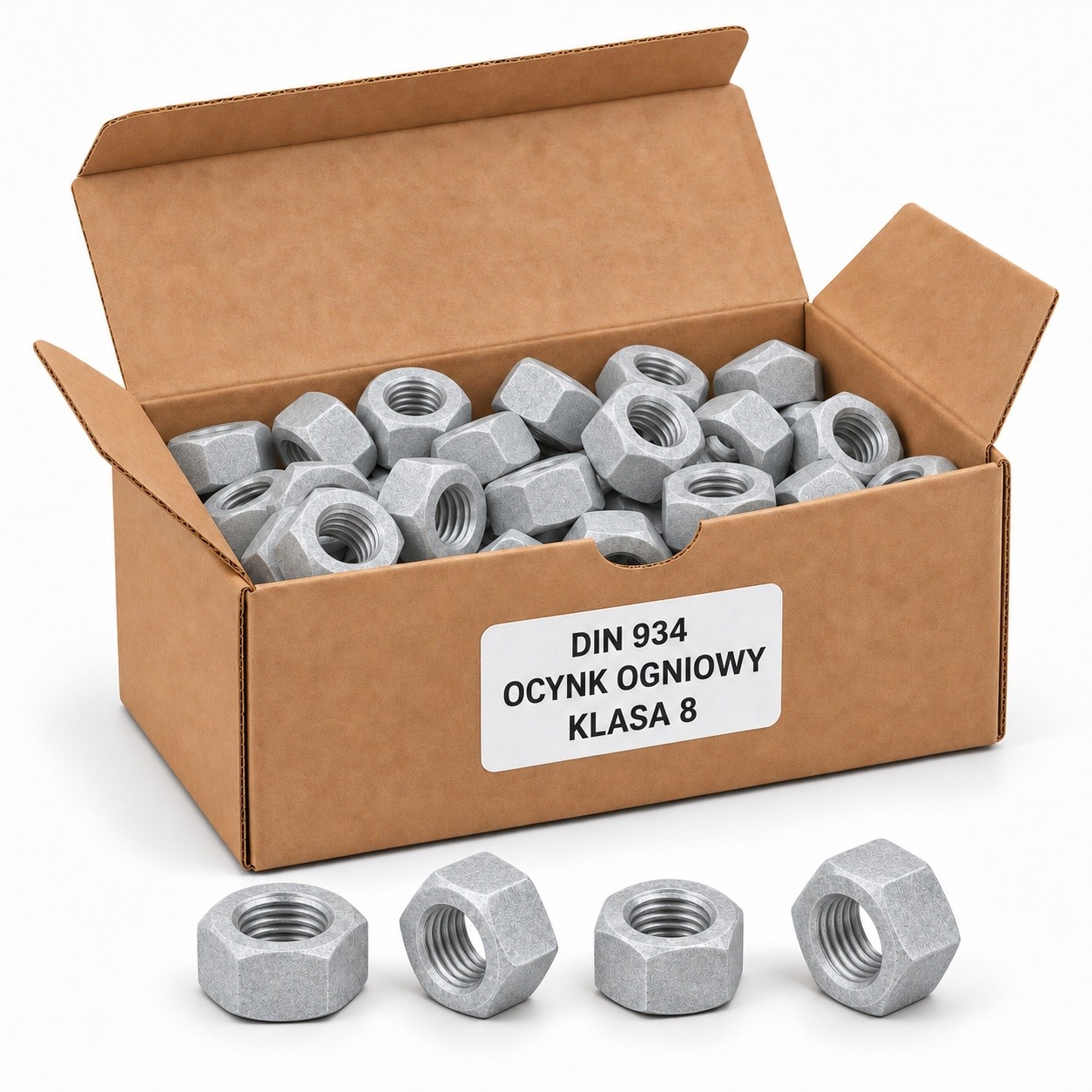
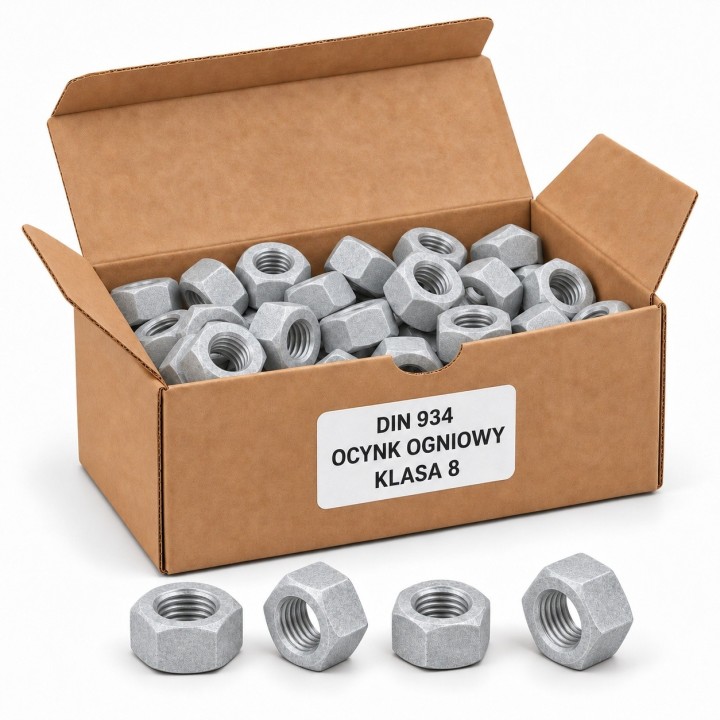
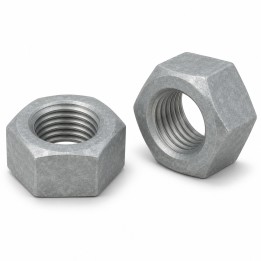
Our own diagram shows only lines and references d, m, s. Product and pack graphics are photorealistic illustrations of the family; the number of visible nuts does not specify the pack contents.
Scope of delivery
The price is for 10 M12 DIN 934 nuts of class 8, hot-dip galvanised.
Frequently asked questions
How many pieces does the price include?
The price is for one pack containing 10 nuts.
What thread does the nut have?
Metric coarse thread M12×1,75. When selecting a bolt, check compatibility of the fit intended for hot-dip galvanising and batch markings.
Which spanner fits this size?
The nominal catalogue dimension s is 19 mm and height m 9,64–10 mm. These are dimensions before galvanising; the coating affects finished product dimensions.
What is the nut finish and class?
The steel has a hot-dip galvanised coating tZn. The nut class is 8; the designation 8.8 refers to bolt class.



Comments (0)
Your review appreciation cannot be sent
Report comment
Report sent
Your report cannot be sent