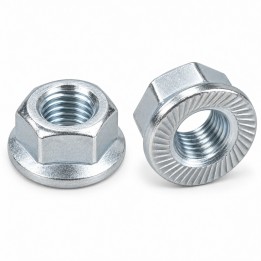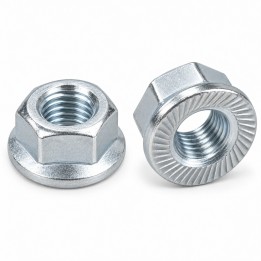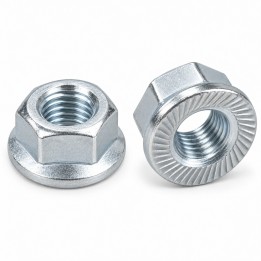
M10 serrated flange nuts DIN 6923 class 8 zinc-plated 200 pcs.
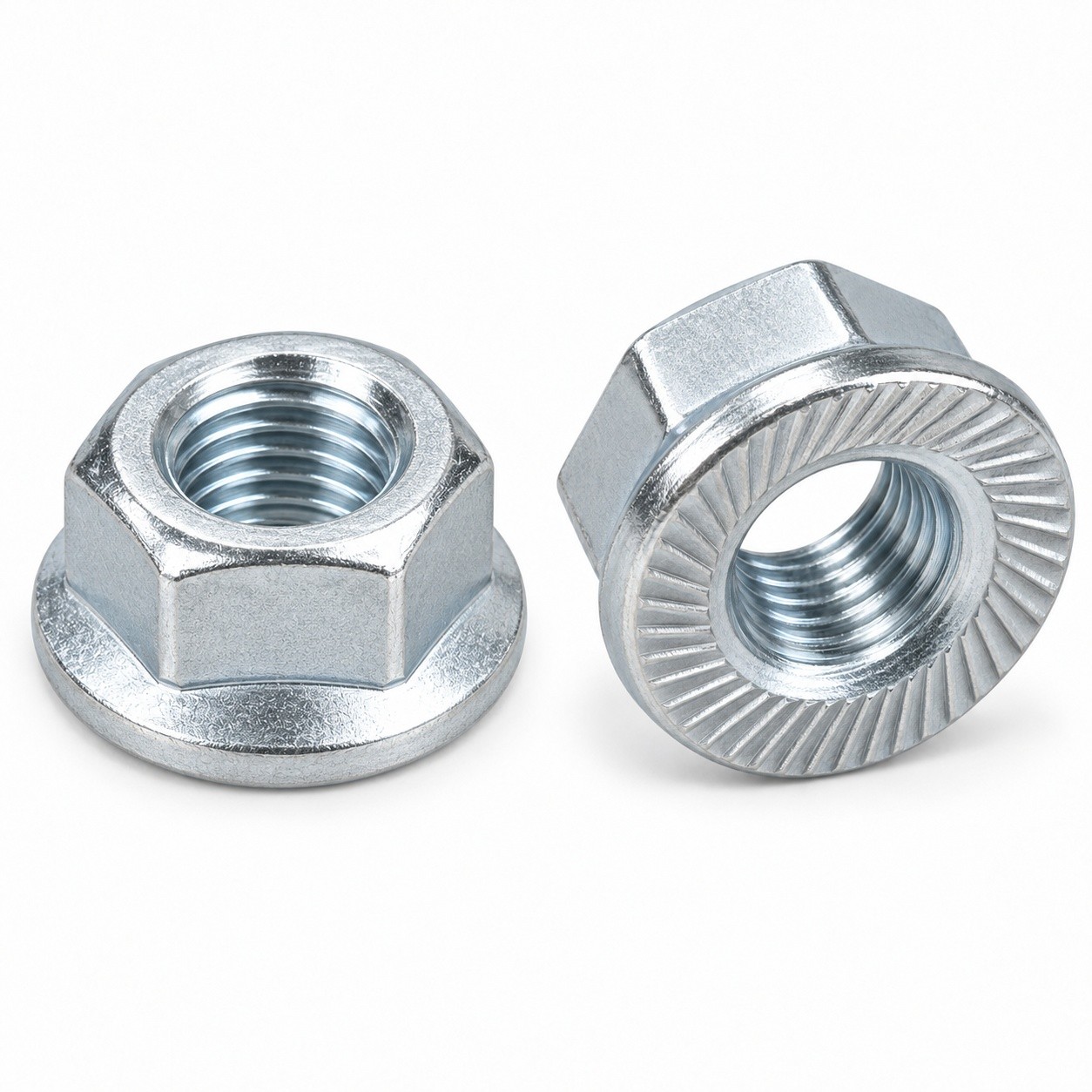
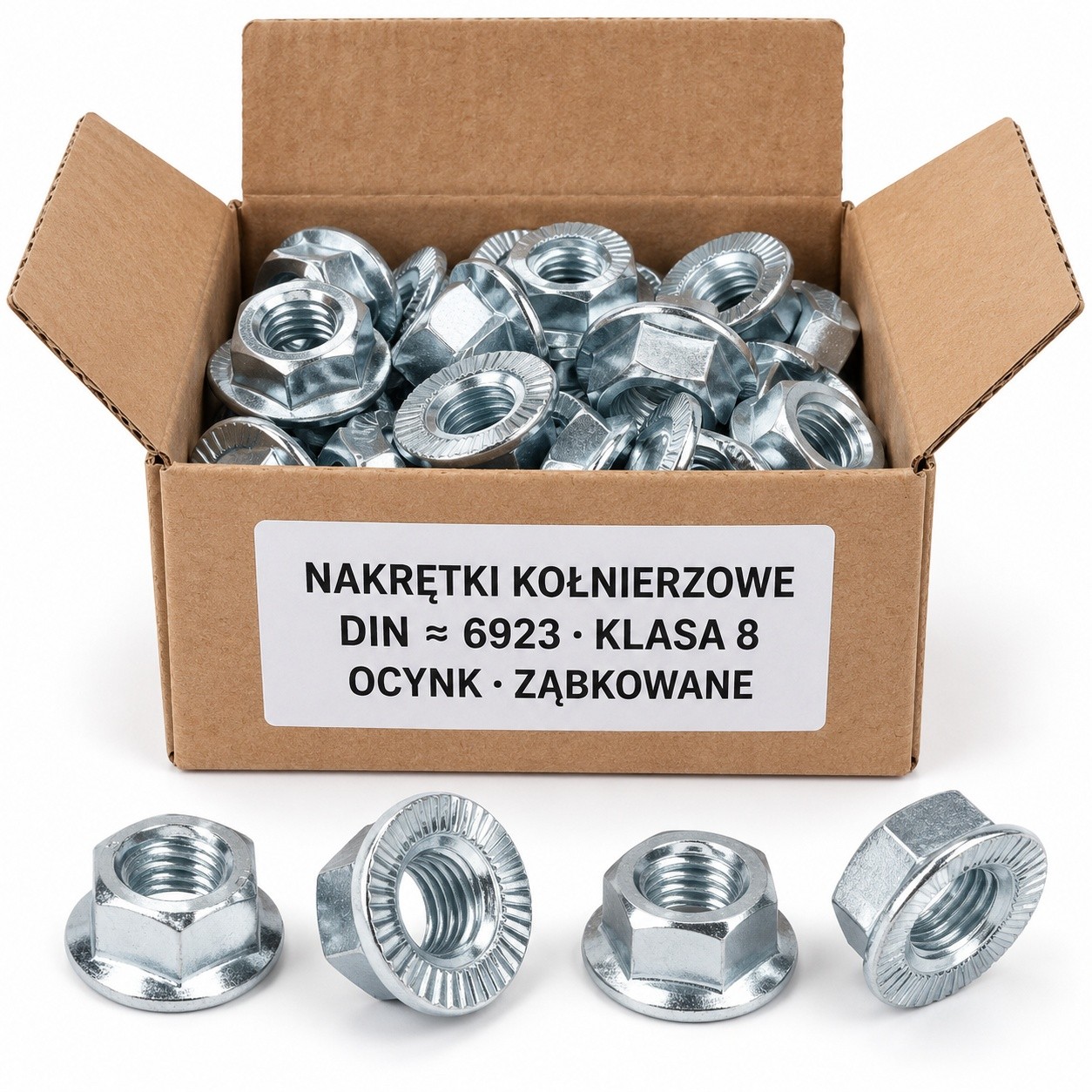
Nuts M10 made of steel of class 8, with a serrated flange and white zinc plating. Dimensional type DIN ≈ 6923: coarse thread P = 1,5 mm, wrench size s = 15 mm, flange dc max. 21,8 mm, height m max. 10 mm. Price for a full pack of 200 pieces, catalogue pack weight 2,09 kg.

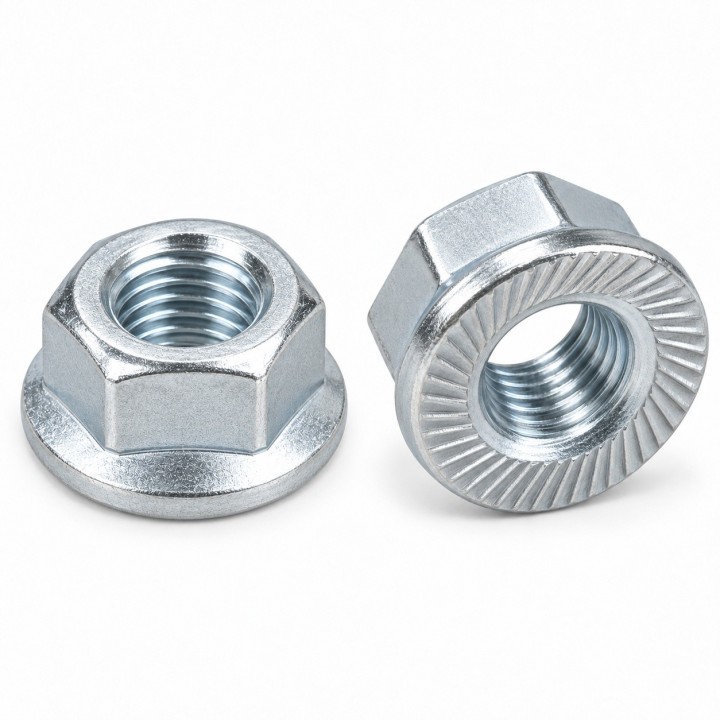
Flange nuts M10 — serrated, steel of class 8, white zinc plating
Hexagonal nut with an integral round clamping flange. The serrations are on the underside of the flange, which contacts the fastened component. The flange distributes pressure over a larger area, and the serrations increase resistance to rotation at the contact surface.
Technical specifications
- Dimensional reference: DIN ≈ 6923
- Nut type: Hexagonal with flange
- Flange surface: Serrated
- Internal thread d: M10
- Thread pitch P: 1,5 mm
- Flange diameter dc: max. 21,8 mm
- Height m: max. 10 mm
- Wrench size s: 15 mm
- Property class: 8
- Manufacturing accuracy grade: A (ISO 4759-1)
- Material: Steel
- Coating: White zinc plating
- Quantity per pack: 200 pcs.
- Sales unit: pack
- Catalogue weight of the full pack: 2,09 kg
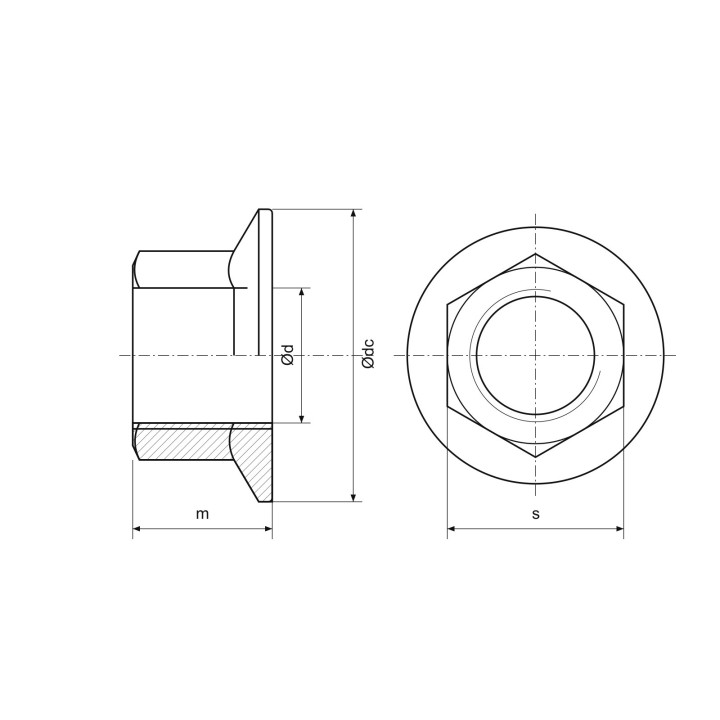
The nut property class is 8. The dimensional designation DIN ≈ 6923 applies to the offered serrated version. Dimensions dc = 21,8 mm and m = 10 mm are maximum values; s = 15 mm denotes the wrench size.
Material and installation
Steel with white zinc plating. The nut has a metric coarse thread M10 with a pitch of 1,5 mm. The wrench engages the hexagonal body, and the serrated flange presses against the surface of the fastened component. The choice of bolt, tightening force and contact surface should suit the conditions of the joint.
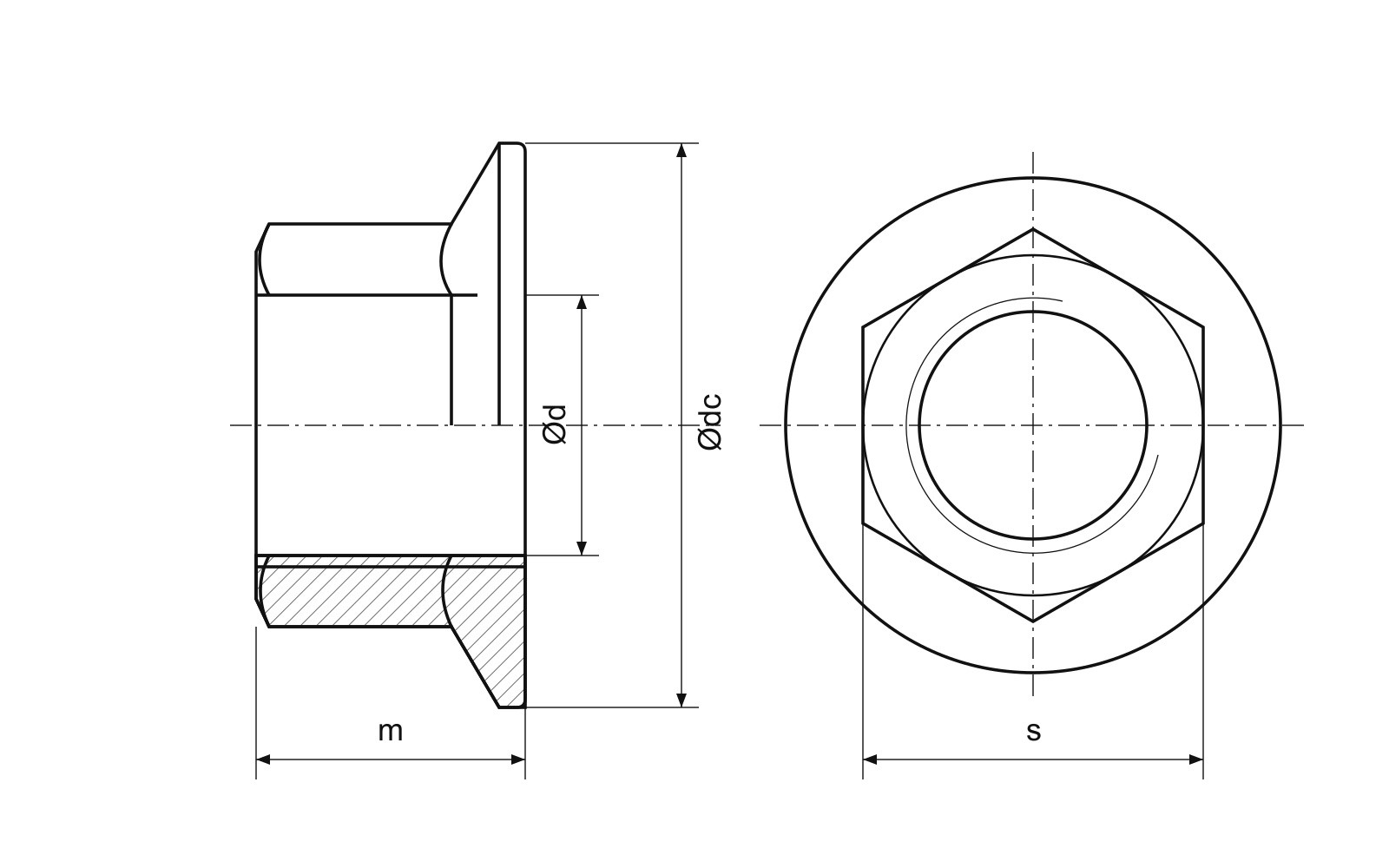
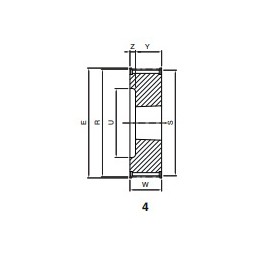
Drawing labels: d — thread M10; dc — flange diameter max. 21,8 mm; m — height max. 10 mm; s — wrench size 15 mm. Thread pitch P = 1,5 mm.
Full pack
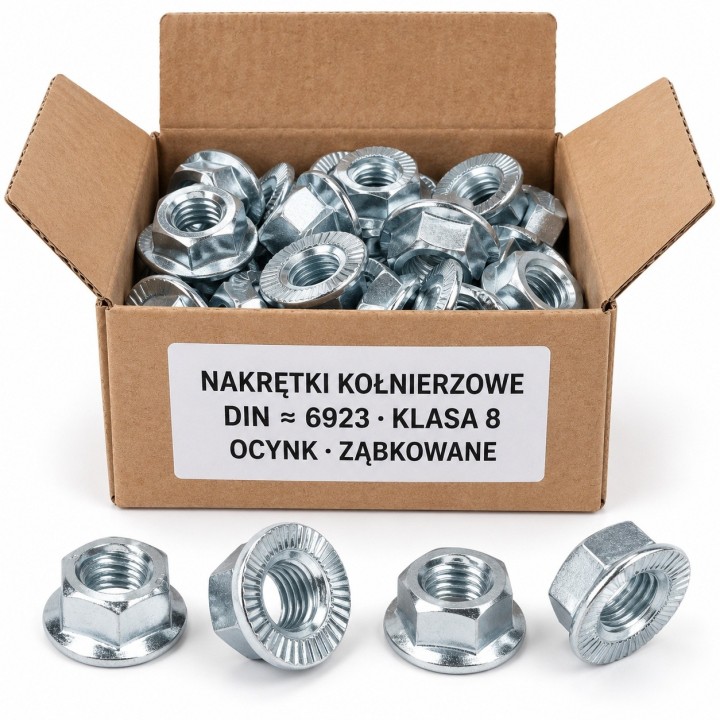
The price includes 200 nuts M10 of class 8 with serrated flange. The catalogue weight of this exact pack is 2,09 kg. This is the weight of the entire pack, not an individual nut. Our own illustrations show the product family; the number of pieces in the carton illustration does not determine the contents supplied. The diagram is a catalogue illustration and is not manufacturing documentation.
Frequently asked questions
How many pieces does the price include?
Full pack of 200 flange nuts M10.
Is the flange smooth or serrated?
Serrated on the underside clamping surface.
What are the wrench size and thread pitch of this variant?
Wrench size 15 mm and thread M10 with a pitch of 1,5 mm.
What property class does the nut have?
Class 8, corresponding to the offered steel variant.

-
Sales unitpack
-
MaterialSteel
-
CoatingWhite zinc plating
-
Source reference9801448413
-
Quantity per pack200 pcs
-
Thread pitch1,5 mm
-
Wrench size s15 mm
-
Thread diameterM10
-
Catalogue mass of full pack2,09 kg
-
Nut typeHexagonal with flange
-
Dimensional referenceDIN ≈ 6923
-
Flange surfaceSerrated
-
Flange diameter dcmax. 21,8 mm
-
Height mmax. 10 mm
-
Mechanical property class8
-
Manufacturing accuracy classA (ISO 4759-1)
1. Eye protection:
– Always wear safety goggles or a face shield to protect your eyes from sparks, particles and metal fragments.
2. Hearing protection:
– When working in a noisy environment, use ear defenders or earplugs to prevent hearing damage.
3. Respiratory protection:
– When working in dusty surroundings or in the presence of fumes, wear a filtering mask or an appropriate respirator.
– Ensure proper ventilation of the workstation.
4. Hand and skin safety:
– Use protective gloves that protect against mechanical injuries and chemicals.
– Where necessary, use protective creams to prevent irritation and dry skin.
5. Work clothing:
– Work in protective clothing resistant to sparks and splashes.
– Avoid loose clothing, jewellery and loose hair near machinery.
6. Fire risk:
– Keep the workstation free of flammable materials (e.g. paper, fabrics and chemicals).
– Keep a serviceable fire extinguisher close at hand and know how to use it.
7. Electrical hazards:
– Check the condition of cables and electrical equipment before use.
– Do not use electrical devices in damp conditions.
– Disconnect equipment from the power supply during maintenance or repairs.
8. Use of machinery and tools:
– Regularly inspect the technical condition of machines and tools.
– Use equipment in accordance with the manufacturer's instructions.
– Blades and tools should be maintained regularly and kept in good condition.
– Machines should be fitted with appropriate guards and protective devices.
9. Handling materials:
– Use handling equipment to move heavy components.
– Lift and carry using ergonomic practices to avoid injury.
10. Working with chemicals:
– Store chemicals in labelled, safe containers.
– Use substances in accordance with the manufacturer's instructions and occupational health and safety rules.
– Ensure air circulation when using chemicals.
Other important rules:
– Keep the workstation clean and tidy.
– Ensure adequate lighting in the working area.
– Provide occupational health and safety training.
– Carry out regular safety audits and comply with current regulations.

Comments (0)
Your review appreciation cannot be sent
Report comment
Report sent
Your report cannot be sent