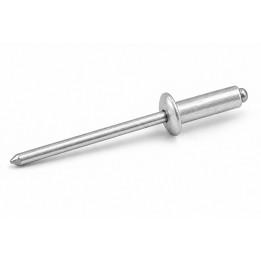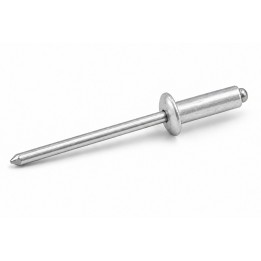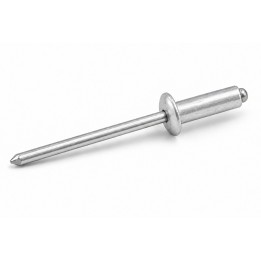
4,8x21 Open-end blind rivets ISO 15981 aluminium/aluminium 250 pcs.
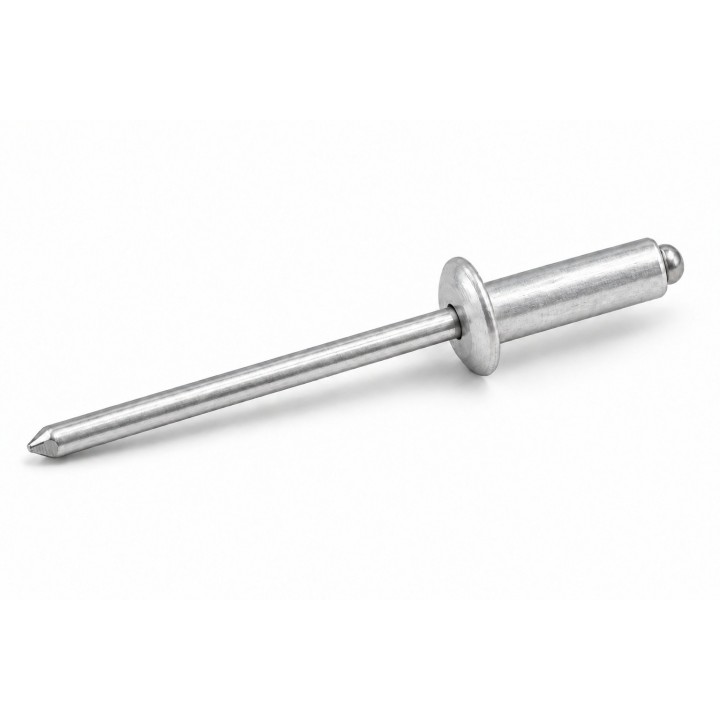
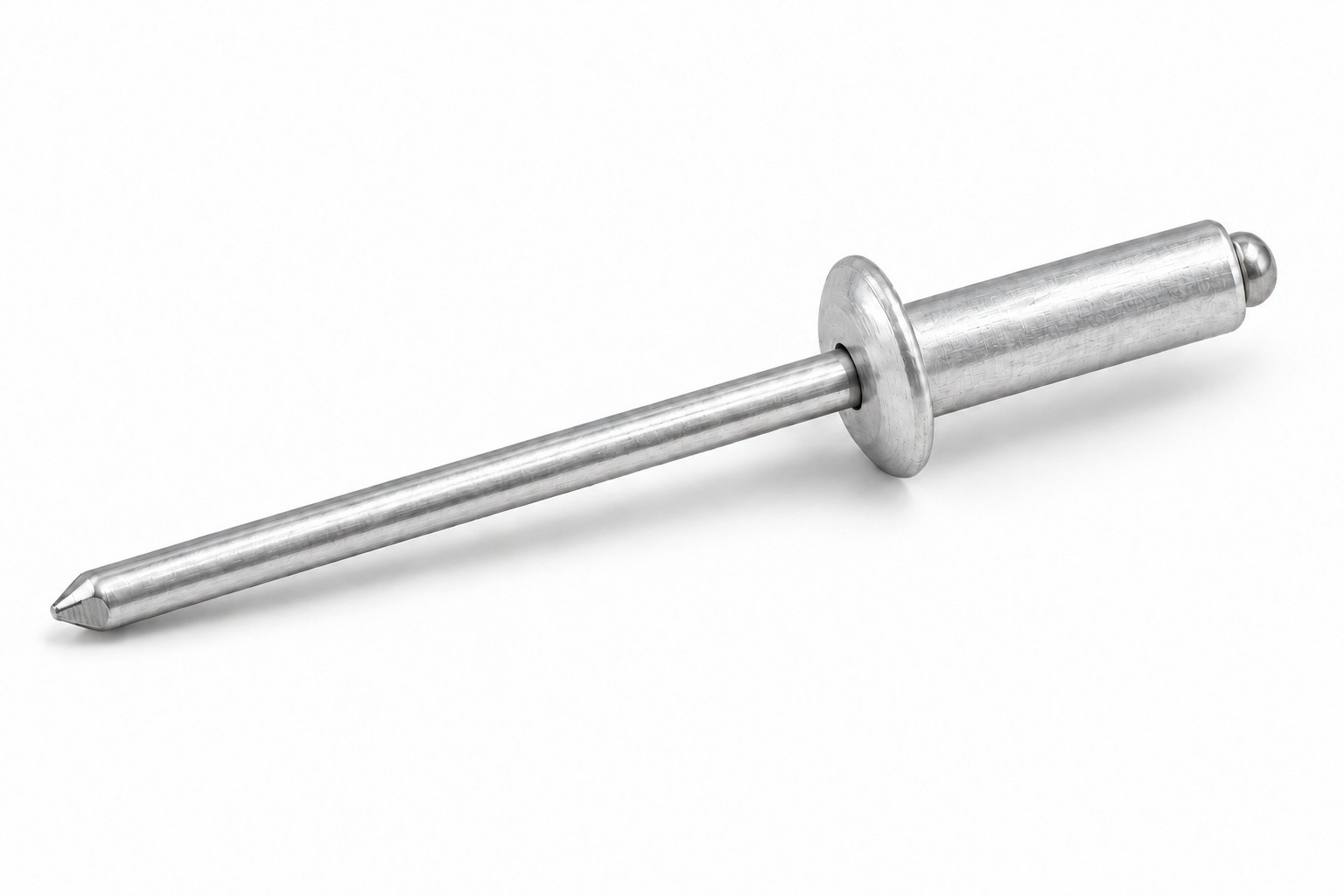
Open-end blind rivets ISO 15981 4,8 × 21 mm, body and mandrel made of aluminium alloy AlA. Domed head. Grip range 13–16 mm. Hole 4,9–5,0 mm. Sales unit: pack of 250 pieces.

Open-end blind rivets ISO 15981 — 4,8 × 21 mm, aluminium/aluminium, 250 pieces
Blind rivets with a break mandrel join components with installation access from one side. The rivet body and mandrel are made of aluminium alloy AlA. The rivet has an open body and a protruding head with a domed profile. The body surface is uncoated, in its natural condition.
Key specifications
- Standard: ISO 15981
- Rivet type: Open-end with break mandrel
- Head type: Domed
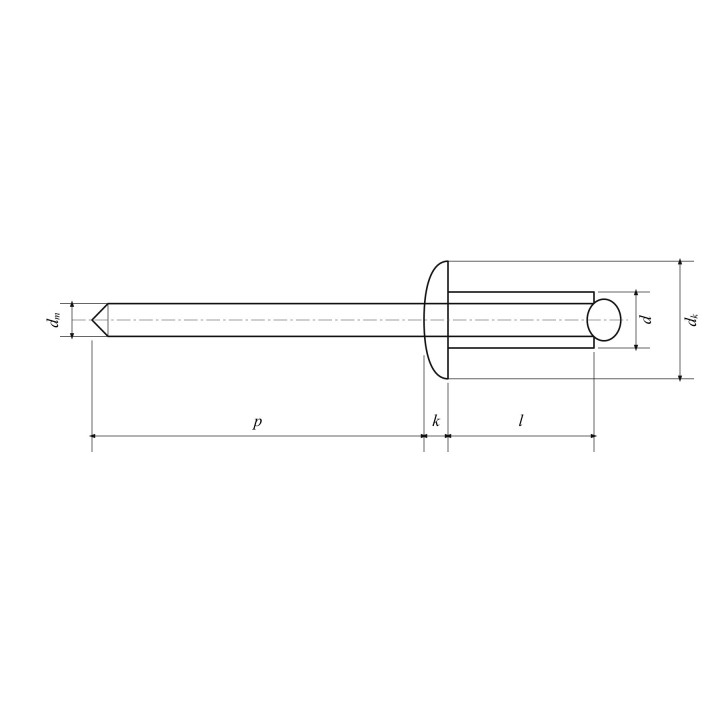
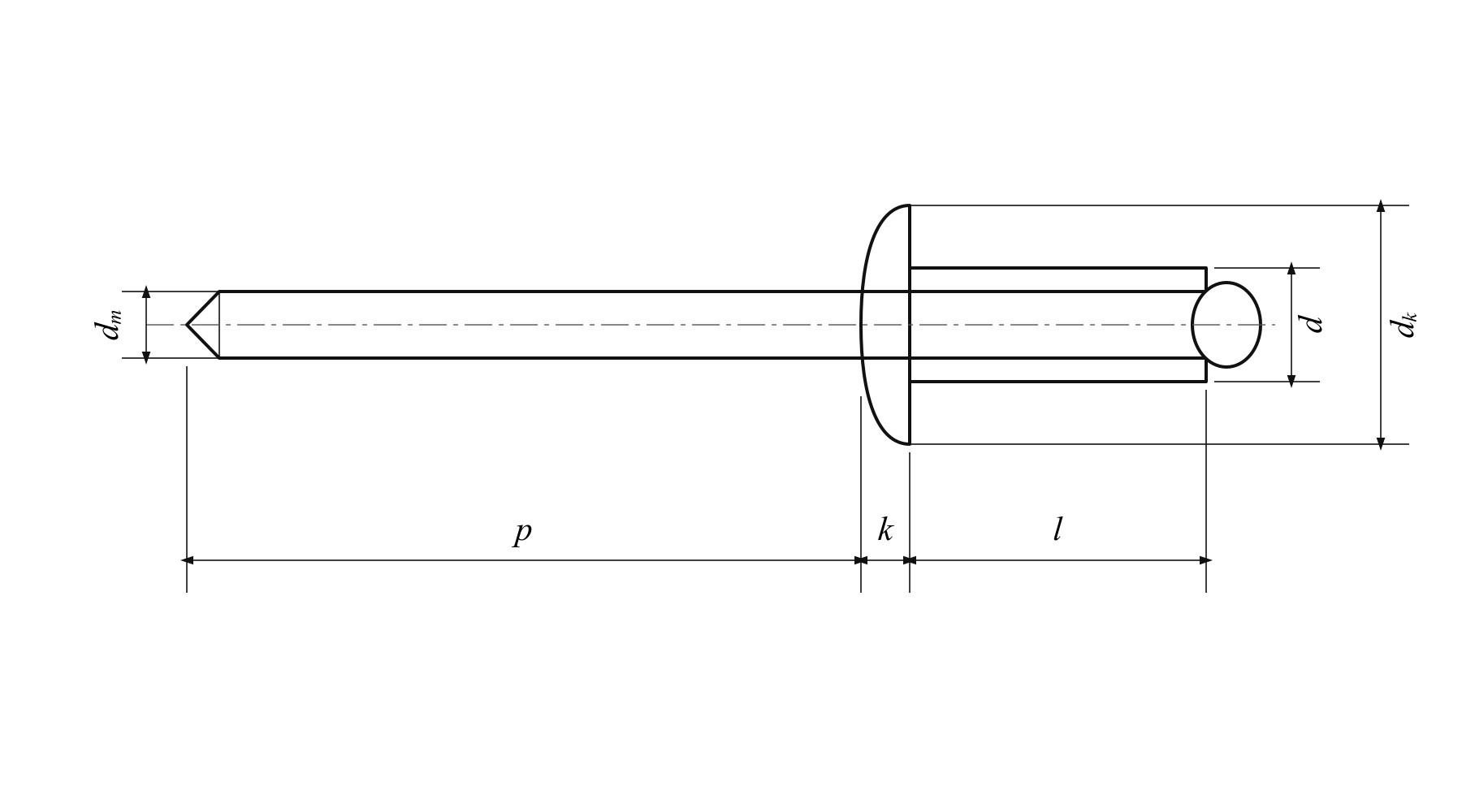
- Body diameter d: 4,8 mm
- Body length l: 21 mm (dimension not covered by the standard; tolerance l is not stated in the technical data sheet)
- Head diameter dk: 8,3–10,1 mm
- Head height k: max. 2 mm
- Mandrel diameter dm: max. 3,05 mm
- Minimum mandrel length p: 27 mm
- Grip range: 13–16 mm
- Hole diameter: 4,9–5,0 mm
- Body material: Aluminium alloy AlA
- Mandrel material: Aluminium alloy AlA
- Finish: Uncoated (natural condition)
- Minimum shear load: 1160 N
- Minimum tensile load: 1420 N
- Maximum mandrel breaking load: 3700 N

Selection and installation
For size 4,8 × 21 mm, the recommended grip range is 13–16 mm. The through-hole diameter is 4,9–5,0 mm. Select a tool and nosepiece for rivets with an aluminium mandrel.
The nominal length 21 mm is marked with an asterisk in the technical data sheet as a dimension not covered by the standard. The sheet gives no separate maximum value for this length; none has been assigned by extrapolation.
The stated loads are values from the technical data sheet for this diameter and rivet family: minimum shear load 1160 N, minimum tensile load 1420 N and maximum mandrel breaking load 3700 N. They are neither test results for the specific batch supplied nor the design load capacity of the completed joint.
Scope of delivery and weight
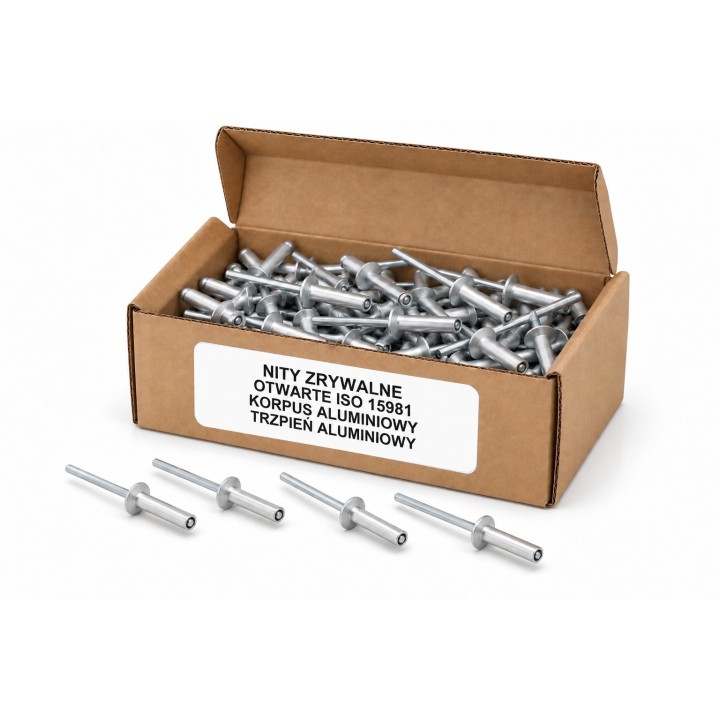
Sales unit: one pack of 250 rivets 4,8 × 21 mm ISO 15981 aluminium/aluminium. The price is for the entire pack.
Indicative catalogue weight of the corresponding full pack of 250 pieces: 0,46 kg. This is the catalogue weight of this pack, not a weighing result from NERON.
The images show the product family and an illustrative pack; they do not document the exact number of pieces or the actual delivery carton. Dimensions and quantity are specified in the technical table. The in-house diagram is a catalogue illustration, not production documentation.

-
ConditionNew
-
StandardISO 15981
-
Sales unitpack
-
Source referenceKAT34344_n
-
Quantity per pack250 pcs
-
Pack mass0,46 kg
-
Rivet typeOpen-end with break mandrel
-
Head typeDomed
-
Body diameter d4,8 mm
-
Body length l21 mm (dimension not covered by the standard; tolerance l is not stated in the technical data sheet)
-
Head diameter dk8,3–10,1 mm
-
Head height kmax. 2 mm
-
Stud diameter dmmax. 3,05 mm
-
Minimum stud length p27 mm
-
Joining range13–16 mm
-
Bore diameter4,9–5,0 mm
-
Body materialAluminium alloy AlA
-
Stud materialAluminium alloy AlA
-
FinishUncoated (natural condition)
-
Minimum shear load1160 N
-
Minimum tensile load1420 N
-
Maximum mandrel breaking load3700 N
1. Eye protection:
– Always wear safety goggles or a face shield to protect your eyes from sparks, particles and metal fragments.
2. Hearing protection:
– When working in a noisy environment, use ear defenders or earplugs to prevent hearing damage.
3. Respiratory protection:
– When working in dusty surroundings or in the presence of fumes, wear a filtering mask or an appropriate respirator.
– Ensure proper ventilation of the workstation.
4. Hand and skin safety:
– Use protective gloves that protect against mechanical injuries and chemicals.
– Where necessary, use protective creams to prevent irritation and dry skin.
5. Work clothing:
– Work in protective clothing resistant to sparks and splashes.
– Avoid loose clothing, jewellery and loose hair near machinery.
6. Fire risk:
– Keep the workstation free of flammable materials (e.g. paper, fabrics and chemicals).
– Keep a serviceable fire extinguisher close at hand and know how to use it.
7. Electrical hazards:
– Check the condition of cables and electrical equipment before use.
– Do not use electrical devices in damp conditions.
– Disconnect equipment from the power supply during maintenance or repairs.
8. Use of machinery and tools:
– Regularly inspect the technical condition of machines and tools.
– Use equipment in accordance with the manufacturer's instructions.
– Blades and tools should be maintained regularly and kept in good condition.
– Machines should be fitted with appropriate guards and protective devices.
9. Handling materials:
– Use handling equipment to move heavy components.
– Lift and carry using ergonomic practices to avoid injury.
10. Working with chemicals:
– Store chemicals in labelled, safe containers.
– Use substances in accordance with the manufacturer's instructions and occupational health and safety rules.
– Ensure air circulation when using chemicals.
Other important rules:
– Keep the workstation clean and tidy.
– Ensure adequate lighting in the working area.
– Provide occupational health and safety training.
– Carry out regular safety audits and comply with current regulations.

Comments (0)
Your review appreciation cannot be sent
Report comment
Report sent
Your report cannot be sent