4,8x14 Open-end blind rivets ~ISO 15977, aluminium/A2 - 25 pcs.

4,8x14 Open-end blind rivets ~ISO 15977, aluminium/A2 - 25 pcs.
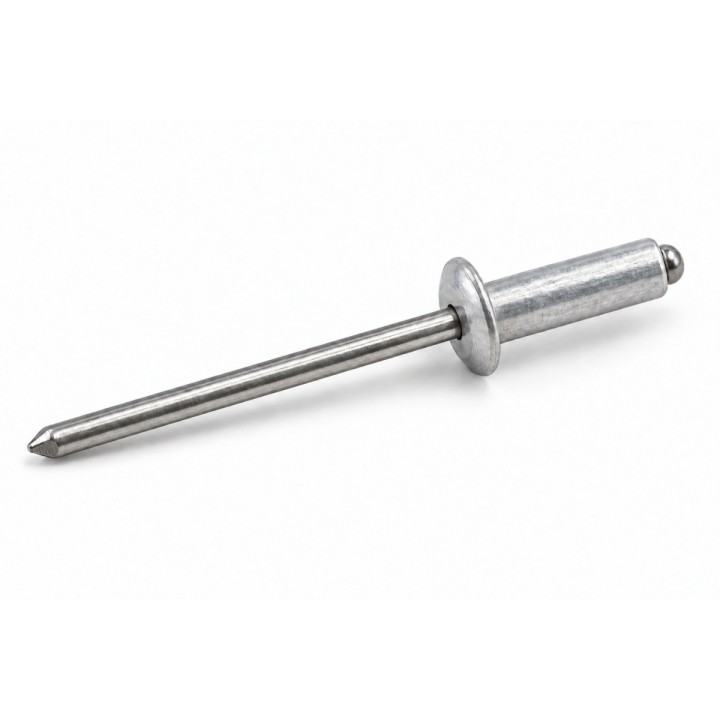
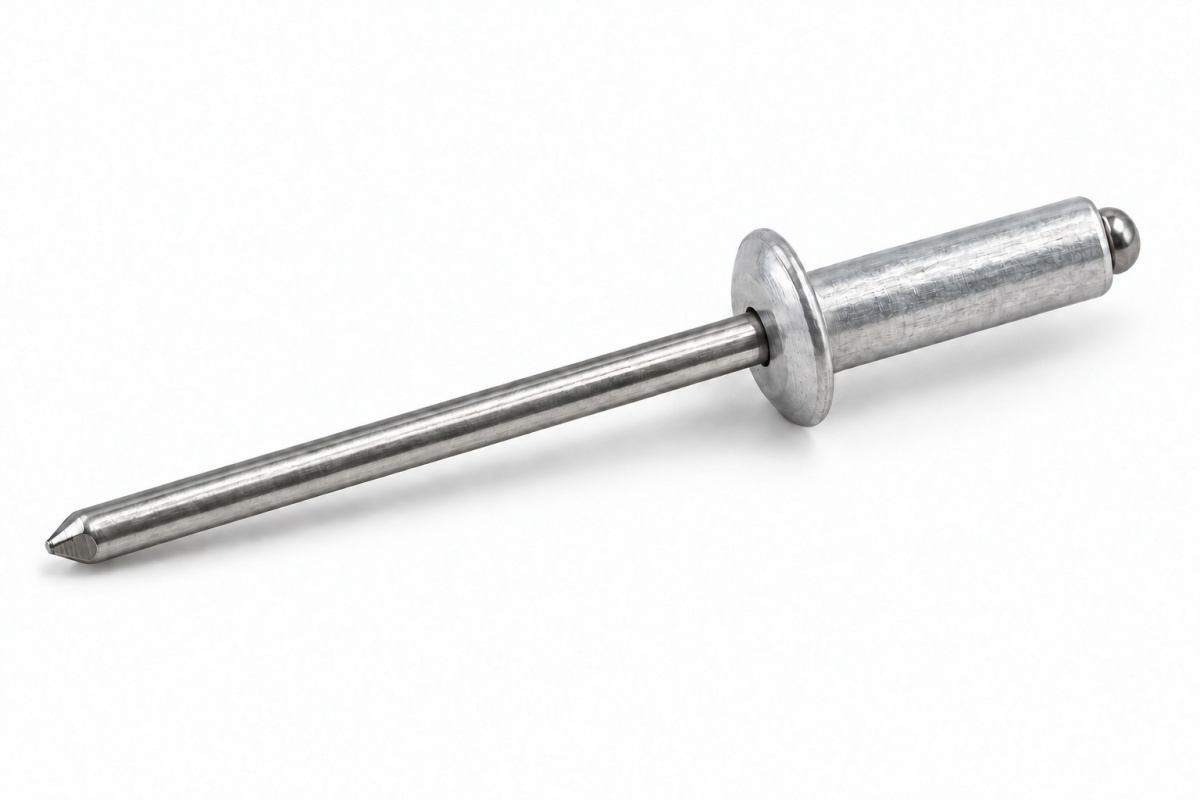
Open-end blind rivets ~ISO 15977 are used to join sheet metal and thin-walled components from one side. The open body has a characteristic stainless A2 mandrel head near the end of the section being deformed, while the domed head provides an even clamping surface. Installation uses a blind-rivet tool, with access only from the head side.
Key specifications
- Type: open-end blind rivet with break mandrel and domed head,
- Standard: ~ISO 15977,
- nominal size d × l: 4,8 × 14 mm,
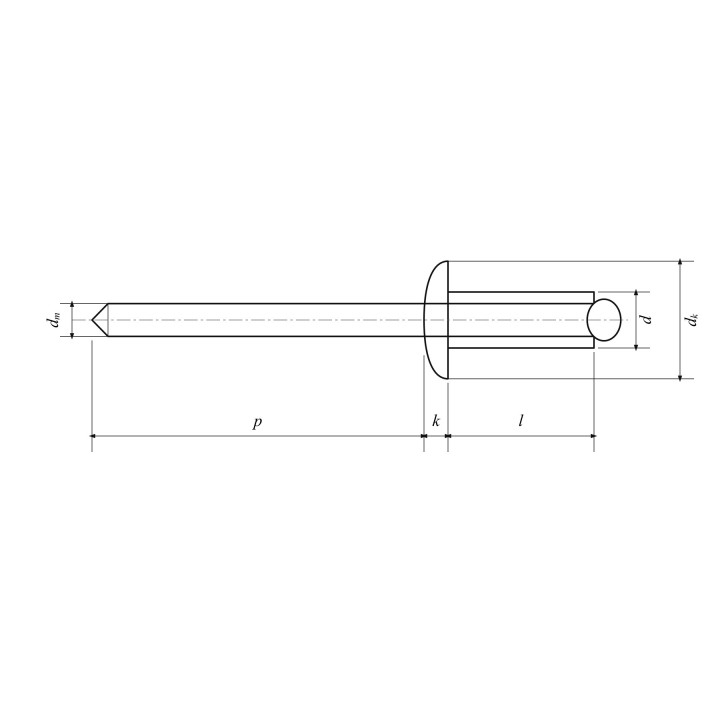
- body diameter d: 4,8 mm,
- body length l: 14 mm,
- head diameter dₖ: 8,3-10,1 mm,
- head height k: Max. 2 mm,
- mandrel diameter dₘ: Max. 2,95 mm,
- minimum mandrel length p: 27 mm,
- recommended grip range: To be confirmed before selection,
- recommended hole diameter: 4,9-5 mm,
- body material: aluminium alloy AlA,
- mandrel material: Stainless steel A2,
- note: the length 14 mm is marked in the supplied data sheet as a dimension not covered by the standard or is absent from the standard table,
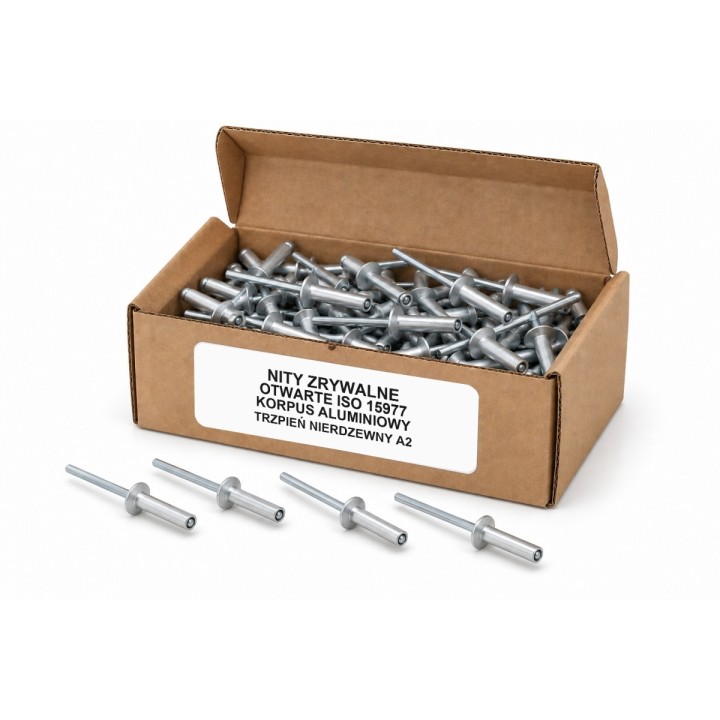
- Sales unit: 1 pack = 25 pcs.
Installation
Before installation, make a hole with a diameter suitable for the rivet and select the body length for the total component thickness. Place the rivet in the hole, then break off the mandrel using a rivet tool. The grip range for this version requires confirmation before selection.

Scope of delivery and weight
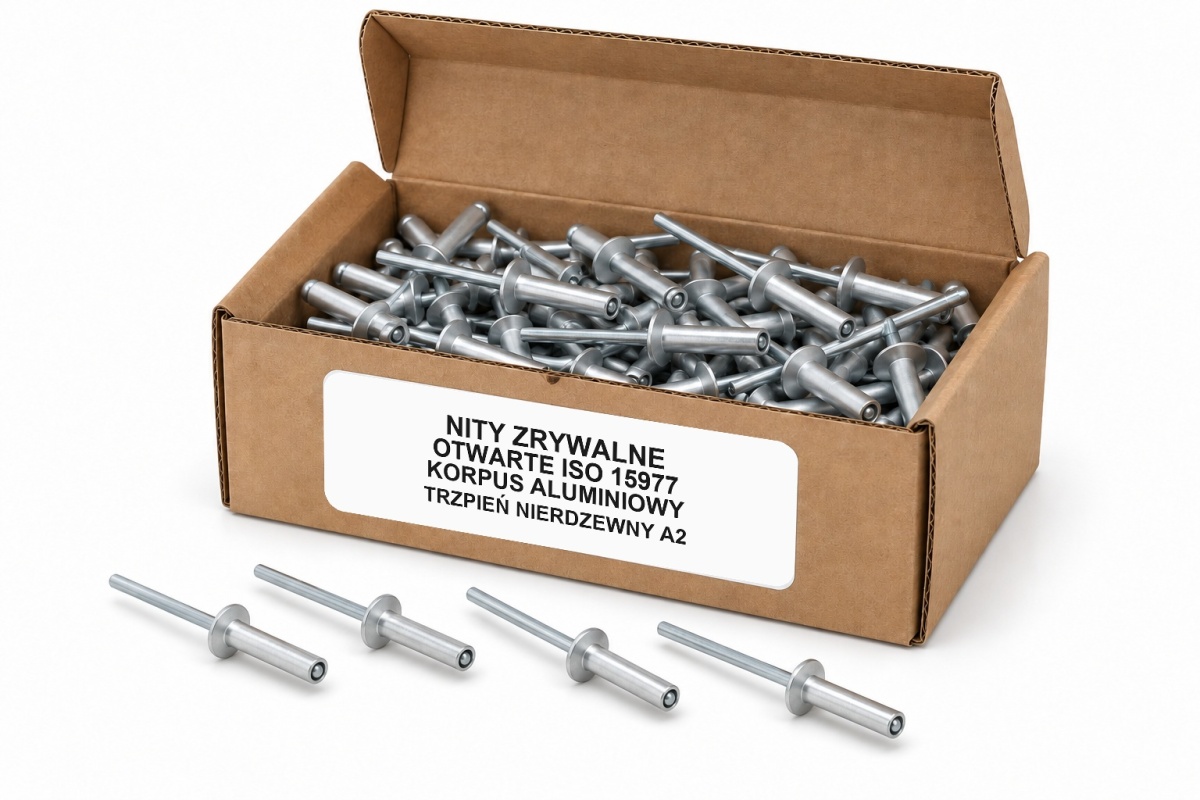
One pack contains 25 open-end blind rivets ~ISO 15977 4,8 × 14 mm.
Weight for the sales quantity: 0,150 kg (150 g).

-
ConditionNew
-
Standard~ISO 15977 (approximate reference)
-
Sales unitpack
-
Quantity per pack25 pcs
-
Pack mass0,15 kg
-
Rivet typeOpen-end with break mandrel
-
Head typeDomed
-
Body diameter d4,8 mm
-
Body length l14 mm (dimension not covered by standard or outside table)
-
Head diameter dk8,3–10,1 mm
-
Head height kmax. 2 mm
-
Stud diameter dmmax. 2,95 mm
-
Minimum stud length p27 mm
-
Joining rangeTo be confirmed
-
Bore diameter4,9–5,0 mm
-
Body materialAluminium alloy AlA
-
Stud materialA2 stainless steel
1. Eye protection:
– Always wear safety goggles or a face shield to protect your eyes from sparks, particles and metal fragments.
2. Hearing protection:
– When working in a noisy environment, use ear defenders or earplugs to prevent hearing damage.
3. Respiratory protection:
– When working in dusty surroundings or in the presence of fumes, wear a filtering mask or an appropriate respirator.
– Ensure proper ventilation of the workstation.
4. Hand and skin safety:
– Use protective gloves that protect against mechanical injuries and chemicals.
– Where necessary, use protective creams to prevent irritation and dry skin.
5. Work clothing:
– Work in protective clothing resistant to sparks and splashes.
– Avoid loose clothing, jewellery and loose hair near machinery.
6. Fire risk:
– Keep the workstation free of flammable materials (e.g. paper, fabrics and chemicals).
– Keep a serviceable fire extinguisher close at hand and know how to use it.
7. Electrical hazards:
– Check the condition of cables and electrical equipment before use.
– Do not use electrical devices in damp conditions.
– Disconnect equipment from the power supply during maintenance or repairs.
8. Use of machinery and tools:
– Regularly inspect the technical condition of machines and tools.
– Use equipment in accordance with the manufacturer's instructions.
– Blades and tools should be maintained regularly and kept in good condition.
– Machines should be fitted with appropriate guards and protective devices.
9. Handling materials:
– Use handling equipment to move heavy components.
– Lift and carry using ergonomic practices to avoid injury.
10. Working with chemicals:
– Store chemicals in labelled, safe containers.
– Use substances in accordance with the manufacturer's instructions and occupational health and safety rules.
– Ensure air circulation when using chemicals.
Other important rules:
– Keep the workstation clean and tidy.
– Ensure adequate lighting in the working area.
– Provide occupational health and safety training.
– Carry out regular safety audits and comply with current regulations.

Comments (0)
Your review appreciation cannot be sent
Report comment
Report sent
Your report cannot be sent