3x20 Solid aluminium rivets with round head DIN 660 50 pcs.

zł7.82 Grosszł6.36 Net

Solid aluminium rivets DIN 660 with round head, 3 × 20 mm, uncoated. Length 20 mm measured under the head; head diameter: 5,2 mm; head height: 1,8 mm. Installation hole: 3,1 mm. Sales quantity: 50 pieces.

Dispatch within:
3 days
Shipping cost incl. VAT:
from zł8.61
Availability:
Available
Weight:
0,15 kg
Secure payments
BLIK Przelewy24

Delivery with our partners

InPost Paczkomaty GLS DHL Pocztex

Available options depend on the products and delivery address.

Share

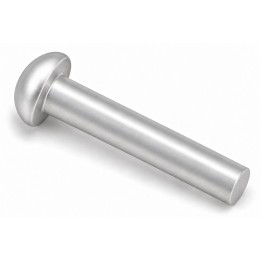
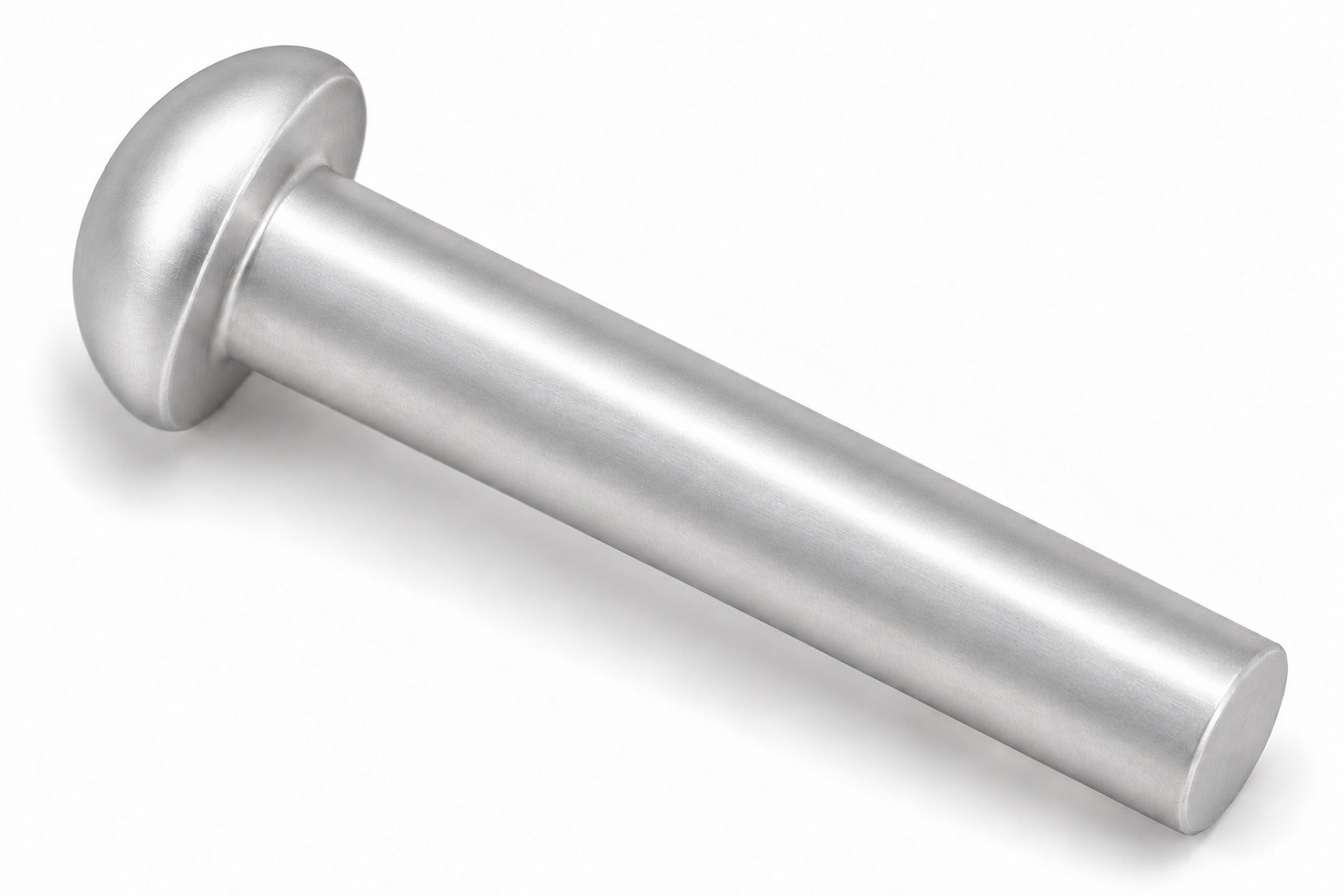
Solid aluminium rivet with round head DIN 660 — product family visualization

Solid aluminium rivets DIN 660 — 3 × 20 mm, round head, 50 pieces

Uncoated solid aluminium rivet with a factory-formed round head and a solid cylindrical shank. The joint is made by riveting the free end of the shank. The size 3 × 20 mm denotes a nominal shank diameter of 3 mm and a length of 20 mm measured under the head. The technical data sheet specifies DIN 660 and reference PN 82952.

Rivet dimensions and specifications before installation

  • Standard: DIN 660
  • PN reference: PN 82952
  • Rivet type: Solid
  • Head type: Round
  • Shank diameter d1: 3 mm
  • Diameter deviation d1: ±0,1 mm
  • Shank length l: 20 mm (under the head, nominal)
  • Head diameter d2: 5,2 mm
  • Head diameter tolerance d2: h14
  • Minimum diameter d3: 2,87 mm
  • Dimension e: Max. 1,5 mm
  • Head height k: 1,8 mm
  • Head height tolerance k: js14
  • Head radius r1: Approximately 2,8 mm
  • Material: Aluminium Al
  • Aluminium grade according to the data sheet: Al 99,5
  • Coating: Uncoated
  • Minimum strength Rm according to the data sheet: 100 N/mm²
  • Material standard according to the data sheet: DIN 1769-1
  • General requirements according to the data sheet: DIN 101

For the aluminium version, the data sheet specifies Al 99,5, minimum strength Rm 100 N/mm² and the material standard DIN 1769-1. These are catalogue requirements in the data sheet, not a test result for this batch, a material certificate or a permissible load for the finished joint.

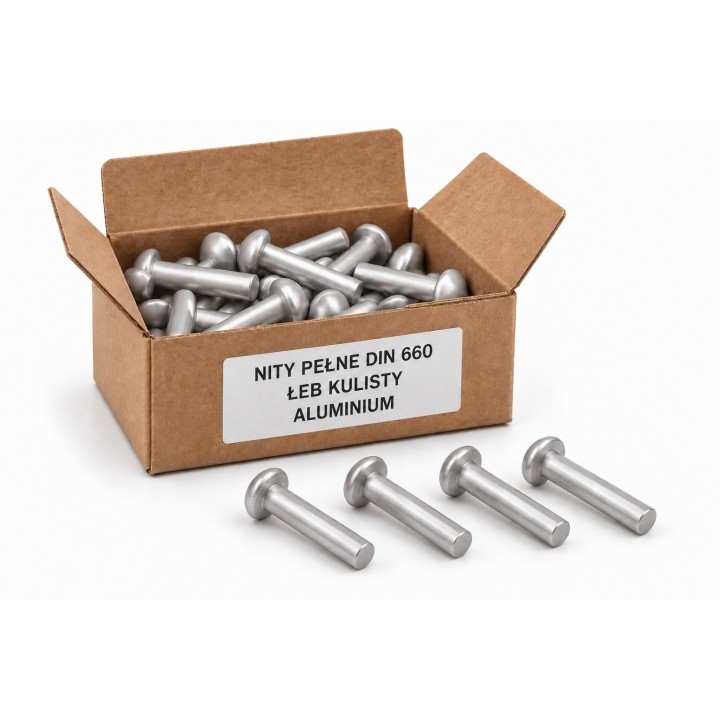
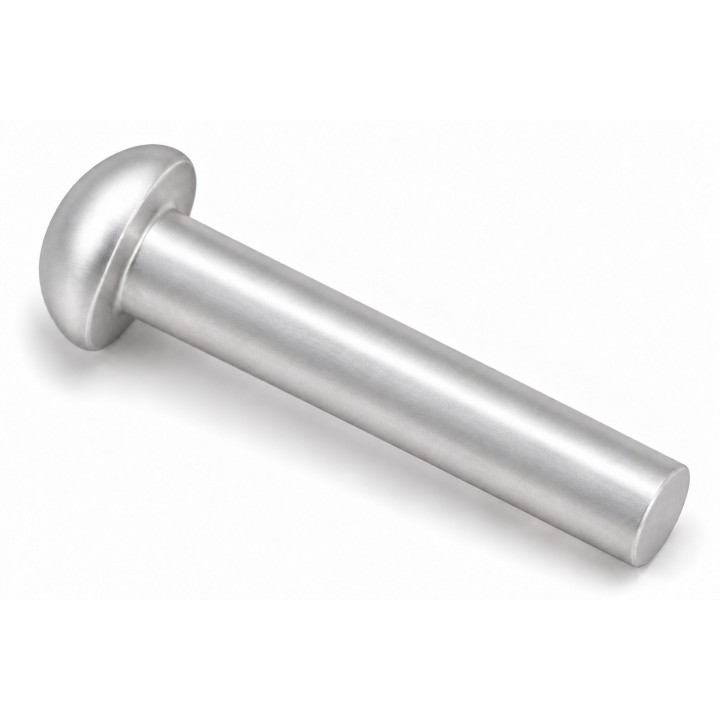
Solid rivets DIN 660 — aluminium, packaging visualization

Installation dimensions according to the technical data sheet

Form A denotes a round closing head after riveting; form B denotes a conical closing head after riveting. These are two ways of forming the free end of the rivet. They do not change the factory-formed round head. The s values apply separately to each form, rather than to a common thickness range.

  • Installation hole d7: 3,1 mm
  • Hole tolerance d7: H12
  • Thickness of joined components s — form A: 14 mm
  • Thickness of joined components s — form B: 16 mm
  • Closing head diameter d8: 5,2 mm
  • Closing head height k1 — form A: 1,8 mm
  • Closing head height k2 — form B: Approximately 1,3 mm
  • Depth t1 — form B: 1,3 mm

Selecting the rivet and riveting method requires consideration of component thickness, hole preparation and the tools used. Tolerance designations from the data sheet are given; no unconfirmed numerical length deviations have been added.
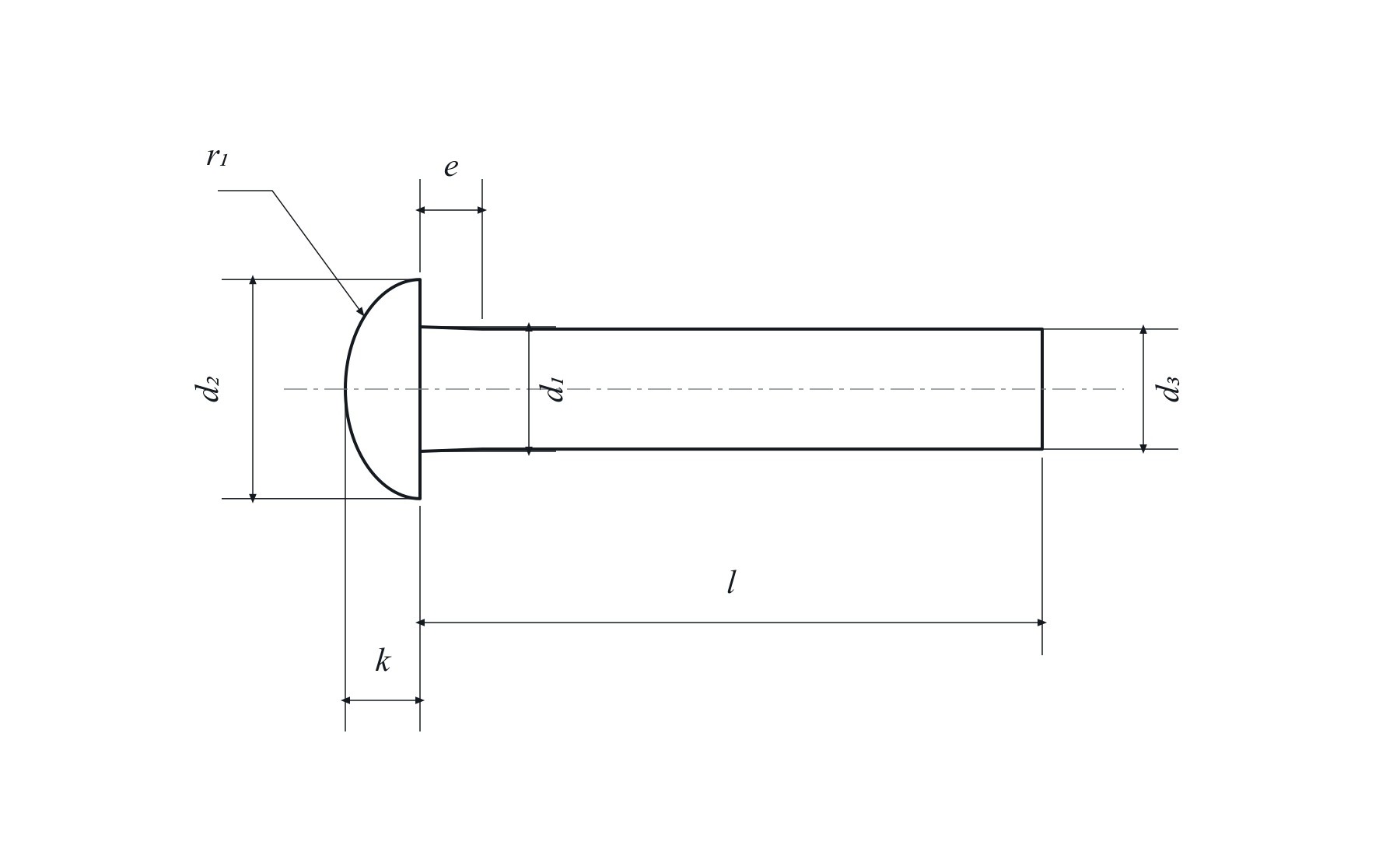
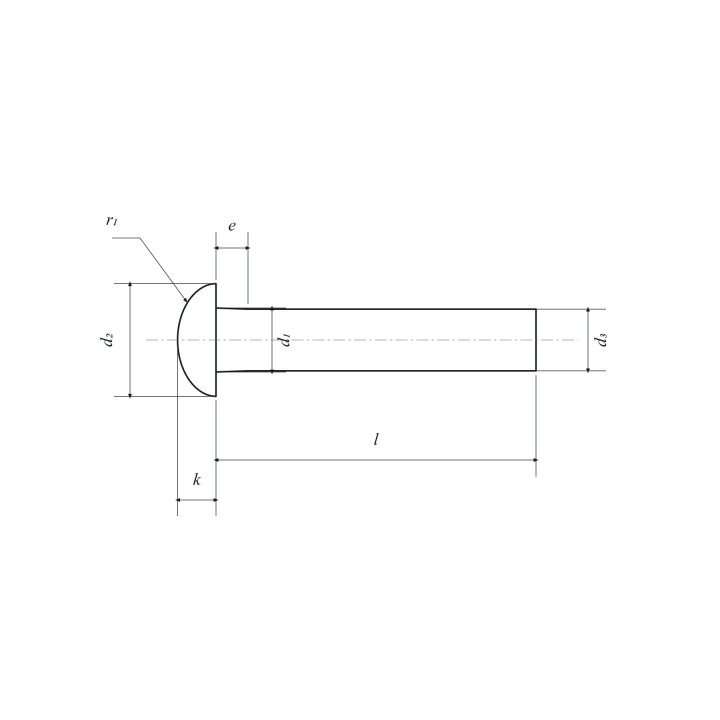
Solid rivet DIN 660 — in-house diagram d1, d2, d3, e, k, l, r1

Scope of delivery and weight

Sales unit: Pack — 50 aluminium rivets DIN 660 3 × 20 mm. The price covers this quantity.

Existing weight assigned to the sales quantity of 50 pieces: 0,15 kg. The value has been retained without new calculations.

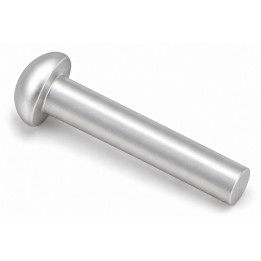
The graphics show the product family and illustrative packaging; they do not document the exact number of pieces or the actual delivery carton. Dimensions and quantity are specified in the specifications table. The in-house diagram shows the rivet before installation and is a catalogue illustration, not manufacturing documentation.

Frequently asked questions

How many rivets does the price cover?

The price covers 50 pieces.

Does the length of 20 mm include the head?

No. The nominal length of 20 mm is measured under the factory-formed round head.

What do forms A and B in the installation table mean?

Form A is a round closing head after riveting, and form B a conical closing head. For this size, thickness s — form A: 14 mm; form B: 16 mm. Installation hole: 3,1 mm.

What material is the rivet made of?

This is the uncoated aluminium version. The technical data sheet for aluminium specifies Al 99,5 and the material standard DIN 1769-1.

  • Brand
  • Reference
    KAT44266_n-SKY65644
  • Waga
    0,15 kg
  • In stock
    978 Items

  • Condition
    New
  • Standard
    DIN 660
  • Sales unit
    pack
  • Material
    Aluminium Al
  • Coating
    Uncoated
  • Source reference
    KAT44266_n
  • Quantity per pack
    50 pcs
  • Pack mass
    0,15 kg
  • Rivet type
    Solid
  • Head type
    Spherical
  • Head height k
    1,8 mm
  • Reference PN
    PN 82952
  • Stud diameter d1
    3 mm
  • Diameter deviation d1
    ±0,1 mm
  • Stud length l
    20 mm (under the head, nominal)
  • Head diameter d2
    5,2 mm
  • Head diameter tolerance d2
    h14
  • Minimum diameter d3
    2,87 mm
  • Dimension e
    max. 1,5 mm
  • Head height tolerance k
    js14
  • Head radius r1
    approximately 2,8 mm
  • Minimum strength Rm according to data sheet
    100 N/mm²
  • Material standard according to data sheet
    DIN 1769-1
  • General requirements according to data sheet
    DIN 101
  • Mounting hole d7
    3,1 mm
  • Bore tolerance d7
    H12
  • Thickness of joined parts s — form A
    14 mm
  • Thickness of joined parts s — form B
    16 mm
  • Closing head diameter d8
    5,2 mm
  • Closing head height k1 — form A
    1,8 mm
  • Closing head height k2 — form B
    approximately 1,3 mm
  • Depth t1 — form B
    1,3 mm
  • Aluminium grade according to data sheet
    Al 99,5

Workplace safety warnings — in accordance with Regulation (EU) 2023/988 on general product safety:
1. Eye protection:
– Always wear safety goggles or a face shield to protect your eyes from sparks, particles and metal fragments.
2. Hearing protection:
– When working in a noisy environment, use ear defenders or earplugs to prevent hearing damage.
3. Respiratory protection:
– When working in dusty surroundings or in the presence of fumes, wear a filtering mask or an appropriate respirator.
– Ensure proper ventilation of the workstation.
4. Hand and skin safety:
– Use protective gloves that protect against mechanical injuries and chemicals.
– Where necessary, use protective creams to prevent irritation and dry skin.
5. Work clothing:
– Work in protective clothing resistant to sparks and splashes.
– Avoid loose clothing, jewellery and loose hair near machinery.
6. Fire risk:
– Keep the workstation free of flammable materials (e.g. paper, fabrics and chemicals).
– Keep a serviceable fire extinguisher close at hand and know how to use it.
7. Electrical hazards:
– Check the condition of cables and electrical equipment before use.
– Do not use electrical devices in damp conditions.
– Disconnect equipment from the power supply during maintenance or repairs.
8. Use of machinery and tools:
– Regularly inspect the technical condition of machines and tools.
– Use equipment in accordance with the manufacturer's instructions.
– Blades and tools should be maintained regularly and kept in good condition.
– Machines should be fitted with appropriate guards and protective devices.
9. Handling materials:
– Use handling equipment to move heavy components.
– Lift and carry using ergonomic practices to avoid injury.
10. Working with chemicals:
– Store chemicals in labelled, safe containers.
– Use substances in accordance with the manufacturer's instructions and occupational health and safety rules.
– Ensure air circulation when using chemicals.
Other important rules:
– Keep the workstation clean and tidy.
– Ensure adequate lighting in the working area.
– Provide occupational health and safety training.
– Carry out regular safety audits and comply with current regulations.

Comments (0)

No customer reviews for the moment.

4 other products in the same category

Viewed products

O-ring seal 93,26x3,53 70NBR
zł4.20 Grosszł3.41 Net
Rated out of 5 stars based on review(s)
Loading...
Back to top