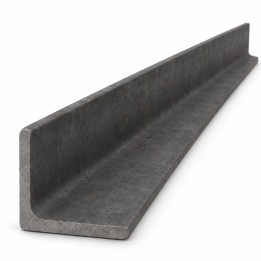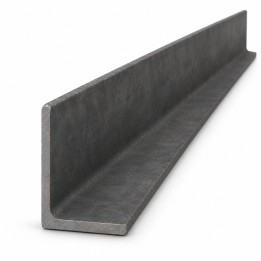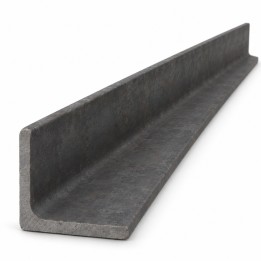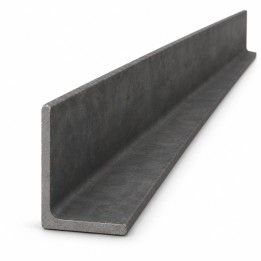
Hot-rolled steel angle 150x75x11 S355 6000 mm
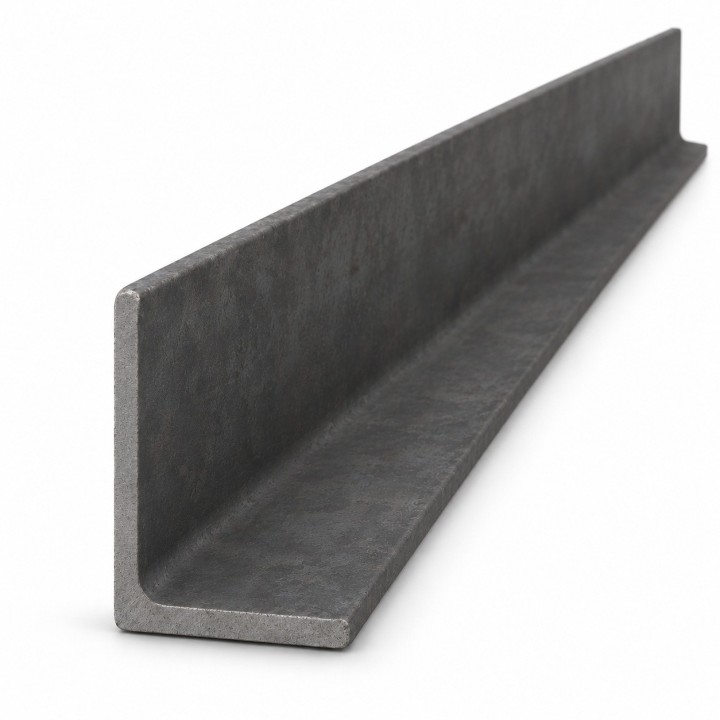
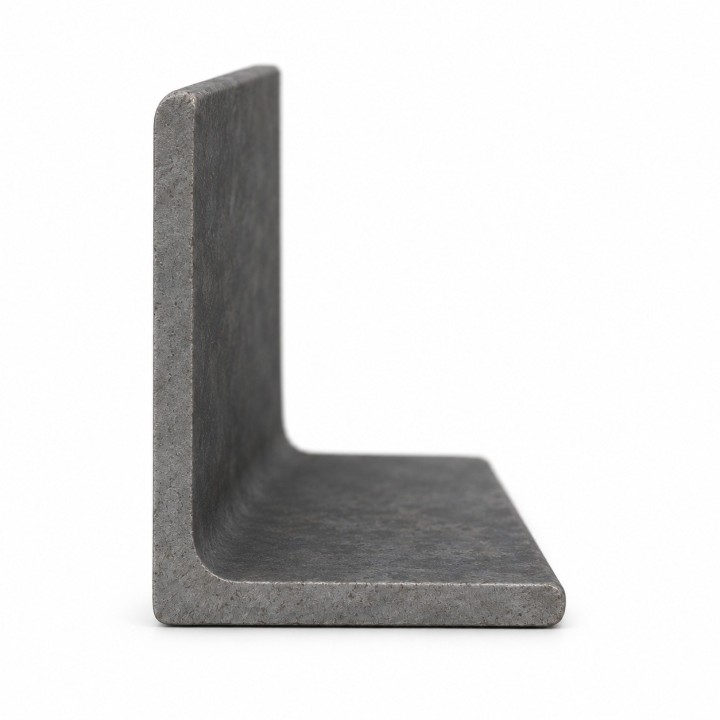
Steel angle S355 unequal-leg 150 × 75 × 11 mm, length 6000 mm. The price covers 1 piece. Theoretical mass: 111.600 kg.
Hot-rolled unequal angle S355 150 × 75 × 11 × 6000 mm
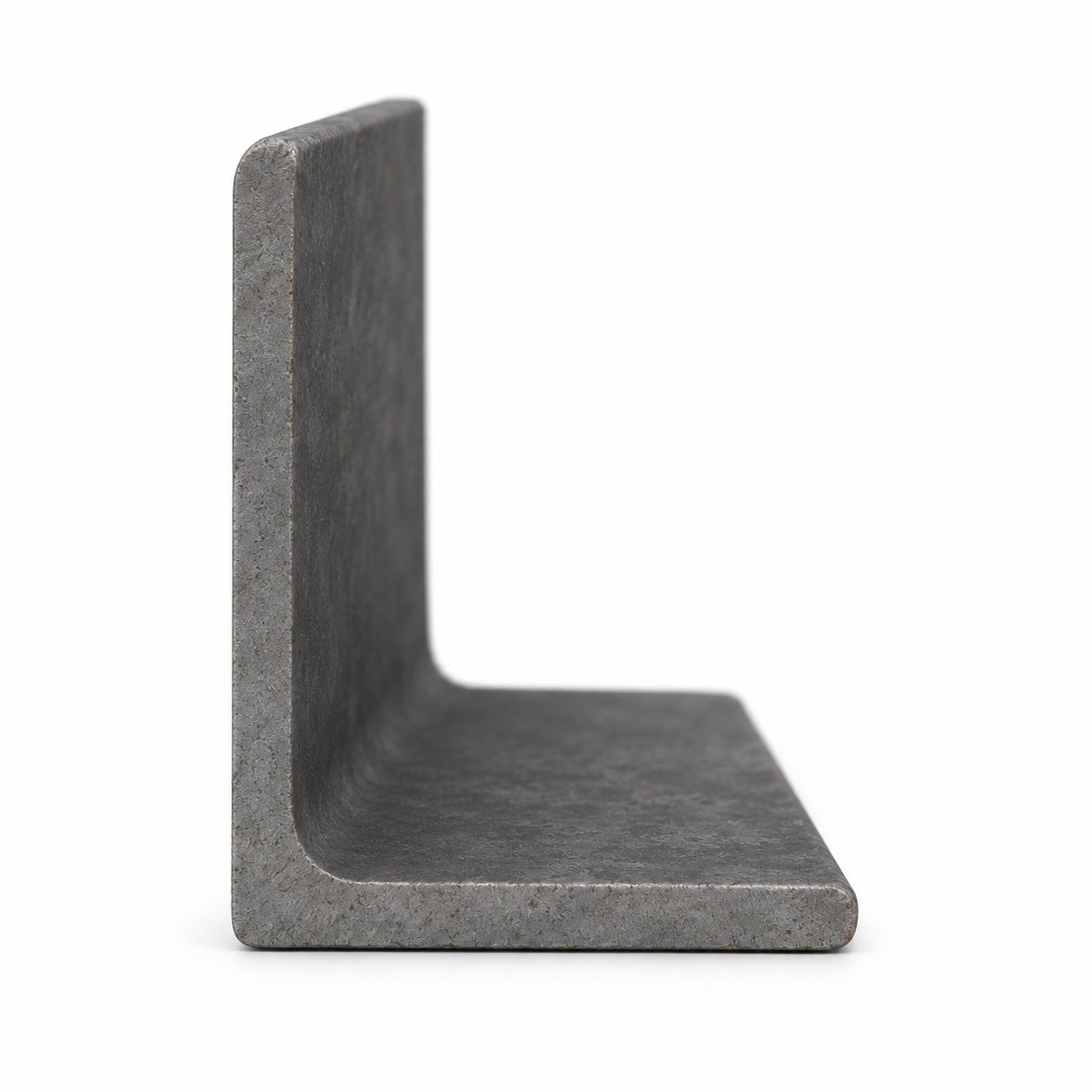
Angle with two perpendicular legs measuring 150 and 75 mm. The price covers one piece 6000 mm long.
Technical specifications
| Parameter | Value |
|---|---|
| Material | S355 structural steel |
| Condition | Hot-rolled, open L-section |
| Longer leg a | 150 mm |
| Shorter leg b | 75 mm |
| Leg thickness t | 11 mm |
| Section length L | 6000 mm |
| Sales unit | 1 piece |
| Theoretical mass of sales unit | 111,600 kg |
S355 steel and hot-rolled surface
S355 is a structural steel used, among other things, for frames and brackets. The unfinished surface is matt and may have mill scale. It must be suitably prepared before painting or welding.

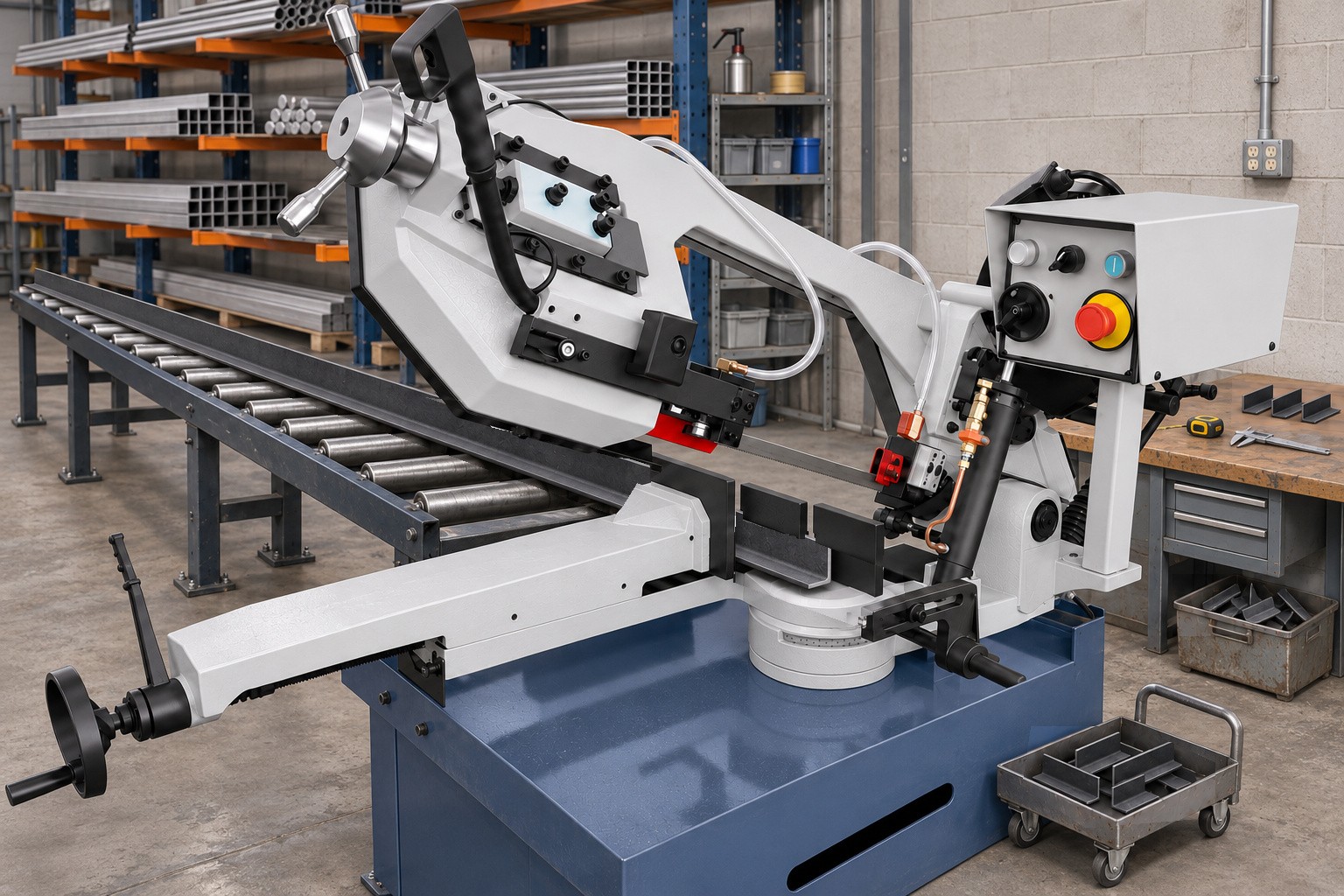
Preparation and cutting
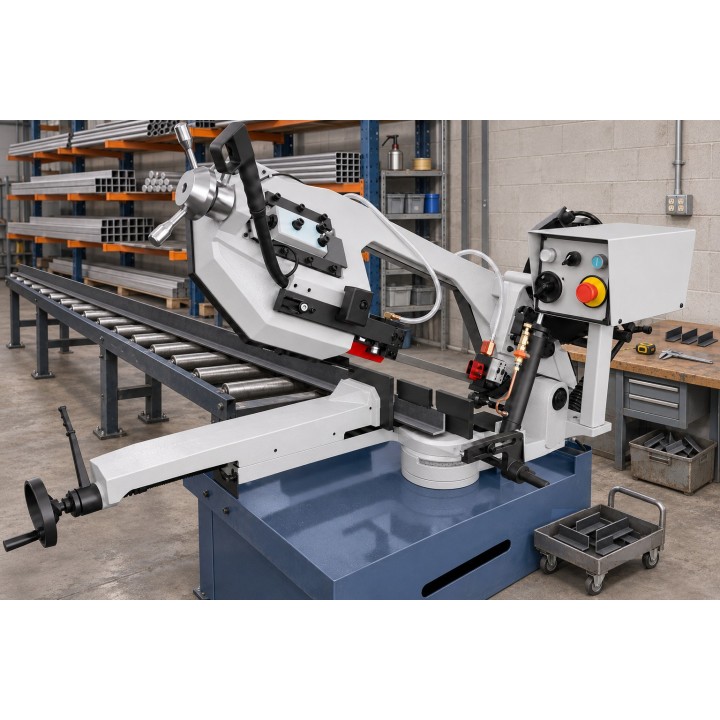
When ordering an additional cutting service, agree on the length and required tolerance. The reference tolerance for the cutting service is ±2 mm.

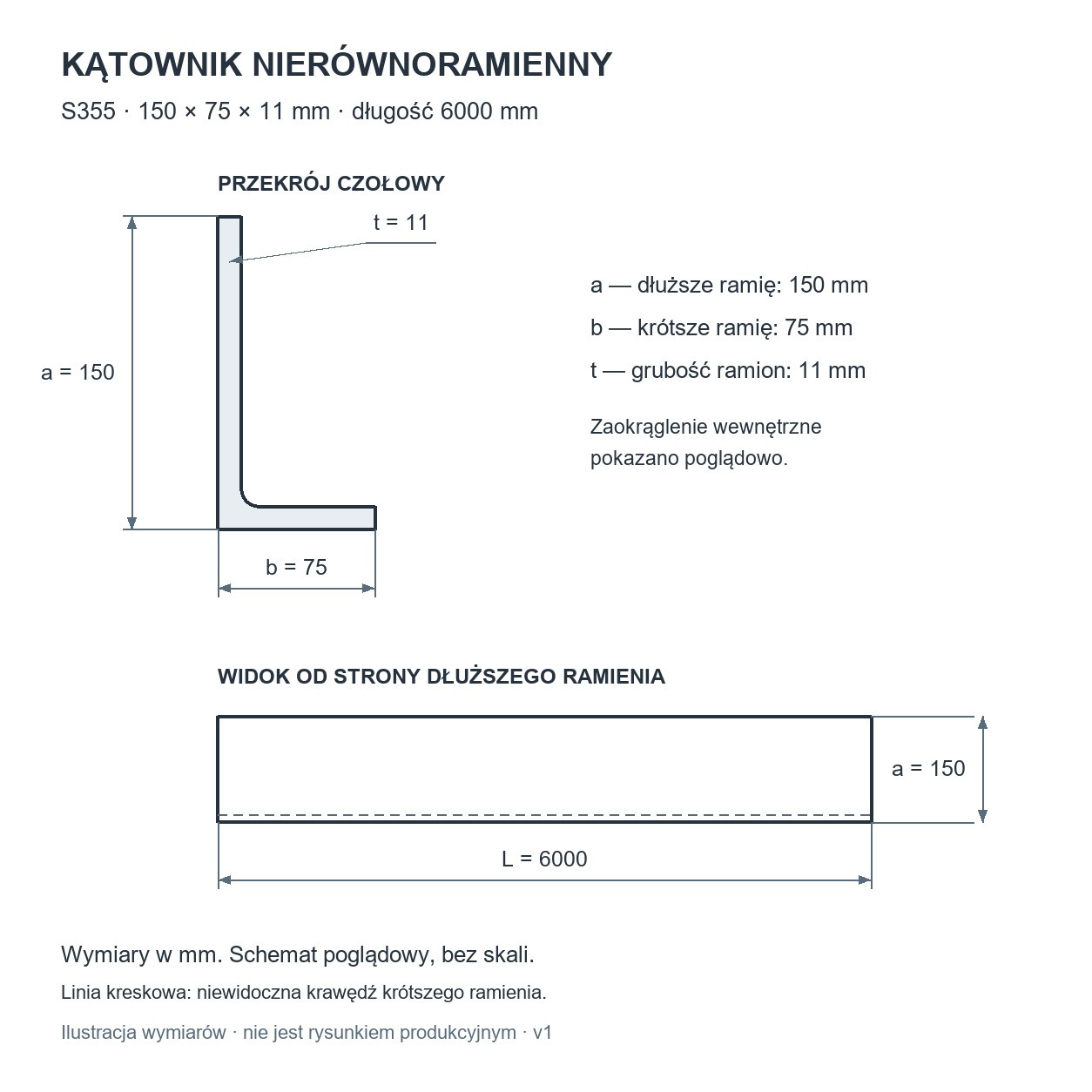
Angle dimensions and cross-section
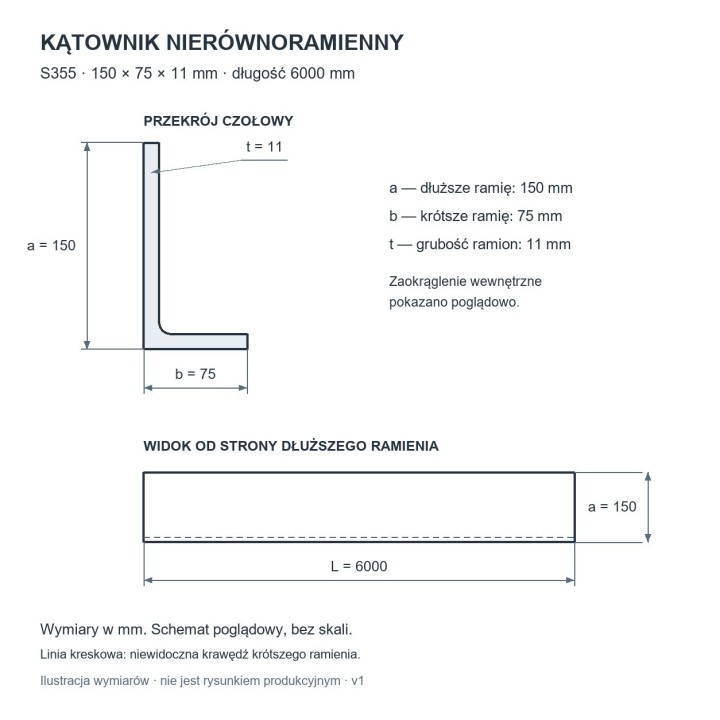
In the diagram, a denotes the longer leg, b the shorter leg, t the thickness of both legs and L the cut length.

Standards and tolerances
Reference standards for this angle type are PN-EN 10056-1:2017-03 (dimensions) and PN-EN 10056-2:1998 with amendment Ap1:2003 (tolerances). Edition PN-EN 10056-1:2017-03 replaced PN-EN 10056-1:2000.
Reference values according to PN-EN 10056-2. The deviation is selected separately for the nominal dimension of each leg.
| Parameter | Value |
|---|---|
| Leg a = 150 mm | ±3 mm (147–153 mm) |
| Leg b = 75 mm | ±2 mm (73–77 mm) |
| Thickness t = 11 mm | ±1 mm (10–12 mm) |
Required compliance with the standard can be confirmed for the batch before ordering.
-
ConditionNew
-
StandardOdniesienie: PN-EN 10056-1:2017-03 i PN-EN 10056-2:1998
-
Sales unitpcs
-
MaterialSteel S355
-
TypeKątownik nierównoramienny
-
Length [mm]6000
-
Surface treatmentHot-rolled
-
Number of pieces per sales unit1
-
Wall thickness11 mm (grubość ramion t)
-
Product width75 mm (leg b)
-
Product height150 mm (leg a)
-
Dimensional tolerancesEN 10056-2, wartości odniesienia: a 150 mm ±3 mm (147–153 mm), b 75 mm ±2 mm (73–77 mm), t 11 mm ±1 mm (10–12 mm)
-
Cross-section shapeL, nierównoramienny
1. Eye protection:
– Always wear safety goggles or a face shield to protect your eyes from sparks, particles and metal fragments.
2. Hearing protection:
– When working in a noisy environment, use ear defenders or earplugs to prevent hearing damage.
3. Respiratory protection:
– When working in dusty surroundings or in the presence of fumes, wear a filtering mask or an appropriate respirator.
– Ensure proper ventilation of the workstation.
4. Hand and skin safety:
– Use protective gloves that protect against mechanical injuries and chemicals.
– Where necessary, use protective creams to prevent irritation and dry skin.
5. Work clothing:
– Work in protective clothing resistant to sparks and splashes.
– Avoid loose clothing, jewellery and loose hair near machinery.
6. Fire risk:
– Keep the workstation free of flammable materials (e.g. paper, fabrics and chemicals).
– Keep a serviceable fire extinguisher close at hand and know how to use it.
7. Electrical hazards:
– Check the condition of cables and electrical equipment before use.
– Do not use electrical devices in damp conditions.
– Disconnect equipment from the power supply during maintenance or repairs.
8. Use of machinery and tools:
– Regularly inspect the technical condition of machines and tools.
– Use equipment in accordance with the manufacturer's instructions.
– Blades and tools should be maintained regularly and kept in good condition.
– Machines should be fitted with appropriate guards and protective devices.
9. Handling materials:
– Use handling equipment to move heavy components.
– Lift and carry using ergonomic practices to avoid injury.
10. Working with chemicals:
– Store chemicals in labelled, safe containers.
– Use substances in accordance with the manufacturer's instructions and occupational health and safety rules.
– Ensure air circulation when using chemicals.
Other important rules:
– Keep the workstation clean and tidy.
– Ensure adequate lighting in the working area.
– Provide occupational health and safety training.
– Carry out regular safety audits and comply with current regulations.

Comments (0)
Your review appreciation cannot be sent
Report comment
Report sent
Your report cannot be sent