

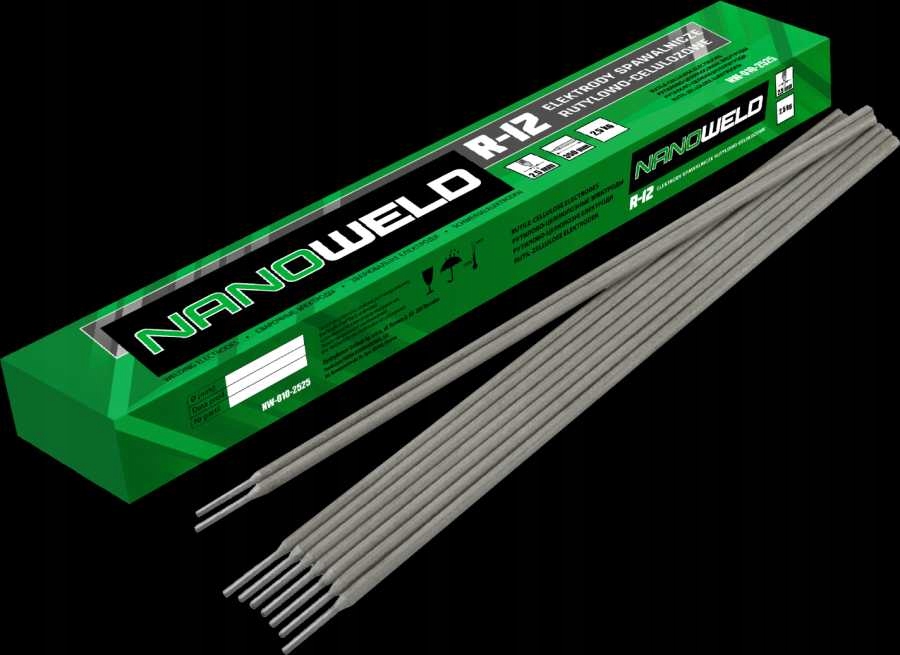
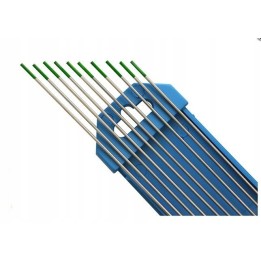
RUTILE ELECTRODE NANOWELD R-12 4.0*450 mm 2.5KG [16405496659]
RUTILE ELECTRODE NANOWELD R-12 4.0*450 mm 2.5KG.
CLASSIFICATION:
ISO 2560-A: E43 3 RC11
EN ISO 499: E42 0 RC11
AWS A5.1: E 6013
WELDING POSITIONS:
PA, PB, PC, PD, PE, PF
WELD METAL CHEMICAL COMPOSITION:
C <= 0,11 S <= 0,030 Si <=0,10 – 0,35 P <= 0,035 Mn 0,40-0,65
MECHANICAL PROPERTIES:
Yield strength => 450 N/mm2
Relative elongation => 22%,
Impact toughness => 78 J/cm2.
WELDING CURRENT:
110 – 170 A
Coated metal electrode.
Coating type – rutile-cellulosic.
Electrodes for manual arc welding are intended for welding carbon-steel structures with a carbon content up to 0,25% using a short or medium arc in all positions, except vertical-down for 5 mm diameter electrodes.
Store electrodes in dry rooms at a temperature no lower than + 15 st. C and relative humidity no higher than 80%.
If coating moisture exceeds 0,9%, anneal the electrodes before welding at 110 ± 10 °C for 30 minutes.
They are relatively insensitive to edge-preparation quality, the presence of galvanic coatings, rust and other surface contaminants.
-
ConditionNew
-
Sales unitpcs
-
BrandUnimet (2)
1. Eye protection:
– Always wear safety goggles or a face shield to protect your eyes from sparks, particles and metal fragments.
2. Hearing protection:
– When working in a noisy environment, use ear defenders or earplugs to prevent hearing damage.
3. Respiratory protection:
– When working in dusty surroundings or in the presence of fumes, wear a filtering mask or an appropriate respirator.
– Ensure proper ventilation of the workstation.
4. Hand and skin safety:
– Use protective gloves that protect against mechanical injuries and chemicals.
– Where necessary, use protective creams to prevent irritation and dry skin.
5. Work clothing:
– Work in protective clothing resistant to sparks and splashes.
– Avoid loose clothing, jewellery and loose hair near machinery.
6. Fire risk:
– Keep the workstation free of flammable materials (e.g. paper, fabrics and chemicals).
– Keep a serviceable fire extinguisher close at hand and know how to use it.
7. Electrical hazards:
– Check the condition of cables and electrical equipment before use.
– Do not use electrical devices in damp conditions.
– Disconnect equipment from the power supply during maintenance or repairs.
8. Use of machinery and tools:
– Regularly inspect the technical condition of machines and tools.
– Use equipment in accordance with the manufacturer's instructions.
– Blades and tools should be maintained regularly and kept in good condition.
– Machines should be fitted with appropriate guards and protective devices.
9. Handling materials:
– Use handling equipment to move heavy components.
– Lift and carry using ergonomic practices to avoid injury.
10. Working with chemicals:
– Store chemicals in labelled, safe containers.
– Use substances in accordance with the manufacturer's instructions and occupational health and safety rules.
– Ensure air circulation when using chemicals.
Other important rules:
– Keep the workstation clean and tidy.
– Ensure adequate lighting in the working area.
– Provide occupational health and safety training.
– Carry out regular safety audits and comply with current regulations.

Comments (0)
Your review appreciation cannot be sent
Report comment
Report sent
Your report cannot be sent