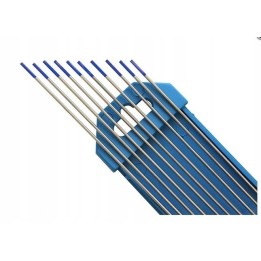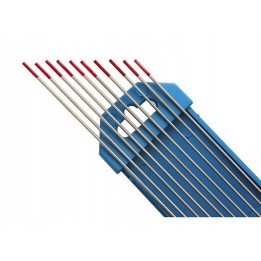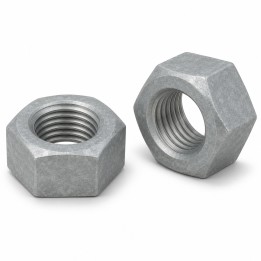






CAST IRON ELECTRODE CASTWELD NI FE 3.2*350 mm
CAST IRON ELECTRODE CASTWELD NI FE 3.2*350 mm.
Price is for 1 piece
MECHANICAL PROPERTIES:
Tensile strength Rm [N/mm2]: 450
Hardness: 160-190 HB
Electrode (coating) type: basic-graphite
Drying: 180°C / 1 h
PERFORMANCE CHARACTERISTICS:
Universal electrode with a Ni-Fe bimetal core for cold welding all types of cast iron (ductile, grey, malleable) and joining cast iron to steel.
For welding cast iron of the highest strength.
Very good for depositing the first layers in joints with cast iron.
Excellent welding characteristics; does not overheat during welding.
Very low spatter, easily removable slag and a finely rippled weld deposit.
High-strength weld metal resistant to cracking.
The weld is fully machinable.
Can be used for welding with AC Uo < 50V as well as DC (+) and (-).
APPLICATION:
Machine and engine housings
Repair and welding of valves
Welding cast iron to steel
-
ConditionNew
-
Sales unitpcs
-
BrandMetalweld
1. Eye protection:
– Always wear safety goggles or a face shield to protect your eyes from sparks, particles and metal fragments.
2. Hearing protection:
– When working in a noisy environment, use ear defenders or earplugs to prevent hearing damage.
3. Respiratory protection:
– When working in dusty surroundings or in the presence of fumes, wear a filtering mask or an appropriate respirator.
– Ensure proper ventilation of the workstation.
4. Hand and skin safety:
– Use protective gloves that protect against mechanical injuries and chemicals.
– Where necessary, use protective creams to prevent irritation and dry skin.
5. Work clothing:
– Work in protective clothing resistant to sparks and splashes.
– Avoid loose clothing, jewellery and loose hair near machinery.
6. Fire risk:
– Keep the workstation free of flammable materials (e.g. paper, fabrics and chemicals).
– Keep a serviceable fire extinguisher close at hand and know how to use it.
7. Electrical hazards:
– Check the condition of cables and electrical equipment before use.
– Do not use electrical devices in damp conditions.
– Disconnect equipment from the power supply during maintenance or repairs.
8. Use of machinery and tools:
– Regularly inspect the technical condition of machines and tools.
– Use equipment in accordance with the manufacturer's instructions.
– Blades and tools should be maintained regularly and kept in good condition.
– Machines should be fitted with appropriate guards and protective devices.
9. Handling materials:
– Use handling equipment to move heavy components.
– Lift and carry using ergonomic practices to avoid injury.
10. Working with chemicals:
– Store chemicals in labelled, safe containers.
– Use substances in accordance with the manufacturer's instructions and occupational health and safety rules.
– Ensure air circulation when using chemicals.
Other important rules:
– Keep the workstation clean and tidy.
– Ensure adequate lighting in the working area.
– Provide occupational health and safety training.
– Carry out regular safety audits and comply with current regulations.

Comments (0)
Your review appreciation cannot be sent
Report comment
Report sent
Your report cannot be sent