Pulley SPZ 106/1 for Taper Lock bushing 1610 — Optibelt
The offer includes the pulley only. The Taper Lock bushing is not included and is sold separately.
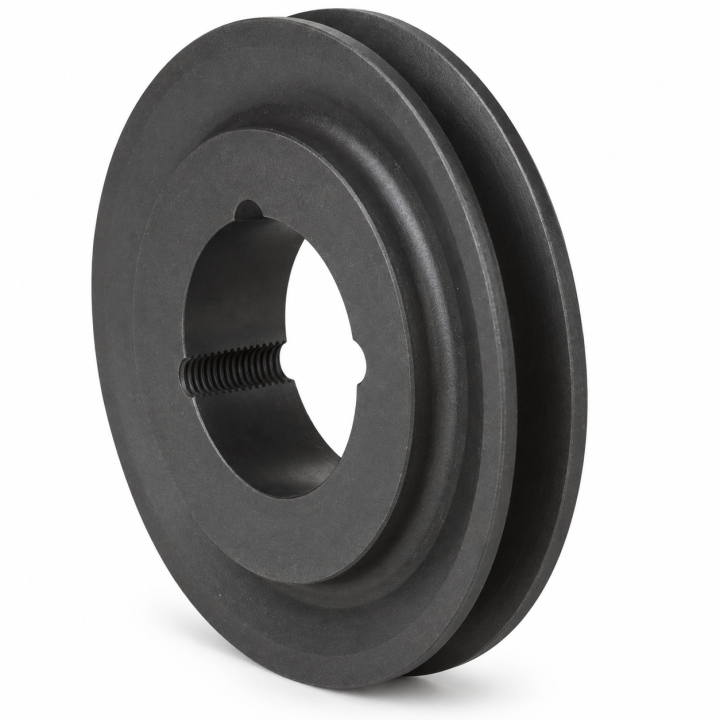
Single-groove Optibelt TB SPZ 106/1 cast-iron pulley, solid, intended for fitting with a type 1610 Taper Lock bushing. Select the bushing bore diameter to match the shaft on which the pulley will operate.
Select a Taper Lock bushing for this pulley
Required bushing type: 1610. Choose a bore matching the shaft diameter. Clicking a tile opens a separate bushing page — it does not add the bushing to the basket automatically.
Check the price and availability of the selected bushing on its product page. Selected bores for type 1610 are shown above, not the full bushing range. If the required bore is not shown, contact NERON for help with selection.
Pulley dimensions and specifications
| Manufacturer | Optibelt |
|---|
| Designation | TB SPZ 106/1 |
|---|
| Pulley profile | SPZ |
|---|
| Number of grooves | 1 |
|---|
| Datum diameter D | 106 mm |
|---|
| Outside diameter Da | 110 mm |
|---|
| Pulley width B | 16 mm |
|---|
| Required bushing type | Taper Lock 1610 — sold separately |
|---|
| Material | Cast iron |
|---|
| Design | Solid pulley |
|---|
| Belt profiles specified for this pulley | Z, HZ, ZX, SPZ, XPZ |
|---|
How to select the pulley and bushing
Check the belt profile, required pulley diameter and number of grooves. Use a type 1610 bushing for this pulley and select its bore to match the shaft diameter. The designation 1610 identifies the bushing type, not the bore diameter. Also consider the shaft design and keyed connection when selecting.
Available from 1 piece. Fulfilment time: up to 48 hours. The bushing is not included in the pulley price; both products are ordered and charged separately.
Taper Lock 1610 bushing installation — summary for Optibelt
Before starting work, switch off the drive and secure the machine against starting. Follow its manufacturer's instructions.
- Clean and degrease the shaft, bushing bore and tapered surfaces of the bushing and pulley. Do not oil these surfaces.
- Fit the bushing into the hub, aligning the threaded and unthreaded halves of the holes.
- Lightly oil the mounting screws and insert them without final tightening.
- Position the pulley and bushing on the shaft. If a key is used, maintain clearance above it. Check pulley alignment before and after tightening.
- Tighten the screws evenly with a torque wrench. For bushing Optibelt TB 1610: 20 Nm for each screw according to the manufacturer's table. Do not apply this value to other types or brands.
- After 30–60 minutes of operation, switch off and secure the drive again; check the tightening torque. Protect unused bushing holes with grease according to the instructions.
This is a summary and does not replace the instructions supplied with the particular bushing and machine. Full Optibelt instructions — PDF, table on page 2 and installation on page 4.
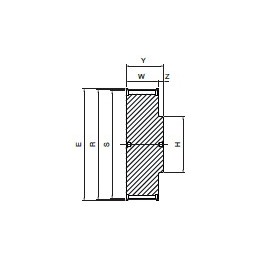
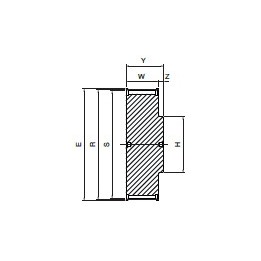
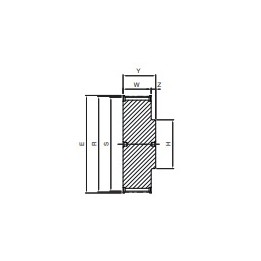
The main image is a shared original illustration of a single-groove pulley without bushing. The table for this offer specifies the dimensions and required bushing type.



Comments (0)
Your review appreciation cannot be sent
Report comment
Report sent
Your report cannot be sent