


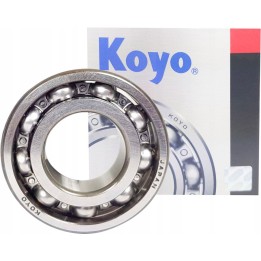
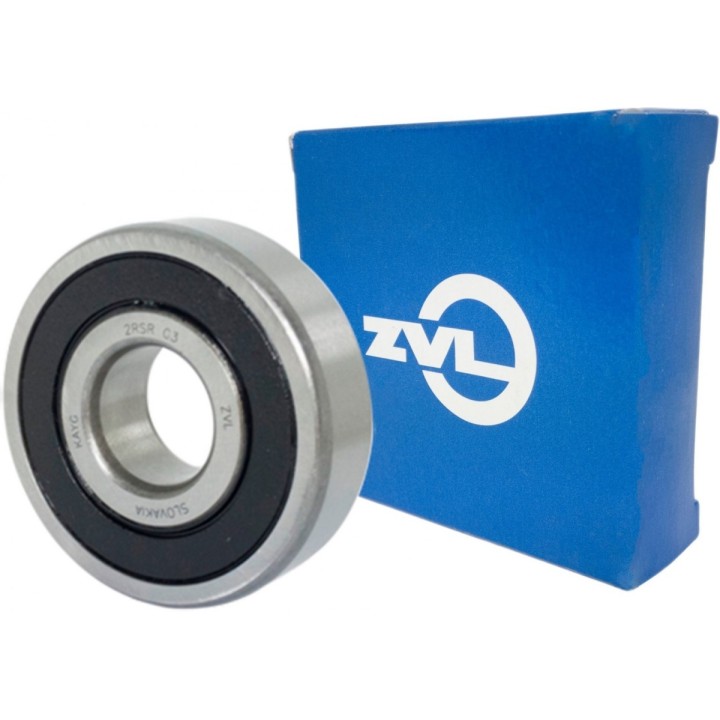
Ball bearing 6314 2RS C3 70x150x35 images
Ball bearing 6314 2RS C3 70x150x35
zł156.00 Grosszł126.83 Net
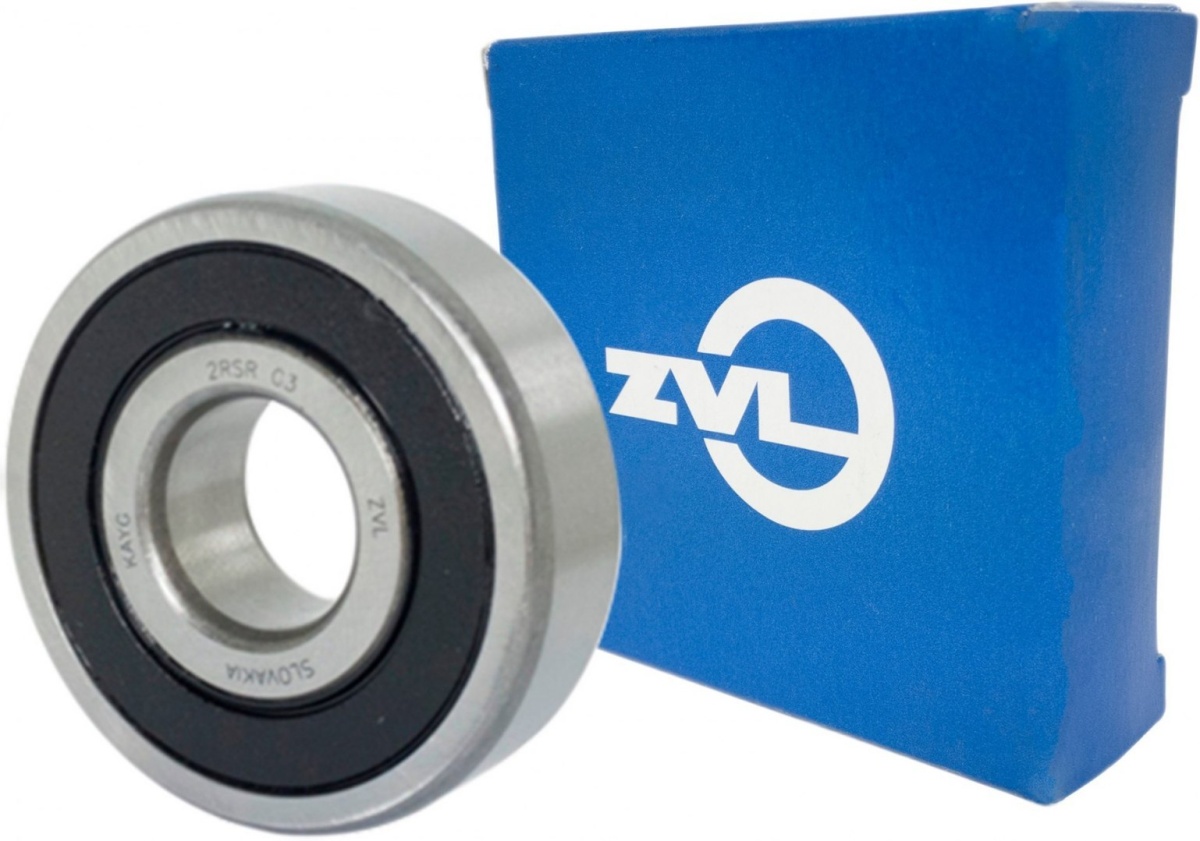
Ball bearing 6314 2RS C3 70x150x35.
Product description:
- Name: Single-row ball bearing
- Code: 6314 2RS C3
- Quantity sold: 1 pc.
- Size:70x150x35 mm
- Material: Bearing steel
- Manufacturer: ZVL
- Sealing:2RS plastic seals
- Clearance C3: increased for higher speeds
Technical specifications:
Dimensions:
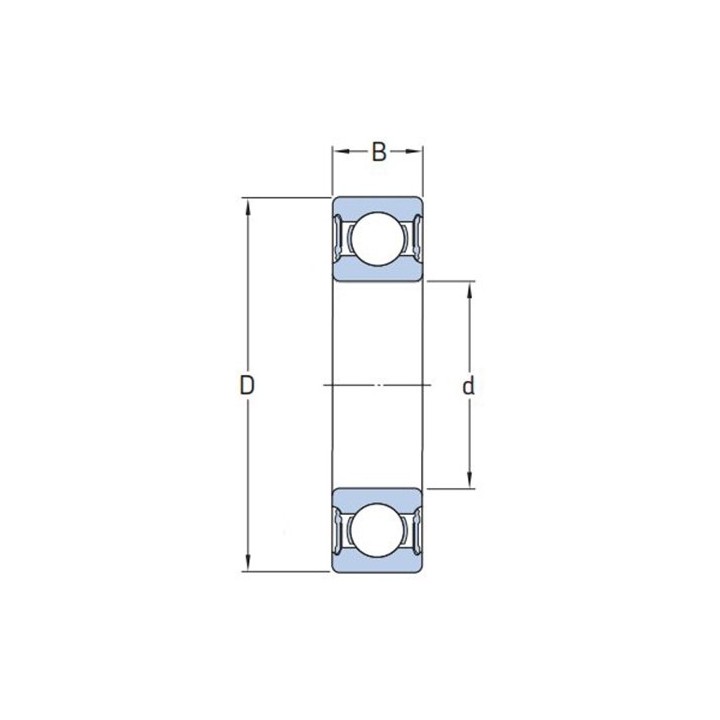
- inside diameter d - 70 mm
- outside diameter D - 150 mm
- width B - 35 mm
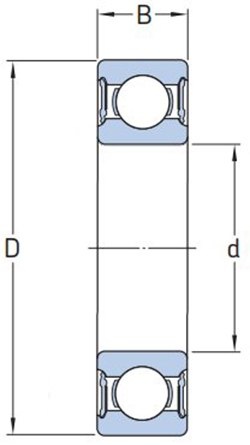
Deep groove ball bearings are among the most widely used bearing types. They have a simple design. Their main advantage is the ability to accommodate both radial and axial loads, even at high rotational speeds.
Depending on requirements, deep groove ball bearings can be supplied in various designs, for example with reduced or increased clearance, higher precision classes and special cages suitable for relatively high rotational speeds. They are also available in different construction variants, including type 2Z metal shields or type 2RS rubber seals, and a type N groove in the outer ring for axial location in the housing using a type R ring.
This wide range of construction and quality variants allows deep groove ball bearings to be used in all sectors of industry. Shielded or sealed deep groove ball bearings with 2Z metal shields or 2RS rubber seals are filled by the manufacturer with a suitable operating grease that lasts for their service life under average operating conditions. In standard designs, shielded or sealed ball bearings can operate at temperatures from -30°C to +100°C. For demanding conditions (high rotational speed or temperature), the manufacturer can supply bearings with special grease and an appropriate fill quantity. Shielded or sealed ball bearings allow bearing arrangements to be significantly simpler and more compact. They do not require relubrication, which considerably simplifies maintenance during operation. Their use is not recommended in arrangements where the outer rings rotate, as grease may escape even at relatively low rotational speeds. Shielded or sealed bearings must not be washed or heated before installation.
-
Brand

-
ReferenceKAT40585_n
-
Waga2,55 kg
-
In stock1000 Items
-
ConditionNew
-
Sales unitpcs
Workplace safety warnings — in accordance with Regulation (EU) 2023/988 on general product safety:
1. Eye protection:
– Always wear safety goggles or a face shield to protect your eyes from sparks, particles and metal fragments.
2. Hearing protection:
– When working in a noisy environment, use ear defenders or earplugs to prevent hearing damage.
3. Respiratory protection:
– When working in dusty surroundings or in the presence of fumes, wear a filtering mask or an appropriate respirator.
– Ensure proper ventilation of the workstation.
4. Hand and skin safety:
– Use protective gloves that protect against mechanical injuries and chemicals.
– Where necessary, use protective creams to prevent irritation and dry skin.
5. Work clothing:
– Work in protective clothing resistant to sparks and splashes.
– Avoid loose clothing, jewellery and loose hair near machinery.
6. Fire risk:
– Keep the workstation free of flammable materials (e.g. paper, fabrics and chemicals).
– Keep a serviceable fire extinguisher close at hand and know how to use it.
7. Electrical hazards:
– Check the condition of cables and electrical equipment before use.
– Do not use electrical devices in damp conditions.
– Disconnect equipment from the power supply during maintenance or repairs.
8. Use of machinery and tools:
– Regularly inspect the technical condition of machines and tools.
– Use equipment in accordance with the manufacturer's instructions.
– Blades and tools should be maintained regularly and kept in good condition.
– Machines should be fitted with appropriate guards and protective devices.
9. Handling materials:
– Use handling equipment to move heavy components.
– Lift and carry using ergonomic practices to avoid injury.
10. Working with chemicals:
– Store chemicals in labelled, safe containers.
– Use substances in accordance with the manufacturer's instructions and occupational health and safety rules.
– Ensure air circulation when using chemicals.
Other important rules:
– Keep the workstation clean and tidy.
– Ensure adequate lighting in the working area.
– Provide occupational health and safety training.
– Carry out regular safety audits and comply with current regulations.
4 other products in the same category
Single-row deep groove ball bearing 306-2Z SKF
zł435.40 Grosszł353.98 Net
Rated out of 5 stars based on
review(s)
Ball bearing 6009 2RSC3 FŁT-PBF 45x75x16
zł29.00 Grosszł23.58 Net
Rated out of 5 stars based on
review(s)
Ball bearing 607 2RS KOYO JAPAN 7x19x6
zł13.00 Grosszł10.57 Net
Rated out of 5 stars based on
review(s)
Viewed products
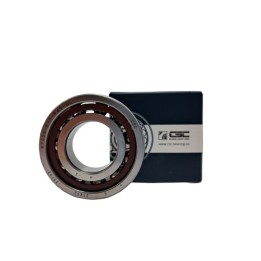
HCB71914-E-2RSD-T-P4S-UL CSC precision single-row angular contact bearing 70x100x16
zł1,257.80 Grosszł1,022.60 Net
Rated out of 5 stars based on
review(s)
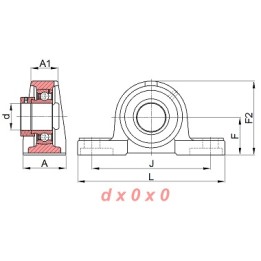
Bearing unit with cast iron housing ESP.203 SNR
zł71.80 Grosszł58.37 Net
Rated out of 5 stars based on
review(s)
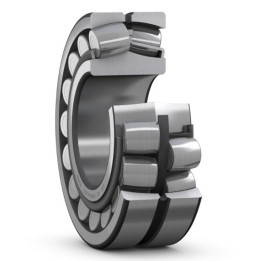
Double-row spherical roller bearing 22212 EK SKF
zł454.40 Grosszł369.43 Net
Rated out of 5 stars based on
review(s)
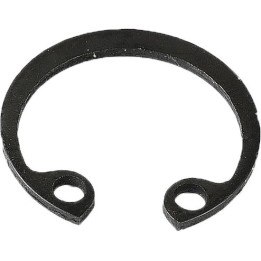
Internal circlip W 78 DIN 472 10 pcs.
zł15.00 Grosszł12.20 Net
Rated out of 5 stars based on
review(s)
Comments (0)
Your review appreciation cannot be sent
Report comment
Report sent
Your report cannot be sent