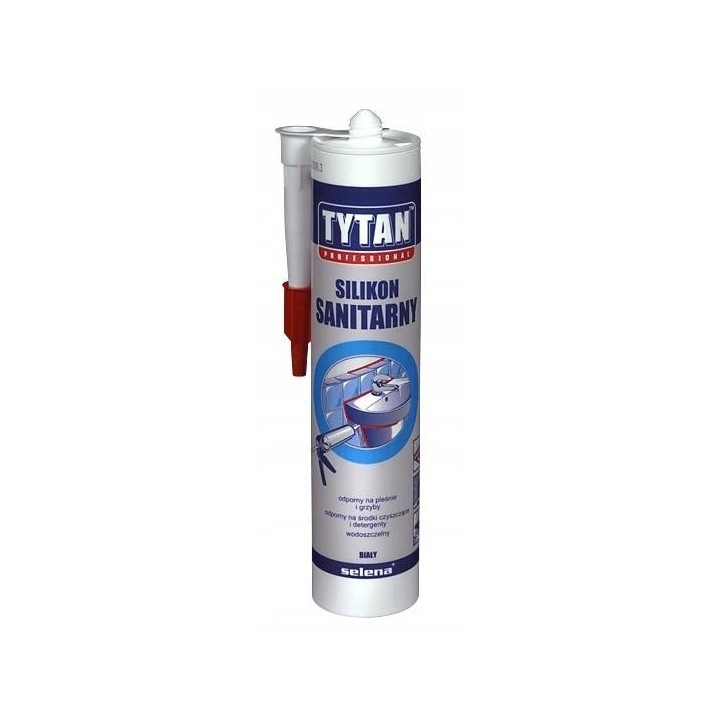
Sanitary silicone TYTAN 280 ml colourless [13221566544]
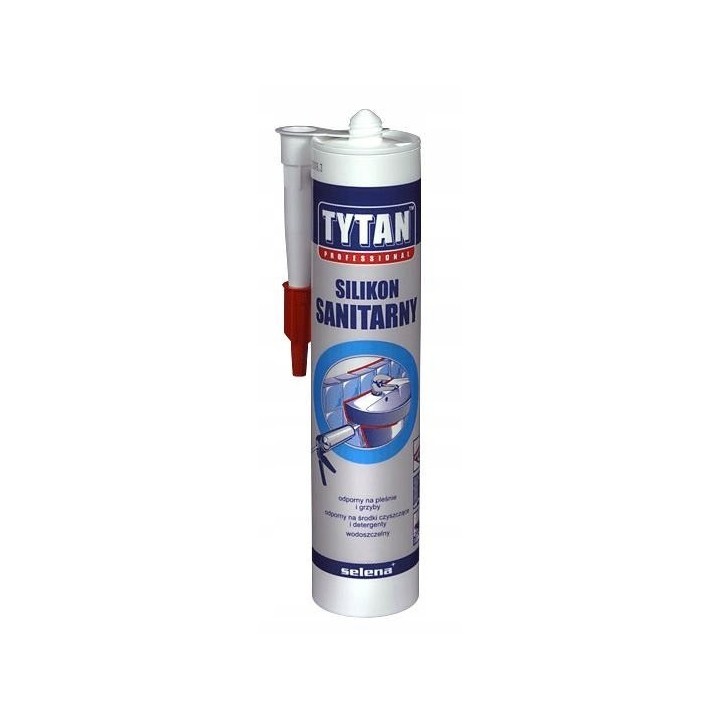
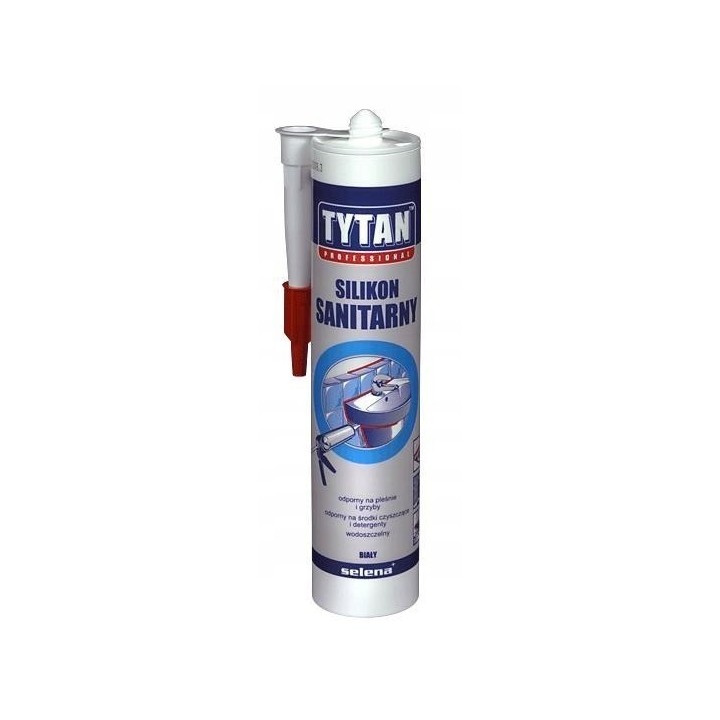
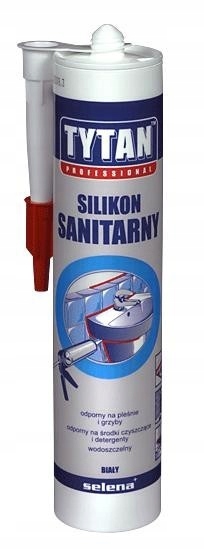
Sanitary silicone TYTAN 280 ml colourless.
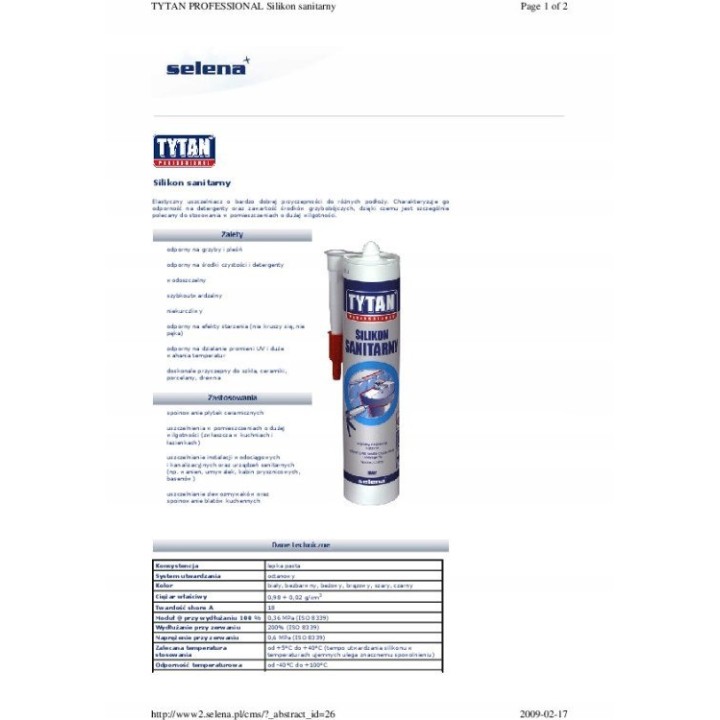
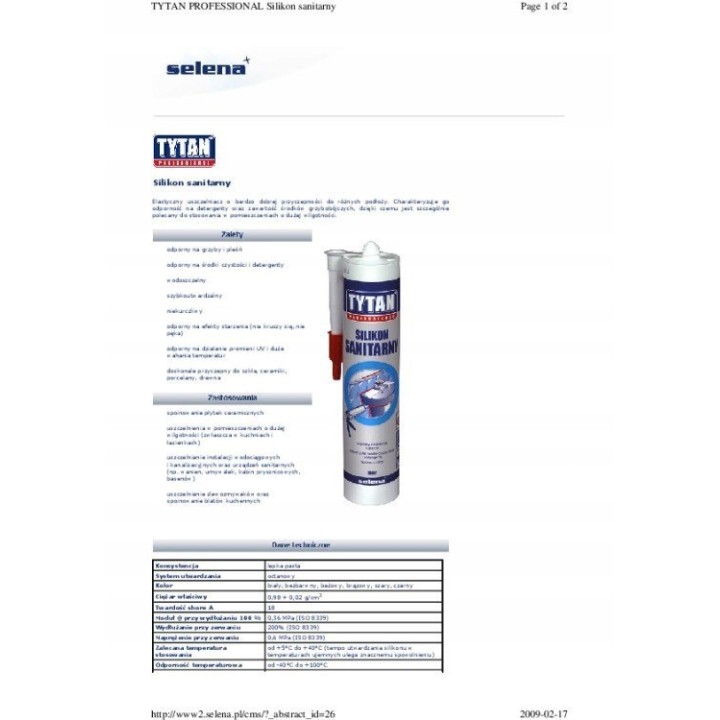
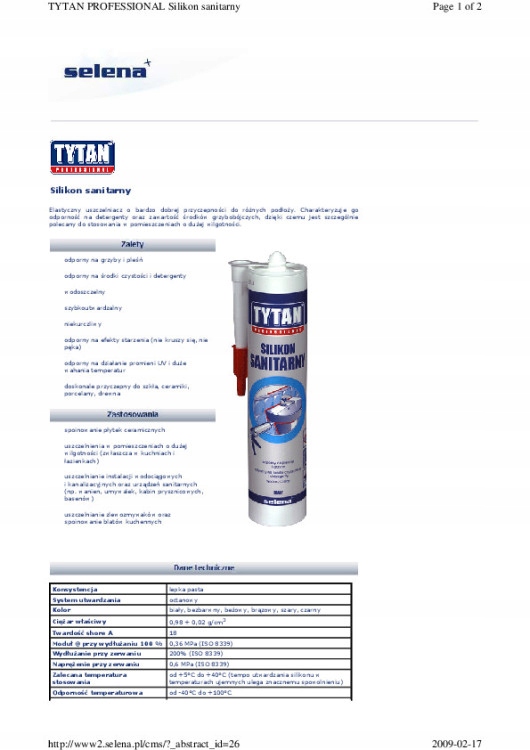
TYTAN SANITARY SILICONE
- for sanitary applications and rooms with high humidity,
BENEFITS:
* a fast-curing sealant,
* contains a fungicide preventing mould formation and growth;
* after curing forms a non-shrinking, permanently flexible compound,
* adhering excellently to most smooth and porous surfaces, including glass, glazed tiles, brick and ceramics.
APPLICATION:
* jointing ceramic tiles and corner joints,
* sealing joints, expansion joints and gaps in rooms with high humidity;
* sealing edges of baths and washbasins, shower enclosures, pools and other sanitary fixtures
* sealing water supply and drainage installations and PVC pipes and fittings
* filling gaps at decorations, curtains and glass blocks;
TECHNICAL DATA:
* Curing system: acidic (acetoxy)
* Colour: beige,
* Specific weight: 0,98 g / cm3,
* Curing rate: 2,0 mm/24h,
* Hardness Shore¢A: 18
* Modulus @ 100 % elongation: 0,36 MPa (ISO 8339),
* Elongation at break: 200 % (ISO 8339),
* Stress at break: 0,6 MPa (ISO 8339),
* Shrinkage after curing: none (ISO 10563),
* Recommended application temperature: from + 5°C to + 40°C(silicone curing slows considerably at sub-zero temperatures)
* Temperature resistance: from - 40°C to + 100°C
* Movement capability: 20%
* Elastic recovery: >90%
* UV resistance: excellent
* Tooling time: 10 á 25 min
-
ConditionNew
-
Sales unitpcs
-
BrandTytan Professional (2)
1. Eye protection:
– Always wear safety goggles or a face shield to protect your eyes from sparks, particles and metal fragments.
2. Hearing protection:
– When working in a noisy environment, use ear defenders or earplugs to prevent hearing damage.
3. Respiratory protection:
– When working in dusty surroundings or in the presence of fumes, wear a filtering mask or an appropriate respirator.
– Ensure proper ventilation of the workstation.
4. Hand and skin safety:
– Use protective gloves that protect against mechanical injuries and chemicals.
– Where necessary, use protective creams to prevent irritation and dry skin.
5. Work clothing:
– Work in protective clothing resistant to sparks and splashes.
– Avoid loose clothing, jewellery and loose hair near machinery.
6. Fire risk:
– Keep the workstation free of flammable materials (e.g. paper, fabrics and chemicals).
– Keep a serviceable fire extinguisher close at hand and know how to use it.
7. Electrical hazards:
– Check the condition of cables and electrical equipment before use.
– Do not use electrical devices in damp conditions.
– Disconnect equipment from the power supply during maintenance or repairs.
8. Use of machinery and tools:
– Regularly inspect the technical condition of machines and tools.
– Use equipment in accordance with the manufacturer's instructions.
– Blades and tools should be maintained regularly and kept in good condition.
– Machines should be fitted with appropriate guards and protective devices.
9. Handling materials:
– Use handling equipment to move heavy components.
– Lift and carry using ergonomic practices to avoid injury.
10. Working with chemicals:
– Store chemicals in labelled, safe containers.
– Use substances in accordance with the manufacturer's instructions and occupational health and safety rules.
– Ensure air circulation when using chemicals.
Other important rules:
– Keep the workstation clean and tidy.
– Ensure adequate lighting in the working area.
– Provide occupational health and safety training.
– Carry out regular safety audits and comply with current regulations.

Comments (0)
Your review appreciation cannot be sent
Report comment
Report sent
Your report cannot be sent